


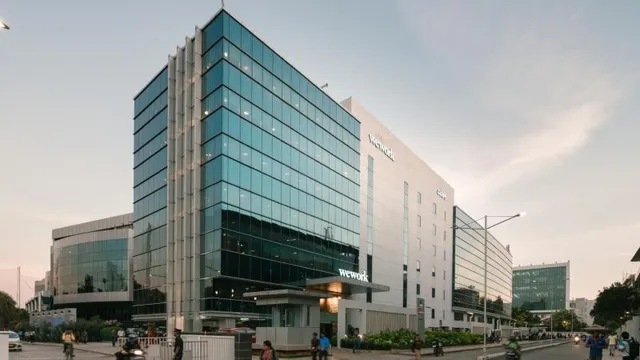
Bengaluru’s residential real estate map is undergoing a structural reset as the city moves into 2026, with buyers and investors increasingly looking beyond the once-dominant Outer Ring Road (ORR) corridor. Saturation, affordability pressure and declining liveability along the ORR are pushing housing demand into emerging micro-markets shaped by transport infrastructure, decentralised employment hubs and long-term urban planning.
For more than a decade, the ORR belt anchored Bengaluru’s housing growth, driven by its dense concentration of technology offices and predictable rental demand. That equation is now weakening. Traffic congestion, stretched civic infrastructure and sharp price escalation have reduced the corridor’s appeal, particularly for mid-income households. Urban mobility studies indicate that peak-hour commute speeds in the ORR zone have fallen to levels that directly affect daily productivity and quality of life, prompting households to reassess location choices. At the same time, residential prices across Bengaluru have risen rapidly over the past five years, with some of the steepest increases recorded in established IT-linked zones. Market researchers note that this has narrowed the affordability gap between mid-segment and premium housing, limiting fresh demand in mature corridors and accelerating decentralisation. Infrastructure has emerged as the primary driver of this shift. Expansion of the city’s metro network, progress on suburban rail, improved airport connectivity and new business corridors are reshaping how residential value is created. Homes located within walking or short driving distance of mass transit routes are consistently outperforming less-connected locations in both rental stability and long-term price appreciation. This has elevated several peripheral and transit-oriented micro-markets into mainstream consideration for 2026.
A clear divergence is now visible between eastern and northern parts of the city. East Bengaluru, encompassing established zones such as Whitefield and Sarjapur Road, continues to benefit from strong office absorption and remains a rental-led market. These areas offer relatively stable yields, supported by sustained employment density, but are increasingly showing signs of price maturity. North Bengaluru, by contrast, is evolving into a longer-term capital appreciation play. Airport-led development, logistics and aerospace clusters, and the emergence of new commercial districts are attracting both developers and early-stage investors. Planning experts point out that the scale of land availability and infrastructure visibility in the north allows for more integrated, lower-density development an advantage as cities grapple with climate resilience and sustainable growth. For Bengaluru, this redistribution of residential demand carries broader civic implications. Decentralised growth can ease pressure on overburdened corridors while creating opportunities for more balanced, people-first urban expansion. However, planners caution that success will depend on synchronising housing supply with public transport, social infrastructure and environmental safeguards.
As the city enters its next growth cycle, Bengaluru’s housing market is no longer defined by a single road or corridor. Instead, it is being reshaped by connectivity, liveability and the ability of micro-markets to support inclusive and resilient urban living.
Also Read: Anant Raj profit growth lifts Delhi realty outlook
Bengaluru micro markets redraw residential investment map
