


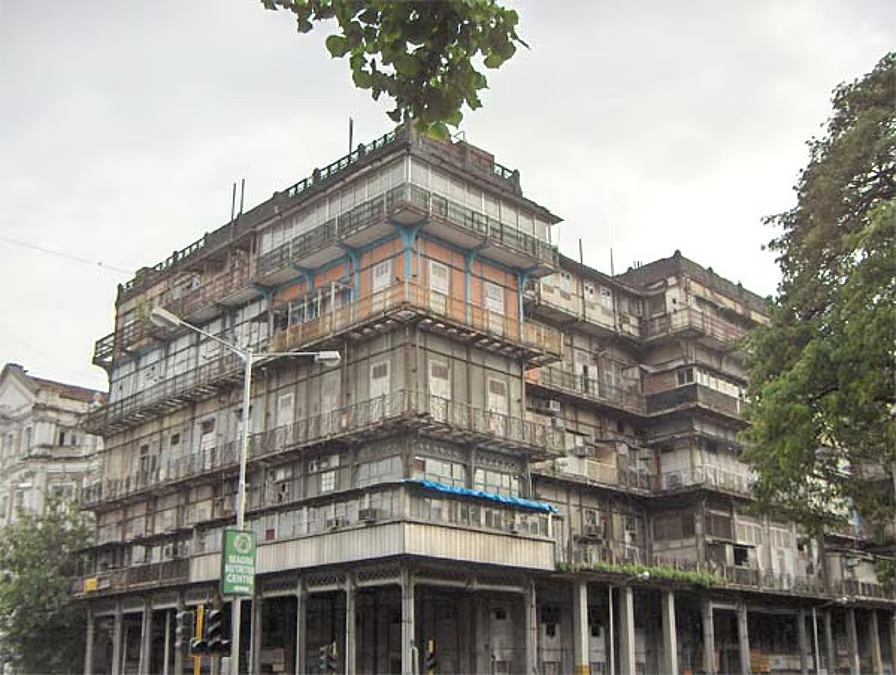
A prominent heritage landmark in south Mumbai’s Fort precinct is set to undergo long-overdue repairs following a change in ownership at the corporate level, signalling renewed institutional interest in conserving the city’s historic built environment. The company holding the lease rights to the iconic Capitol Cinema building has been acquired by a retail-focused real estate platform backed by one of India’s largest property groups, according to official registration filings.
The transaction involves the acquisition of Nadir Company Private Limited, the long-standing leaseholder of the Capitol Cinema property located opposite Chhatrapati Shivaji Maharaj Terminus (CSMT). The building sits within one of Mumbai’s most sensitive heritage zones, close to key civic institutions and railway infrastructure that together form a UNESCO-recognised urban ensemble. Property registration records indicate that the ownership transition has been formally declared with the state registration authority. Following the acquisition, the Grade-IIA heritage structure is expected to undergo repair and restoration works strictly aligned with conservation regulations. Urban conservation specialists note that such interventions are critical for ageing heritage buildings, many of which face structural deterioration due to decades of deferred maintenance rather than redevelopment pressure. Any work on the Capitol Cinema will require clearances from the city’s heritage oversight committee, ensuring that architectural character and historical value are retained. The legal foundation for the property has also been clarified. A registered undertaking confirms the acceptance of a long-term lease renewal granted by the municipal corporation, covering a 30-year period ending in 2035. The lease, originally dating back to the early 20th century, places clear obligations on the lessee to maintain the structure, correct historical deviations from lease terms, and restrict land use to specific functions including cinema, retail, and residential components.
Urban planners say this clarity is significant. Heritage properties in Mumbai often suffer from ambiguous lease conditions and ownership structures, which discourage investment in maintenance and conservation. The consolidation of control under a large, professionally managed real estate platform could improve compliance and long-term stewardship, provided commercial interests do not override heritage safeguards. Importantly, the planned works are understood to focus on repair and compliance rather than redevelopment. This distinction matters in a city where heritage assets are frequently threatened by adaptive reuse that prioritises commercial returns over cultural continuity. Conservation-led restoration can extend the life of such structures while retaining their role in the public realm, especially in dense civic precincts like Fort. The Capitol Cinema, first leased more than a century ago, has been an enduring part of Mumbai’s cultural landscape. Its location near major transit nodes makes it both highly visible and vulnerable to infrastructure pressures. Experts argue that protecting such landmarks contributes to a more inclusive urban identity, balancing economic growth with historical memory.
As Mumbai grapples with the dual challenges of urban renewal and heritage preservation, this ownership transition may serve as a test case. The outcome will be closely watched to see whether institutional capital can successfully align commercial discipline with conservation responsibility an increasingly important equation in shaping resilient, people-first cities.
Also Read: Delhi Anand Vihar Station To Add Pod Hotel
South Mumbai Heritage Building Set for Restoration
