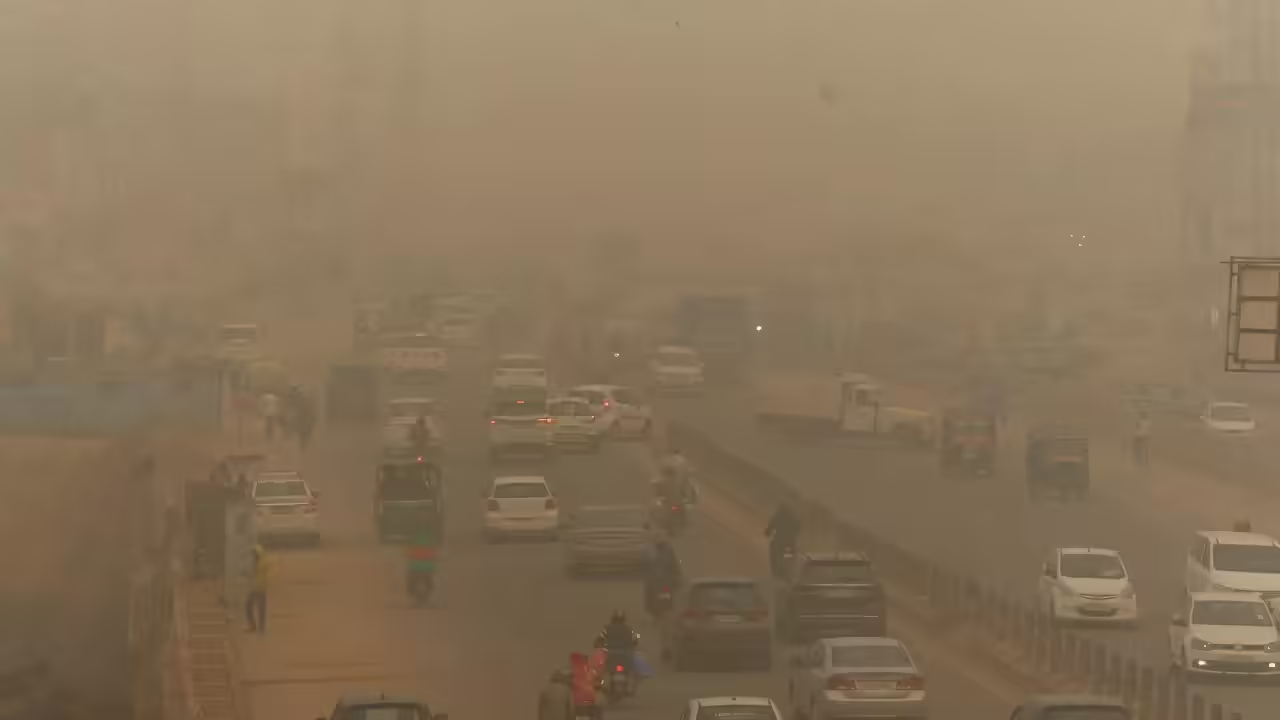
Delhi remained under a blanket of hazardous air on Thursday as winter fog and cold temperatures trapped pollutants close to the ground, keeping air quality in the ‘very poor’ category across large parts of the city. The persistence of toxic conditions, despite a marginal improvement in readings, underlines the capital’s ongoing struggle to balance mobility, public health and climate resilience during peak pollution season.
According to official monitoring data, the citywide Air Quality Index (AQI) hovered just above 310 in the early morning hours, still well within the range considered harmful for prolonged exposure. Several densely populated and high-traffic zones continued to report significantly worse conditions, with eastern, central and north-western districts emerging as major hotspots. Transport corridors and industrial clusters in areas such as Anand Vihar, RK Puram, Chandni Chowk, Punjabi Bagh and Ashok Vihar recorded AQI levels approaching or exceeding 350. Meteorological conditions compounded the problem. The national weather agency reported moderate to dense fog across multiple neighbourhoods, with temperatures dropping below 8 degrees Celsius at sunrise. Such cold, stagnant air reduces atmospheric dispersion, allowing fine particulate matter to accumulate near ground level. Urban climate experts note that these winter inversions are becoming more intense and prolonged, amplifying the health burden on vulnerable populations, including children, older residents and people with respiratory illnesses.
In response to the deteriorating air, the city government has moved to tighten demand-side measures aimed at curbing private vehicle use during severe pollution episodes. Under a newly notified policy, parking charges at authorised facilities will be doubled whenever advanced stages of the Graded Response Action Plan (GRAP) are triggered. The measure is designed to disincentivise discretionary driving during periods when particulate levels cross dangerous thresholds. A senior transport official said the decision reflects the need to align economic signals with public health priorities. “Pricing interventions are among the fastest tools available to influence travel behaviour in the short term,” the official said. Parking facilities operated by the metro system have been excluded from the revised charges, a move intended to protect last-mile connectivity for public transport users.
The policy shift draws on long-standing evidence linking vehicular emissions to Delhi’s winter smog. A comprehensive emissions inventory conducted by a leading technical institute found that road transport contributes a substantial share of fine particulate pollution during colder months, alongside being a dominant source of greenhouse gases such as nitrous oxide and carbon dioxide in the capital. With more than 8 million registered vehicles and limited authorised parking capacity, demand for road space continues to outstrip supply.
Urban planners argue that pricing curbs, while necessary, are only a partial solution. “Without parallel investments in reliable, low-emission public transport and safe non-motorised mobility, punitive measures risk being socially regressive,” said a mobility policy analyst. The National Green Tribunal has also urged authorities to deploy destination-based bus services and adopt coordinated traffic management strategies to reduce congestion-linked emissions. From a built-environment perspective, persistent air pollution is beginning to shape real estate and workplace decisions.
Developers report rising demand for air-filtration systems, green buffers and wellness-focused design in residential and commercial projects, particularly in pollution-prone corridors. As Delhi heads deeper into winter, officials say further restrictions under GRAP remain likely if pollution levels spike again. For a city aspiring to climate-resilient and people-first growth, the current episode underscores the urgency of integrating clean mobility, urban design and regional air-shed management into a coherent long-term strategy.
Delhi Smog Lingers As Winter Tightens Grip