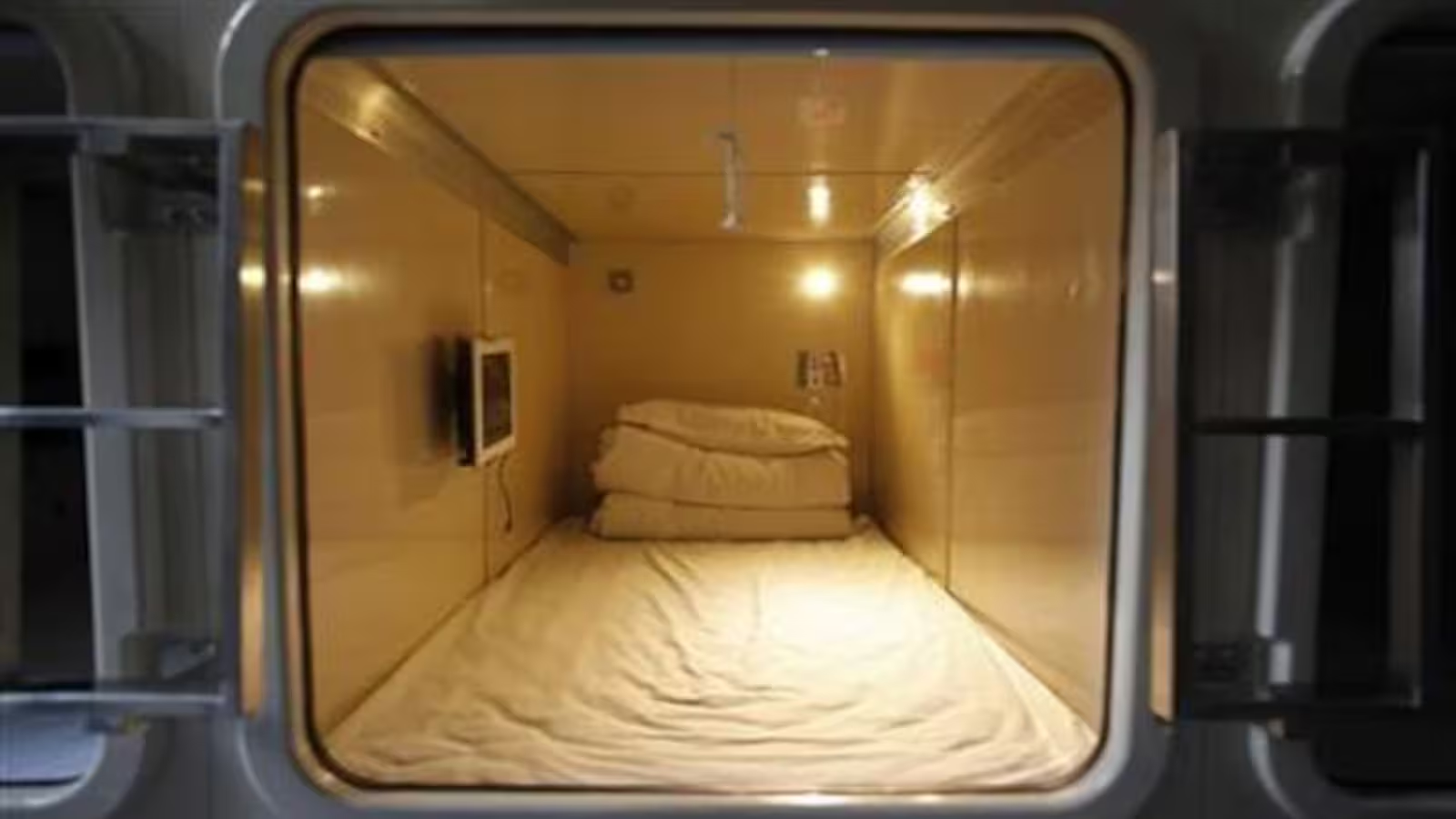
Delhi’s Anand Vihar interchange station is set to introduce compact accommodation for transit passengers, marking a shift in how transport infrastructure is being designed to support short-stay mobility needs in the National Capital Region. The plan includes a pod hotel, food and beverage outlets, retail units and office space within the station complex, positioning the hub as both a transport and commercial node.
Officials associated with the project said a licence has been awarded for developing commercial floors at the Anand Vihar rapid rail station, which serves the Delhi–Meerut Namo Bharat corridor. The proposed pod hotel will have a capacity of around 30 beds and will be distributed across multiple levels of the station, covering more than 4,000 square metres. The facilities are intended to cater to passengers with long layovers, overnight transfers or early-morning connections. Urban mobility experts say the development reflects a broader trend towards transit-oriented amenities that reduce friction in intercity travel. Anand Vihar handles some of the highest interchange volumes in the region, linking rapid rail services with two Delhi Metro lines, the city’s eastern railway terminal and interstate bus services on both the Delhi and Uttar Pradesh sides. The clustering of transport modes has made the area one of the busiest passenger gateways into the capital.
A senior official involved in the planning said the accommodation units would be compact, secure and priced for short-duration use. “The aim is to allow travellers to rest without leaving the station precinct, which reduces last-mile travel, improves safety and saves time,” the official said. Similar facilities at other transport hubs have shown steady demand, particularly among intercity commuters and business travellers. The commercial development is part of the transport corporation’s non-fare revenue strategy, designed to reduce reliance on ticket income and improve financial sustainability. Industry analysts note that station-area monetisation is becoming essential as capital-intensive rail projects seek stable operating revenue streams. “Retail and hospitality assets embedded within stations can cross-subsidise core transport operations while enhancing user experience,” said a transport economics consultant.
From an urban development perspective, the project aligns with transit-oriented development principles, which promote mixed-use spaces around high-capacity public transport. By offering accommodation and services within walking distance of platforms, the model supports low-carbon travel behaviour and reduces dependence on taxis or private vehicles for short hotel trips. The Anand Vihar node also plays a strategic role in the Delhi–Meerut corridor, which spans roughly 82 kilometres and passes through dense urban clusters in Delhi, Ghaziabad and Meerut. Since commercial operations began, the corridor has recorded more than 20 million passenger journeys, underscoring the scale of demand for seamless, interlinked transport infrastructure.
Urban planners caution, however, that station-area commercialisation must be balanced with crowd management, fire safety and accessibility standards. “Introducing lodging within a busy interchange hub requires careful design to avoid congestion and ensure that emergency egress, ventilation and inclusivity norms are fully met,” said a mass-transit planning specialist. The pod hotel project adds to a small but growing portfolio of short-stay facilities at major transit points in Delhi. If demand materialises as projected, similar developments could follow at other multimodal hubs such as Sarai Kale Khan. As construction timelines and pricing structures are finalised, the Anand Vihar initiative will be closely watched as a test case for integrating hospitality, retail and transport infrastructure into a single, people-first urban ecosystem.
Delhi Anand Vihar Station To Add Pod Hotel