


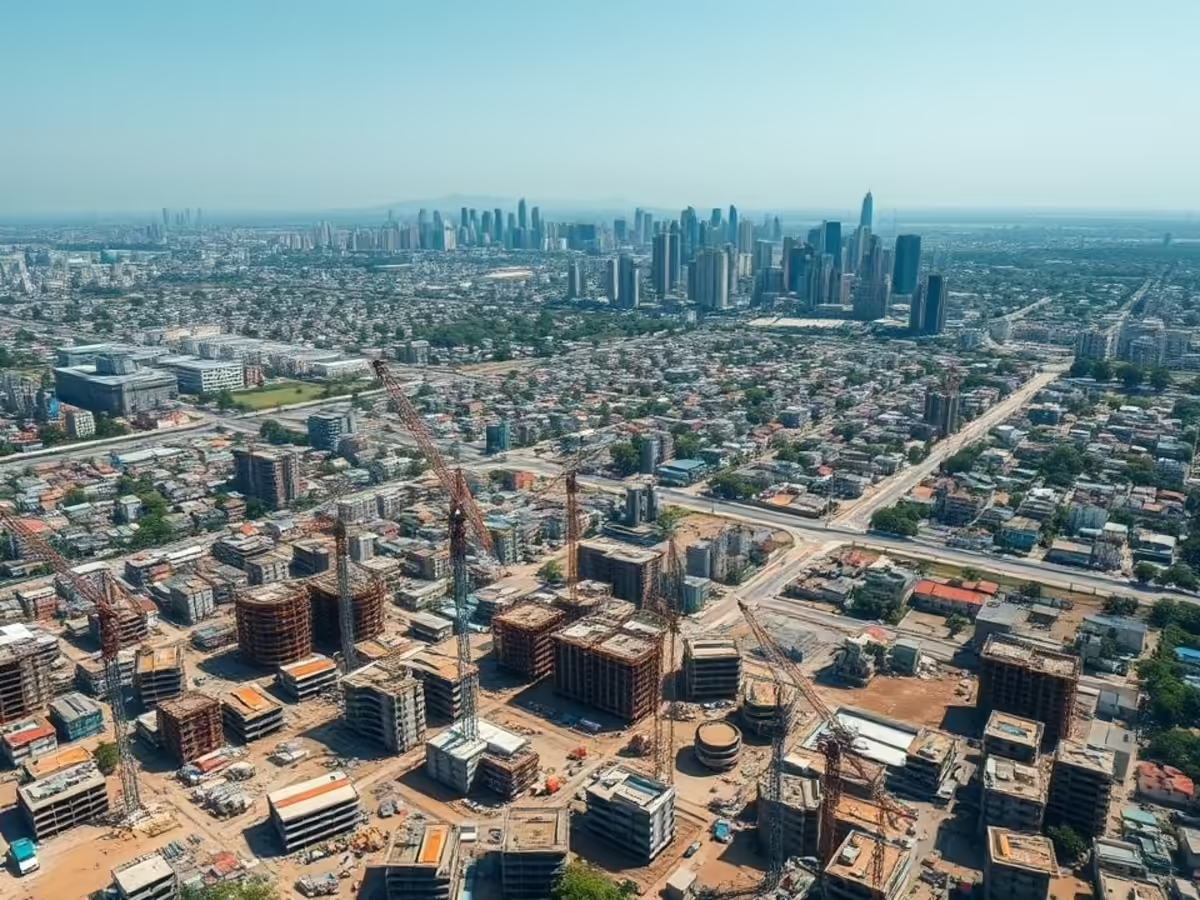
The Mumbai Metropolitan Region (MMR) consolidated its position as India’s most active land acquisition market in 2025, highlighting how the country’s urban growth engine continues to pivot around large, infrastructure-led metropolitan clusters. Data compiled by a leading real estate consultancy shows that MMR accounted for the highest number of land transactions during the year, reinforcing its role as a key destination for long-term real estate and infrastructure investment.
In 2025, developers and investors concluded 32 land transactions across the Mumbai region, aggregating more than 500 acres. This made MMR the single largest contributor by deal count nationally, representing over 13 per cent of total land transacted across India. While the number of transactions was broadly in line with the previous year, the pattern of acquisitions reflects a more deliberate focus on scale, mixed-use potential, and long-term urban relevance. Nationally, India recorded at least 126 land transactions covering close to 3,800 acres in 2025. Although the overall number of deals dipped marginally compared to the year before, the total land area acquired expanded sharply, signalling a shift towards larger parcels suitable for township-style and multi-format developments. Urban economists say this trend mirrors changing market priorities, where developers are seeking projects that can absorb housing, employment, and social infrastructure in an integrated manner. Residential development remained the dominant driver of land acquisitions, accounting for the bulk of transactions and acreage. Large parcels in MMR are being positioned for a mix of housing formats, including plotted developments, integrated townships, and premium residential enclaves. Analysts note that rising infrastructure investments particularly in transport corridors are reshaping demand patterns, pushing housing growth outward while retaining economic links to Mumbai’s core.
Mixed-use developments also gained prominence, with substantial land parcels earmarked for projects that combine residential, commercial, and civic functions. Such formats are increasingly favoured in dense urban regions like MMR, where land scarcity and congestion necessitate compact, multifunctional neighbourhoods. Industrial and logistics parks, along with warehousing and data infrastructure, formed another important segment, reflecting the region’s role in supply chains and the digital economy. Among India’s major urban centres, Bengaluru and Pune followed MMR in land acquisition activity, while the National Capital Region saw more modest parcel sizes. Tier-II and Tier-III cities together accounted for a significant share of land area transacted, pointing to a parallel decentralisation of urban growth beyond the largest metros. Planners argue that this dual trend metro consolidation alongside secondary city expansion could support more balanced regional development if aligned with transport, water, and energy planning. For policymakers, MMR’s lead in land deals raises critical questions about infrastructure capacity, climate resilience, and housing affordability. Experts stress that future development on these newly acquired parcels must integrate mass transit access, low-carbon building practices, and adequate social infrastructure to avoid repeating past patterns of fragmented growth.
As India’s urban transition accelerates, the land acquisition patterns of 2025 suggest that MMR will remain central to the country’s real estate narrative both as an opportunity hub and as a test case for sustainable metropolitan development.
Also Read: University of York Mumbai Lease Highlights Powai Demand
Mumbai Region Land Acquisitions Outpace Other Cities
