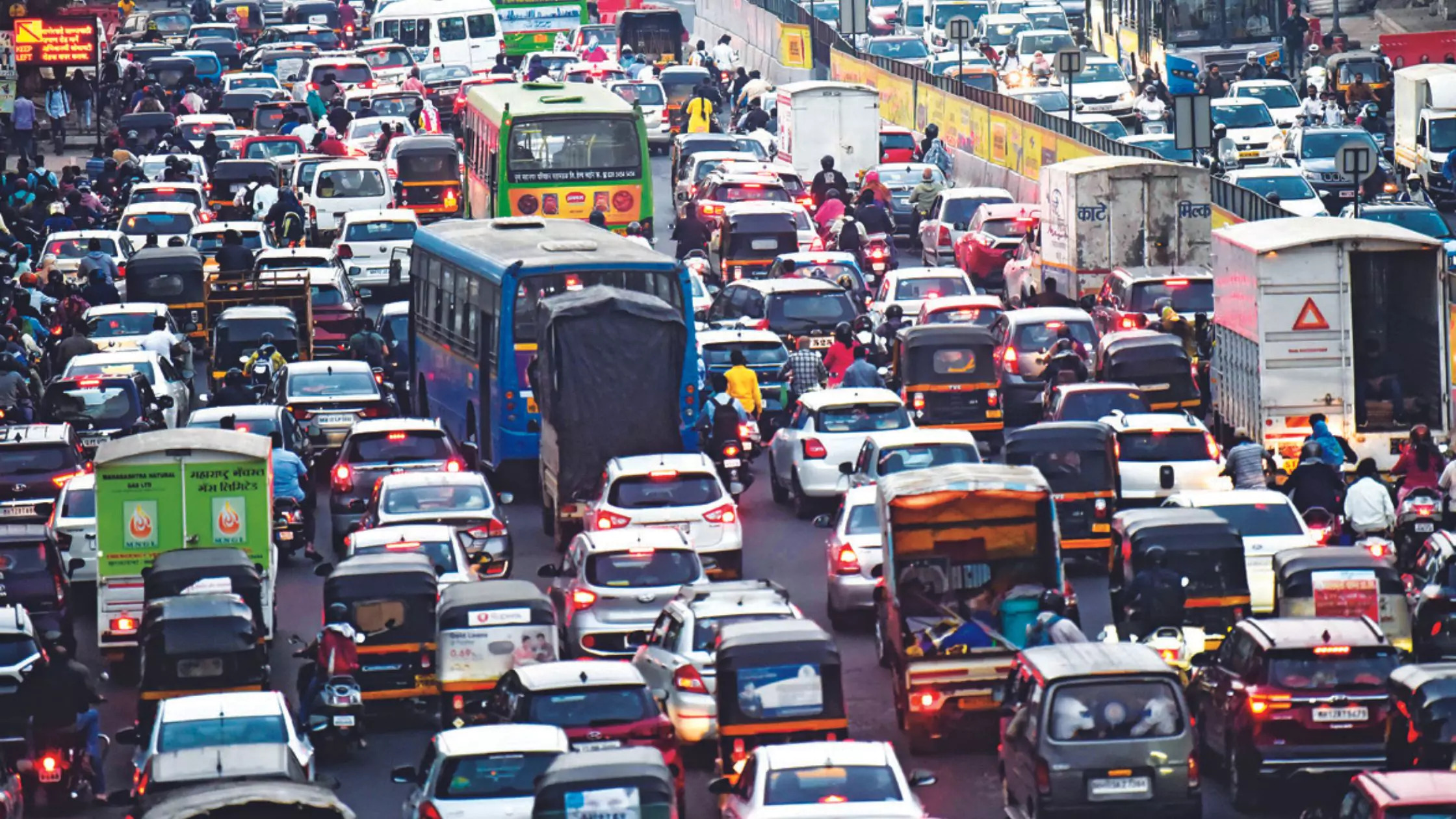
Pune’s mobility crisis has intensified into a defining urban challenge, with new global traffic benchmarking placing the city among India’s slowest for everyday commuting. For residents, covering a routine 10-kilometre stretch now consumes over half an hour during peak periods, underscoring how congestion is reshaping productivity, liveability, and economic efficiency in one of the country’s fastest-growing urban regions.
The findings matter far beyond commuter frustration. Pune is a major manufacturing, education, and technology hub, where delays on arterial roads translate into lost work hours, higher logistics costs, and rising fuel consumption. Urban planners point out that prolonged congestion erodes a city’s competitiveness, especially as companies increasingly evaluate mobility, air quality, and commute reliability while making expansion decisions. Data from an international traffic assessment for 2025 shows Pune ranking just behind Bengaluru nationally for slow-moving traffic, with average peak-hour speeds slipping to nearly 15 kmph. While global rankings suggest a marginal improvement over the previous year, experts caution that the change is statistical rather than structural. Vehicle volumes continue to outpace road capacity, while land-use patterns encourage longer, car-dependent commutes.
Several structural issues compound the problem. Road networks in older parts of the city remain narrow and discontinuous, while rapid peripheral development has outgrown planned transport infrastructure. Encroachments, frequent road excavations, and inconsistent junction design further reduce effective road width. Urban transport specialists note that without corridor-level planning, incremental flyovers or junction upgrades offer limited relief. Public transport capacity remains a critical weakness. Transport planners estimate the city requires more than double its current bus fleet to offer reliable, high-frequency coverage. In the absence of robust mass transit, private vehicle ownership continues to rise, locking the city into a cycle of congestion, emissions, and increased household transport costs. This directly affects lower-income commuters, for whom longer travel times reduce access to jobs, education, and healthcare.
From an environmental perspective, Pune traffic congestion has direct implications for air quality and carbon emissions. Transport is already a leading contributor to urban pollution, and slow-moving traffic significantly increases per-kilometre emissions. Sustainability experts argue that cities cannot meet climate resilience goals without prioritising efficient, people-centric mobility systems. Looking ahead, urban administrators face pressure to move beyond short-term traffic management towards integrated mobility planning. This includes expanding affordable public transport, improving walkability and cycling safety, coordinating land use with transit, and using data-driven enforcement to manage road space more equitably. The next phase of urban governance will determine whether Pune’s growth is supported by accessible, low-carbon mobility or constrained by congestion that increasingly shapes everyday life.