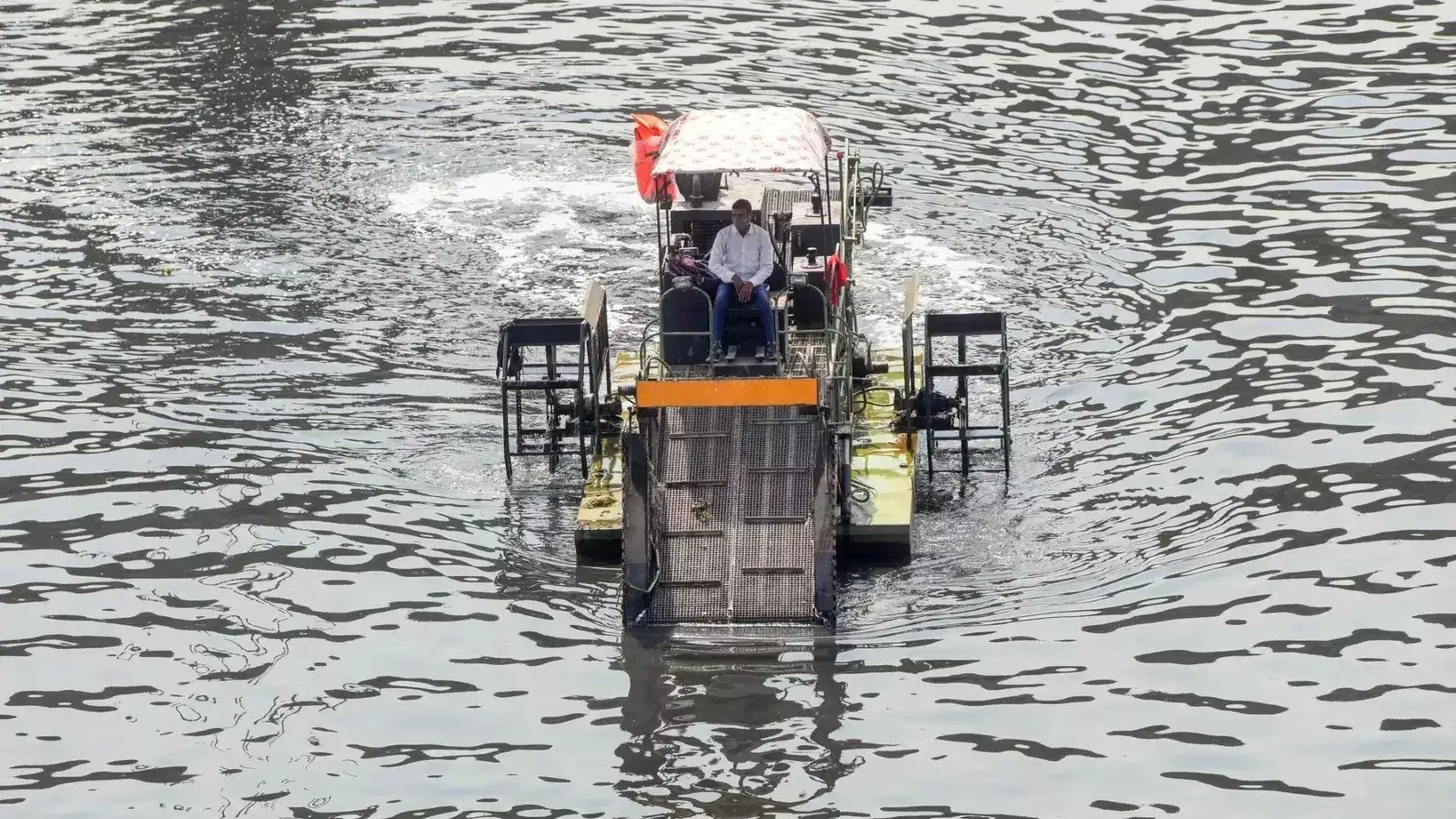
Delhi’s water supply network is under temporary strain after pollution spikes in the Yamuna forced a sharp cut in output at two of the city’s largest treatment facilities. The disruption, affecting multiple neighbourhoods across central, north and south Delhi, highlights the fragile link between river health and urban water security in a city increasingly vulnerable to climate stress and infrastructure pressure.
Officials overseeing the capital’s water system confirmed that production at the Wazirabad and Chandrawal water treatment plants has been scaled down by roughly 25–50 percent after raw water entering the Wazirabad pond showed elevated contamination levels. The measure, they said, was necessary to ensure that only treated, potable water enters the distribution network, even if it results in low-pressure supply or temporary shortages in downstream command areas.
The impact is being felt across densely populated and commercially significant zones, including parts of Civil Lines, Karol Bagh, Patel Nagar, Defence Colony, Greater Kailash and NDMC-managed districts. Peripheral residential clusters in Burari, Jahangirpuri and Model Town are also reporting intermittent supply, underscoring how disruptions at a single river intake point can cascade across the wider metropolitan grid.
A senior water utility official said the curtailment is directly linked to intensified river-cleaning operations upstream, which have disturbed settled pollutants and temporarily degraded intake quality. “Maintaining drinking water standards is non-negotiable,” the official said, adding that stabilisation will depend on how quickly raw water conditions normalise as interception and dredging work progresses.
Urban planners say the episode exposes structural vulnerabilities in Delhi’s water sourcing model, which remains heavily dependent on a single, ecologically stressed river. With climate variability increasing both pollution concentration during low-flow periods and runoff surges after rainfall, treatment plants are likely to face more frequent operational disruptions unless upstream pollution loads are systematically reduced.
To address this, the government has fast-tracked decentralised wastewater interception projects designed to prevent untreated sewage from entering the Yamuna. One such initiative is a new sewage treatment facility at Zindpur, aimed at capturing effluent from a cluster of colonies and villages in north Delhi before it reaches the river. The project includes pumping infrastructure and a 15 million-gallon-per-day treatment capacity, expected to serve more than 4 lakh residents across expanding peri-urban zones. Infrastructure economists note that such decentralised assets are critical for climate-resilient cities, particularly in rapidly urbanising corridors where sewer networks lag behind real estate growth. “Localised treatment reduces both pollution and long-distance pumping costs,” said an environmental infrastructure analyst. “It also shields core water plants from sudden contamination shocks.”
In the interim, tanker deployments have been stepped up in the most affected pockets, though officials caution that logistical constraints limit how far emergency supply can substitute pipeline distribution. Residents have been urged to use water judiciously until normal production resumes. The Yamuna cleanup drive reflects a longer-term shift towards restoring river ecosystems as part of urban resilience planning. For Delhi, the current supply disruption serves as a reminder that sustainable water security will depend not only on treatment capacity, but on sustained investment in upstream sanitation, decentralised infrastructure and coordinated basin management.
Delhi Yamuna Cleanup Disrupts City Water Supply