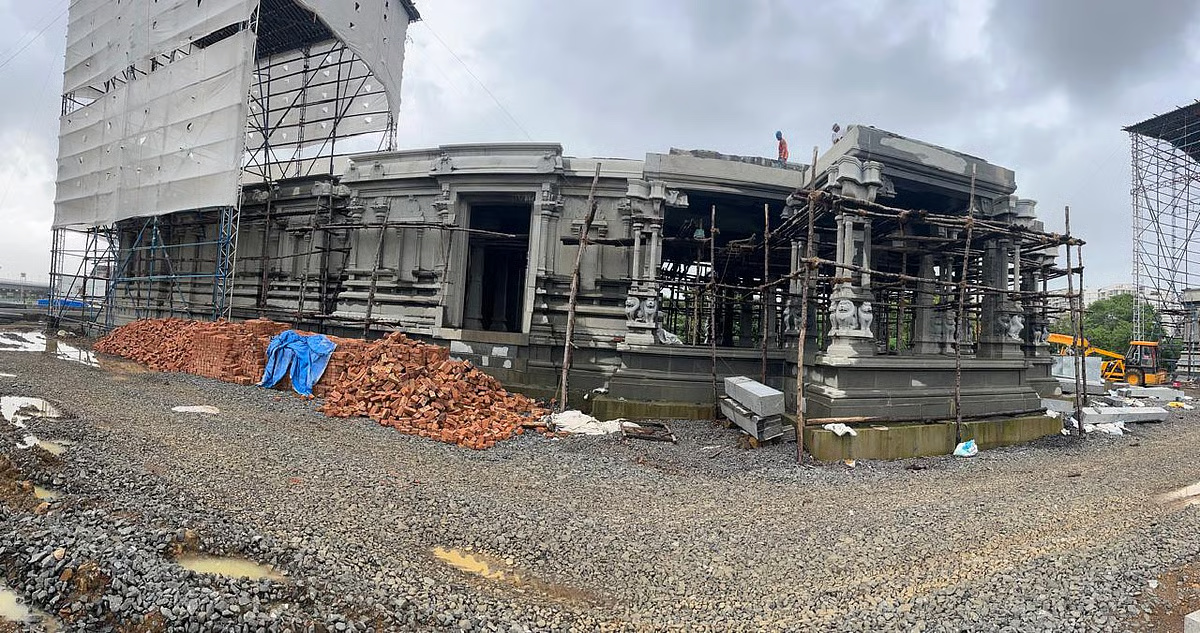
A strategically located land parcel in Navi Mumbai has been cleared for public religious use following a state cabinet decision that signals how urban land policy is being shaped around social infrastructure alongside major transport investments. A 3.6-acre plot in Ulwe, close to the upcoming international airport and the Mumbai Trans Harbour Link, will be transferred to a large public religious trust at a nominal rate, with multiple statutory charges waived.
The decision is significant not only for its concessional pricing but also for its location within one of the Mumbai Metropolitan Region’s fastest-developing urban corridors. Ulwe has emerged as a focal point for infrastructure-led growth, with airport connectivity, metro links and arterial roads rapidly transforming land values and development intensity. Allocating land here for a public faith institution highlights the state’s approach to balancing economic infrastructure with social and cultural facilities. According to officials involved in the approval process, the land was initially processed under standard market-linked norms before the trust sought parity with earlier allocations made to similar institutions. The cabinet subsequently endorsed a token pricing model, citing established precedents and the non-commercial character of the organisation. The trust will retain full responsibility for construction, maintenance and long-term management, ensuring no recurring fiscal burden on the state or local authorities.
Urban planners note that large religious complexes increasingly function as multi-layered civic spaces, generating steady footfall that supports small businesses, transport services and local employment. In peripheral growth nodes such as Ulwe, such developments can anchor community activity while complementing airport-driven commercial expansion. However, planners also stress the importance of integrating these projects carefully into the surrounding urban fabric to avoid congestion and ecological stress. Environmental safeguards form a critical part of the project’s approval framework. Officials confirmed that the design incorporates flood-resilience measures, including an elevated plinth, and maintains mandatory buffers around nearby mangrove ecosystems. Permanent structures will be restricted to approved zones, aligning the project with coastal regulation and climate-adaptation norms increasingly shaping development decisions across the region.
The proposed temple complex will draw architectural inspiration from southern Indian traditions, with stone construction and open mandapams intended to reduce long-term maintenance and energy demand. Experts point out that such design choices, when paired with efficient water management and natural ventilation, can support lower operational emissions over the asset’s lifecycle. As Navi Mumbai prepares for a sharp rise in population, tourism and transit flows following the airport’s commissioning, the allocation reflects a broader planning challenge: ensuring that social, cultural and environmental considerations keep pace with hard infrastructure. How effectively this balance is maintained will influence the region’s liveability as much as its economic momentum.
Navi Mumbai Approves Concessional Ulwe Plot For Major Temple