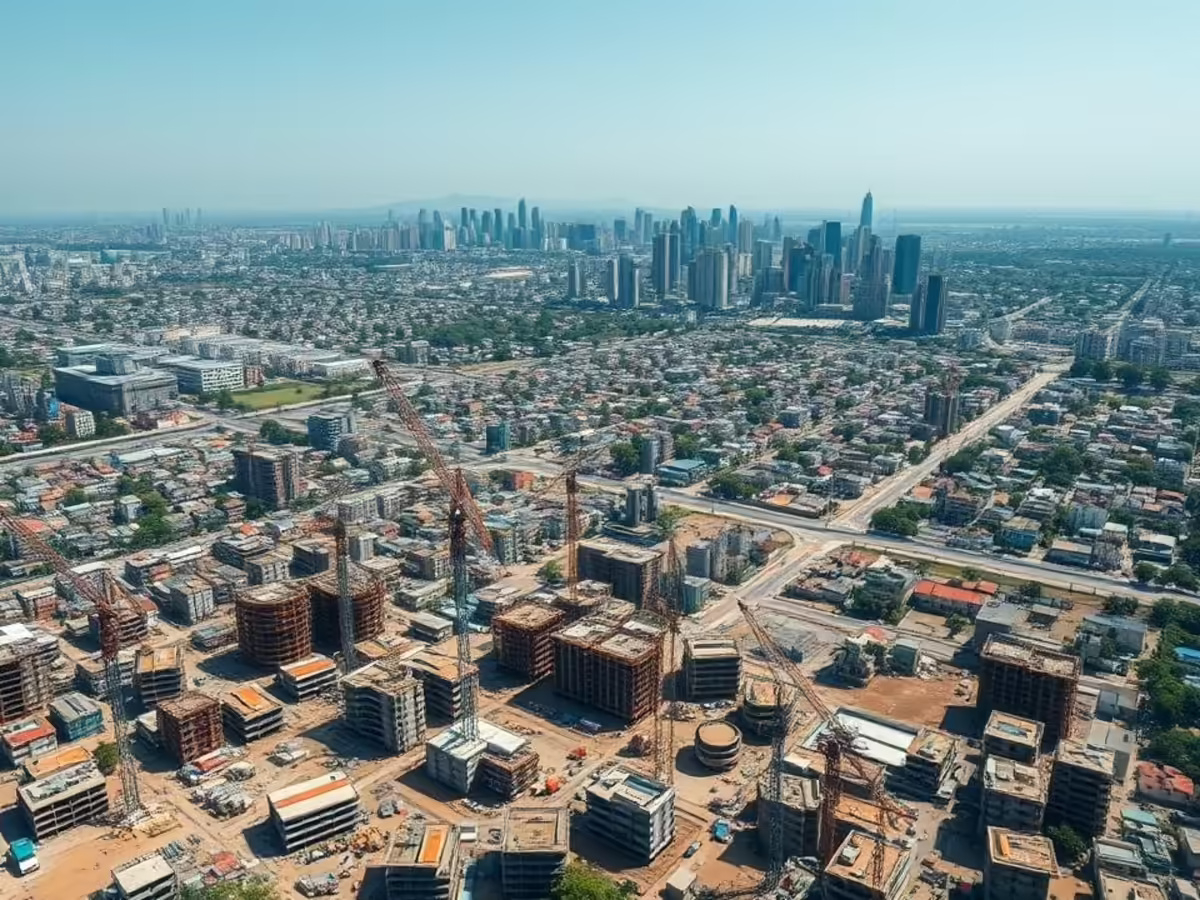
The Mumbai Metropolitan Region has emerged as India’s most active land acquisition market in 2025, underscoring its continued dominance in real estate-led urban expansion. New research tracking transactions across major cities shows the region recording the highest number of land deals during the year, alongside a sharp rise in the total area transacted nationwide. The trend highlights how land banking has become central to future housing supply, infrastructure readiness, and long-term urban growth planning.
Across India, more than 120 land transactions were completed in 2025, covering well over 3,700 acres. While the overall number of deals marginally declined compared to the previous year, the land area involved increased substantially, indicating a shift towards larger, more consolidated parcels. Urban analysts note that this reflects growing interest in integrated townships, industrial clusters, and mixed-use developments that require scale and long-term planning certainty. Within this national picture, the Mumbai region accounted for the largest share of activity, closing over 30 transactions spanning more than 500 acres. This placed it ahead of other major markets in both deal count and strategic significance. Industry observers say Mumbai land acquisition has been driven by a combination of infrastructure expansion, improved regional connectivity, and sustained housing demand across price segments.
Residential development remained the primary driver of land buying in 2025. A majority of the deals nationwide were intended for housing projects, including plotted developments, large townships, and high-end residential formats. Urban planners point out that such projects increasingly integrate social infrastructure, open spaces, and transit access, responding to post-pandemic preferences for self-sufficient neighbourhoods. Beyond housing, mixed-use developments accounted for a sizeable share of land area, reflecting a growing preference for walk-to-work and live-work-play models. Industrial and logistics parks also featured prominently, supported by e-commerce growth, port-linked manufacturing, and regional freight corridors. Smaller but notable allocations were made for commercial offices, data centres, warehousing, and organised retail, signalling diversification in development intent.
Among other cities, Bengaluru and Pune followed Mumbai in terms of land acquisition scale, while the National Capital Region recorded moderate activity spread across multiple sub-markets. Southern cities such as Hyderabad and Chennai saw fewer transactions, largely focused on residential and industrial uses. No major land transactions were reported in eastern India’s largest metro during the year, reflecting uneven regional momentum. Experts suggest that Mumbai land acquisition patterns reveal more than real estate sentiment alone. Large land purchases often precede investments in transport, utilities, and social infrastructure, shaping how cities grow over the next decade. However, they also raise critical questions around environmental impact, water security, and inclusive access to housing.
As land values rise and parcels become scarcer, policymakers and developers alike face pressure to ensure that new developments support climate resilience, efficient mobility, and equitable urban outcomes. How these land banks are eventually built out will determine whether India’s fastest-growing regions can balance economic ambition with sustainable, people-first citymaking.
Mumbai Region Records Highest Land Deal Activity Across India In 2025