


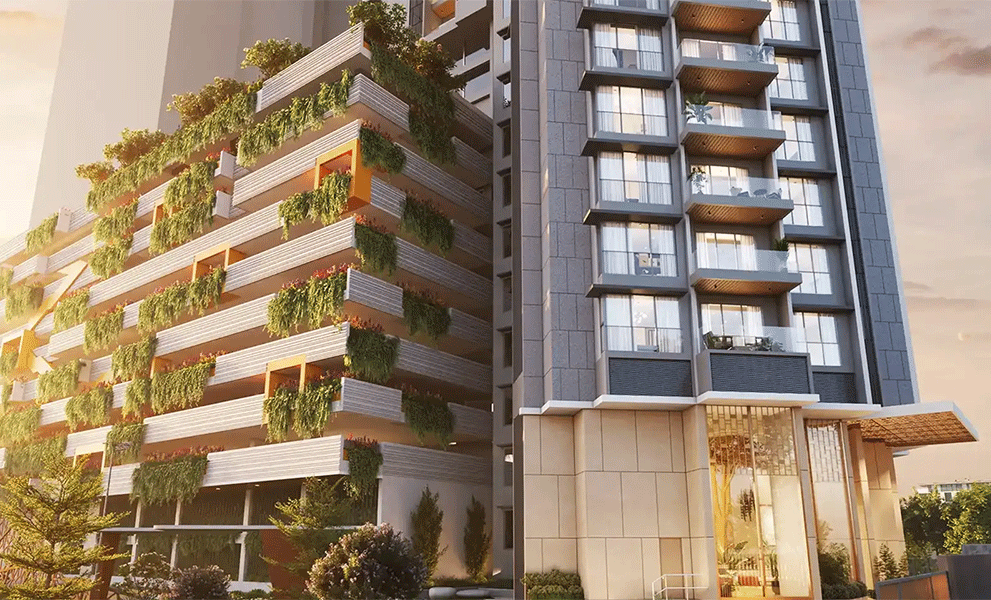
Mumbai’s Matunga neighbourhood, long associated with tree-lined streets and stable residential communities, is entering a new phase of urban change as premium redevelopment projects begin to reshape its housing landscape. The shift reflects a broader pattern across central Mumbai, where limited vacant land and ageing housing stock are pushing developers towards redevelopment-led growth rather than greenfield expansion.
The Five Gardens precinct in Matunga East has emerged as a focal point of this transition. Industry sources confirm that a large-format luxury residential redevelopment is underway on a land parcel of roughly 1.4 acres, with an estimated gross development value exceeding Rs 900 crore. The project is being undertaken through a joint development structure between two established real estate firms, a model increasingly favoured in dense urban locations to balance risk, capital deployment and execution capability. Urban planners say Matunga’s appeal lies in its rare combination of strong social infrastructure and strategic connectivity. The locality sits between South Mumbai and the central business districts, offering relatively quick access to employment hubs such as Bandra Kurla Complex, Lower Parel and Worli. At the same time, it retains a predominantly residential character, supported by legacy educational institutions, healthcare facilities and community spaces that have anchored the area for decades. The new redevelopment is expected to introduce larger, three-bedroom homes aimed at end-users rather than speculative investors. According to market analysts, this reflects steady demand from upwardly mobile households seeking modern housing within established neighbourhoods, rather than relocating to distant suburbs. Amenities are being planned to match contemporary lifestyle expectations, while architectural guidelines are reportedly being shaped to blend with the area’s traditional urban form.
Redevelopment in Matunga also carries a significant social dimension. Projects in this micro-market typically involve long-standing tenants transitioning from rent-controlled housing to ownership-based rehabilitation. A senior industry official involved in the project noted that managing tenant consent, rehousing timelines and trust-building is as critical as construction itself. Successful redevelopment, they said, depends on balancing commercial viability with community continuity. From a market perspective, central Mumbai redevelopment is becoming a key source of new residential supply. With greenfield land largely exhausted, neighbourhoods such as Matunga, Dadar and Wadala are seeing renewed developer interest. Property consultants observe that these projects often command premium pricing due to location advantages, but also face higher regulatory, design and execution complexities. Looking ahead, developers active in Matunga are assessing selective expansion into adjoining pockets, including Wadala, where infrastructure upgrades and transit-oriented development are expected to reshape urban densities. Urban policy experts caution that as redevelopment accelerates, attention must be paid to civic capacity, open spaces and climate resilience, particularly in older neighbourhoods not designed for higher population loads.
Matunga’s evolving skyline thus reflects a wider recalibration in Mumbai’s housing strategy one that prioritises renewal, liveability and long-term urban sustainability over outward sprawl.
Also Read: Mumbai BKC Attracts Global Corporate Office Demand
Matunga Five Gardens Attracts Luxury Housing Investment
