


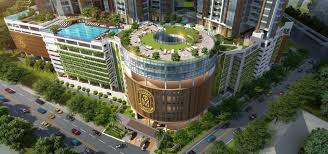
Mumbai’s residential landscape is witnessing a quieter but consequential shift, as developers increasingly prioritise design quality, execution discipline and long-term liveability over rapid scale alone. Piramal Realty, part of a diversified Indian conglomerate, has emerged as a prominent example of this approach, positioning design-led development as a response to the city’s density, climate risks and evolving buyer expectations.
Over the past decade, the company has delivered more than 4,200 homes across multiple locations in Mumbai, focusing on large-format residential projects rather than fragmented, standalone towers. Urban planners note that such scale allows for better integration of open spaces, circulation, and community infrastructure elements often compromised in hyper-dense developments. In a city where land scarcity drives vertical growth, design decisions increasingly shape how residents experience light, ventilation and shared spaces. Industry experts say Mumbai’s premium housing market has matured significantly since the pandemic. Buyers now place greater emphasis on build quality, timelines and neighbourhood planning, rather than just location. This has pushed developers to adopt more rigorous planning processes and tighter execution controls. Senior real estate analysts point out that trust has become a critical currency, particularly in markets where delayed delivery has historically undermined buyer confidence. Projects in central Mumbai illustrate how design-led thinking intersects with urban regeneration. Large redevelopment-led schemes must navigate legacy infrastructure, traffic congestion and environmental sensitivities, especially in coastal and low-lying areas. Urban designers argue that thoughtful master planning such as optimised building orientation, permeable landscapes and energy-efficient systems can mitigate heat stress and flooding risks while improving everyday comfort for residents.
From a sustainability perspective, Mumbai’s future housing stock will play a significant role in determining the city’s carbon footprint. Residential buildings account for a growing share of urban energy consumption, making material choices, passive cooling strategies and operational efficiency increasingly important. Experts stress that while individual projects may not solve systemic challenges, consistent adoption of climate-responsive design can cumulatively shift urban outcomes. The company’s portfolio spans both residential and mixed-use developments, reflecting the blurring boundaries between living, working and leisure in post-pandemic cities. Urban economists observe that mixed-use environments, when well planned, reduce commute distances and support more inclusive, people-first neighbourhoods an important consideration for a city struggling with congestion and uneven access to amenities. Looking ahead, the real test for design-led developers in Mumbai will be scalability without dilution.
As demand remains strong in well-located micro-markets, maintaining execution quality while responding to regulatory complexity and climate pressures will be crucial. For the city, such projects offer a glimpse of how private development can contribute to a more resilient, liveable skyline one where growth is measured not just in square feet, but in how well it serves people and place.
Also Read: Sunteck Realty Strengthens Andheri East Development Pipeline
Piramal Realty Shapes Mumbai Through Urban Design
