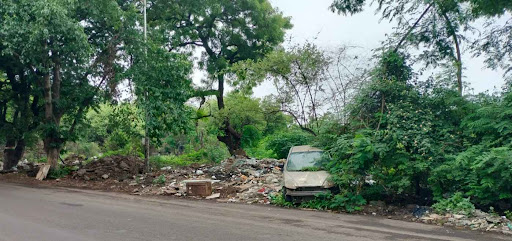
Pune has taken a decisive step towards reshaping its urban ecology after the municipal corporation secured a strategically located parcel of central government land for the long-delayed Mula-Mutha riverfront development. The transfer of around 10 acres along the Sangamwadi stretch marks a critical breakthrough for a project that has remained stalled for years due to legal, environmental and administrative hurdles. The land, positioned between a religious landmark and a key river confluence, lies at the heart of the city’s growth corridor. Urban planners view it as essential for ensuring continuity along the riverbanks, allowing integrated flood management, public access and ecological restoration. Municipal authorities have approved a compensation payment to the central government following a formal valuation, clearing the final procedural barrier to possession.
For Pune, the Mula-Mutha riverfront development is more than a beautification exercise. The twin rivers cut through dense residential, commercial and industrial zones, carrying untreated sewage, industrial discharge and monsoon floodwaters. Over time, this has turned a natural asset into a civic liability. Urban experts say the newly acquired land allows the city to address river health and public safety together, rather than through fragmented interventions. Officials involved in the project say the broader plan focuses on restoring natural flow patterns, reinforcing embankments and reducing pollution loads before introducing public spaces. Dedicated sewage interception and treatment systems are expected to prevent waste from entering the river, while flood lines will be redefined to reduce damage during extreme rainfall events. Such measures are increasingly important as climate variability intensifies across urban India.
The project has also drawn national attention. A central technical team with experience in large-scale riverfront regeneration has reviewed Pune’s proposal, examining hydrology, urban form and land use patterns. Their assessment, according to municipal sources, has helped refine the design to suit Pune’s distinct geography rather than replicate models from other cities without adaptation. Beyond environmental outcomes, the Mula-Mutha riverfront development carries significant economic and social implications. Continuous public promenades, cycling tracks and green zones are expected to improve liveability, raise surrounding property values and attract long-term investment. However, officials emphasise that commercial development will be limited, with priority given to open spaces, cultural facilities and inclusive access.
Consultations with residents, civic groups and urban professionals are planned before final layouts are approved. This process, planners argue, is critical to balancing recreation, conservation and mobility needs in a city already facing infrastructure stress. If executed as intended, the Mula-Mutha riverfront development could redefine Pune’s relationship with its rivers transforming them from neglected backyards into resilient urban commons. The coming months will test whether governance, funding and environmental safeguards can move in step as work begins on one of the city’s most ambitious urban renewal initiatives.