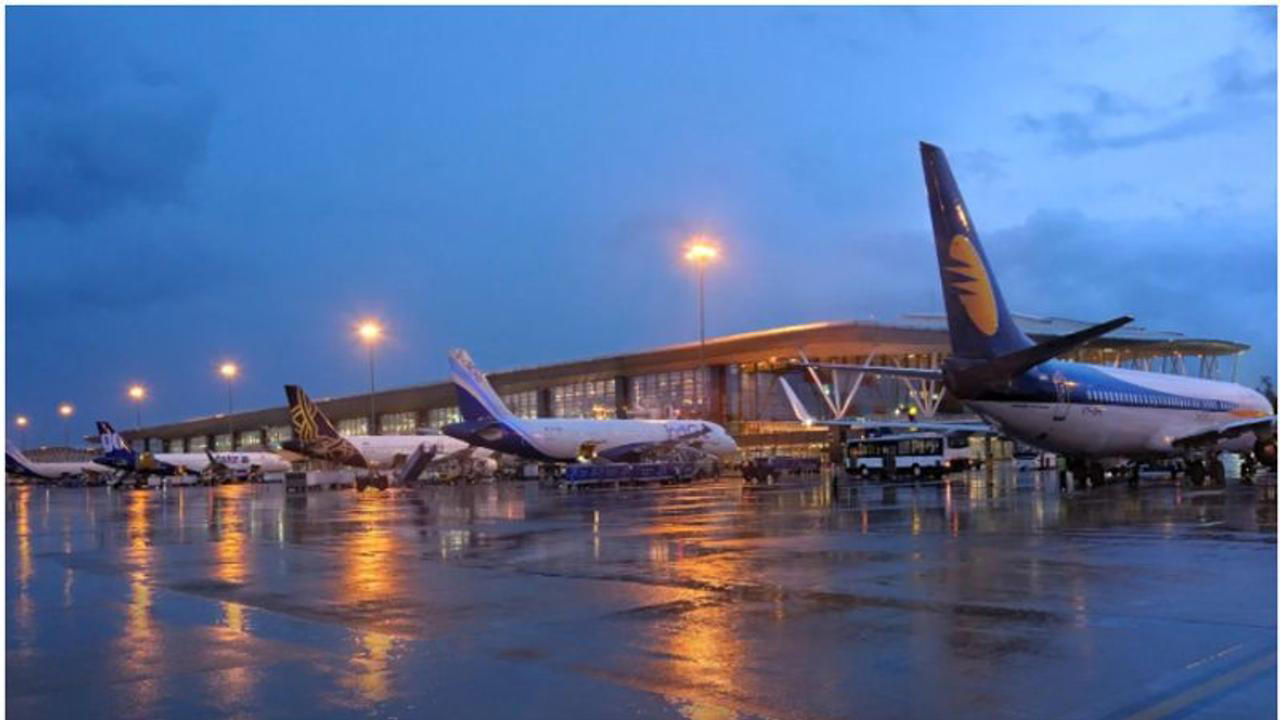
Bengaluru Airport Adds Community Focused Transit Zone
Kempegowda International Airport in Bengaluru has introduced a new social lounge concept in Terminal 2, signalling a shift in how large transport hubs are being designed for younger travellers and evolving urban lifestyles. Positioned adjacent to the airport’s existing international lounge infrastructure, the space is intended to function not merely as a waiting area but as a social and cultural node within one of India’s fastest-growing aviation gateways. The development matters beyond airport retail or passenger comfort. Urban planners increasingly view airports as extensions of metropolitan public space, influencing how cities are perceived and how people interact with infrastructure.
Bengaluru, a city shaped by technology-driven demographics and a young workforce, provides fertile ground for experimenting with such hybrid transit environments. The new Bengaluru airport lounge has been configured as a collection of flexible zones rather than a single enclosed facility. Food and beverage offerings are distributed across café, diner and informal seating formats, while a central amphitheatre-style area is designed to host screenings, pop-ups and informal gatherings. Industry observers note that this approach mirrors co-working and mixed-use developments seen in urban centres, reflecting how travel time is increasingly treated as usable social or productive time. Officials associated with airport operations indicate that the naming of the lounge emerged through an open national participation exercise, aimed at incorporating youth perspectives into the final identity. This participatory approach aligns with broader trends in people-first urban design, where public infrastructure increasingly draws on community input rather than top-down branding.
From a built environment perspective, the lounge integrates curved seating, adaptable layouts and lighting designed to support varied uses, from solitary work to group interaction. Design professionals say such spatial flexibility is becoming critical in high-footfall infrastructure, where diverse passenger needs must be met within limited real estate footprints. The use of durable materials and energy-efficient lighting also reflects the growing emphasis on sustainability within airport interiors, an area often criticised for high carbon intensity. Technology plays a supporting role rather than a dominant one. Artificial intelligence-driven systems have reportedly been incorporated to improve wayfinding and personalise passenger experiences, a move consistent with smart infrastructure principles being adopted across major Indian airports.
The introduction of the Bengaluru airport lounge comes at a time when Indian aviation infrastructure is under pressure to scale capacity while remaining inclusive and environmentally responsible. As airports expand into lifestyle destinations, experts caution that accessibility and affordability must remain central, ensuring such spaces do not become exclusionary or purely commercial. Looking ahead, urban analysts suggest that the success of such lounges will be measured not only by footfall or revenue, but by whether they meaningfully improve the passenger experience while aligning with wider goals of sustainable, people-centric urban development. For Bengaluru’s airport, the experiment offers insights into how future transit spaces across Indian cities may evolve.