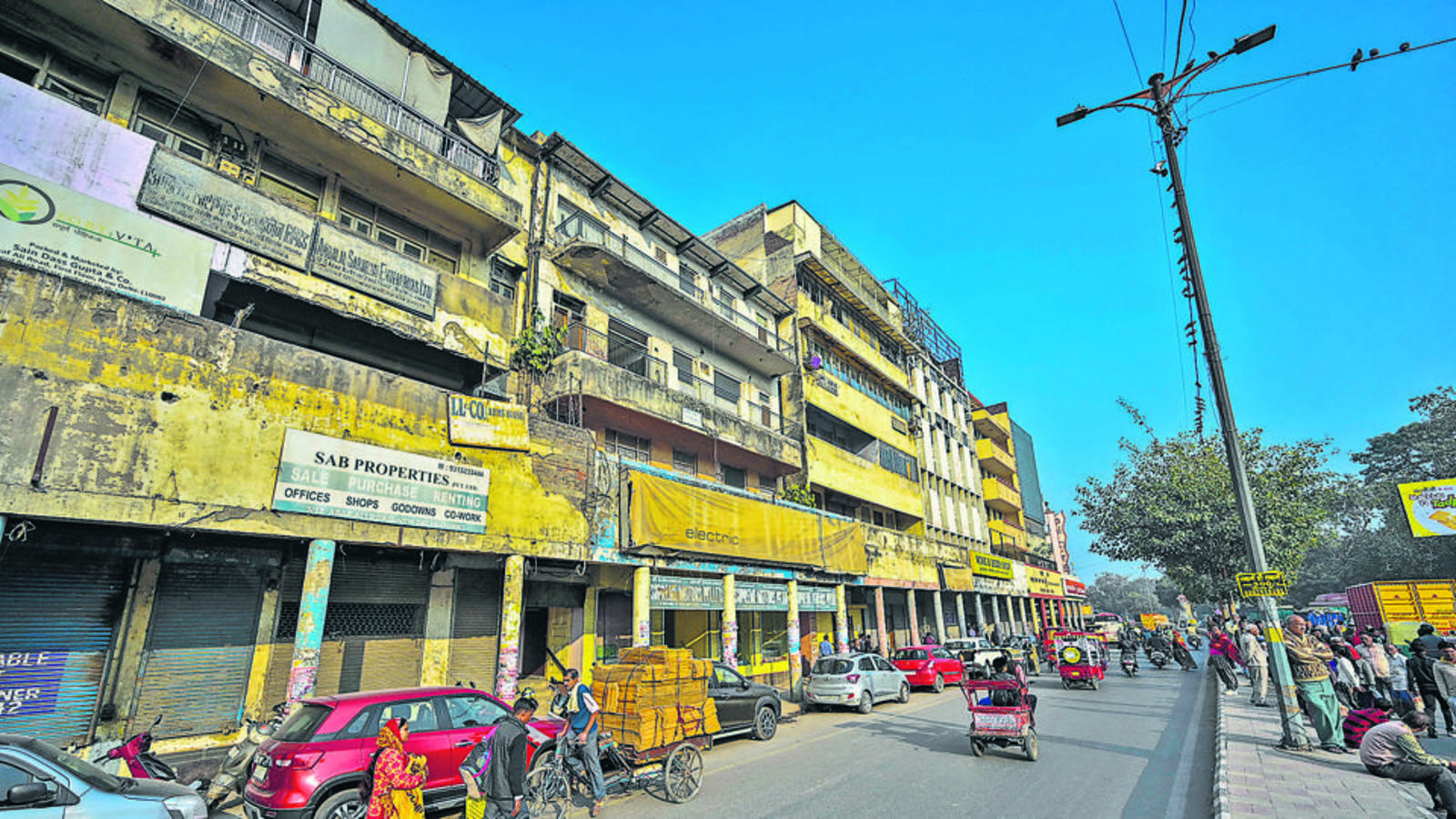
Delhi’s Public Works Department has approved a ₹4.6 crore redevelopment of the Delhi Gate junction on Asaf Ali Road, marking a shift in how the capital is rethinking traffic intersections as civic spaces rather than purely vehicular conduits. Located on a high-density corridor leading towards the Red Fort, the junction handles heavy daily traffic and footfall, making it a strategic site for a people-first urban redesign.
Officials familiar with the project said the plan aims to introduce a structured landscaped island at the centre of the intersection, creating a multi-use public zone without compromising traffic flow. The proposed design includes shaded seating, paved pedestrian paths, recreational corners for children, a skating area and limited parking, alongside water features intended to improve the microclimate and visual character of the corridor. Unlike earlier junction upgrades that focused almost exclusively on easing congestion through road widening or signal optimisation, this initiative blends mobility management with public realm development. “The idea is to improve everyday usability of the junction for pedestrians while keeping vehicle movement efficient,” a senior official involved in the project said. “This is about reclaiming underutilised road space for community use without disrupting traffic capacity.”
The Delhi Gate junction sits in one of the capital’s oldest and most layered urban precincts, surrounded by heritage structures, wholesale markets and institutional buildings. Urban planners say the redesign could help soften the harshness of a traffic-dominated landscape and provide much-needed open space in a dense inner-city zone that lacks accessible recreational infrastructure. The contractor appointed for the project will be responsible for securing regulatory approvals, conducting soil and site condition assessments, preparing as-built drawings and carrying out pre-commissioning tests for all installed systems. Warranty coverage for key equipment and materials has also been built into the contract framework. A phased construction schedule with defined milestones will be submitted to the Public Works Department for monitoring, reflecting an attempt to strengthen delivery accountability.
From a climate resilience perspective, experts say the landscaped island could play a modest but meaningful role in reducing local heat stress and improving rainwater absorption, provided native plant species and permeable surfaces are used. “Even small green interventions can improve thermal comfort and reduce runoff in hardscaped areas, especially in older parts of the city,” said an urban design consultant. The project also carries implications for nearby property values and commercial activity. Improved streetscape quality and pedestrian access are often linked to stronger retail performance and higher real estate attractiveness in heritage-adjacent districts. However, industry observers caution that construction-phase traffic management will be critical, given the junction’s strategic importance and already high congestion levels.
Officials said maintaining uninterrupted access for emergency vehicles, public transport and daily commuters during the build period will be a core requirement. Temporary diversions and work-hour restrictions are expected to be part of the execution plan to minimise disruption. The Delhi Gate junction revamp signals a broader evolution in the city’s infrastructure thinking one that recognises streets as shared public assets rather than solely traffic corridors. If implemented with design sensitivity and operational discipline, the project could offer a template for how other congested intersections in Delhi might be retrofitted to support safer mobility, community life and more liveable urban environments.
Delhi Invests in Asaf Ali Road Upgrade