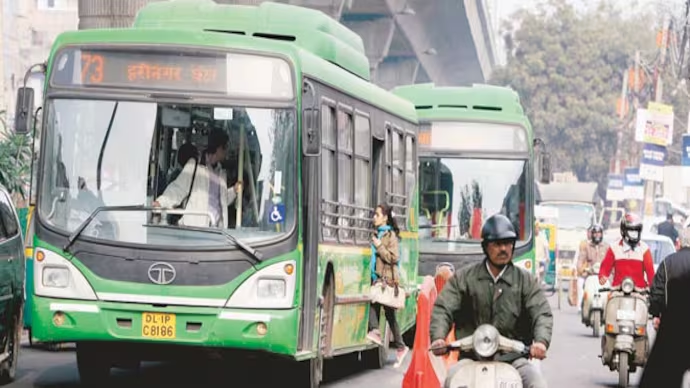
Delhi has begun a structural reset of its bus network in West Delhi, aligning route design with a rapidly changing fleet composition as ageing compressed natural gas buses are retired. The reconfiguration, which comes into force from 21 January, signals a broader shift in how the capital is preparing its public transport system for a low-emissions future while managing growing commuter demand and service reliability.
The initiative follows a similar exercise carried out in East Delhi and is part of a citywide plan to retire 15-year-old low-floor buses in compliance with statutory limits. Officials involved in the process said the latest phase is aimed at preventing service gaps as legacy vehicles leave the fleet, while also adapting routes to accommodate a new generation of smaller electric buses. Under the new framework, no long-distance 12-metre bus corridor has been eliminated. Instead, routes have been reorganised using ridership data, travel patterns and corridor importance to maintain coverage and frequency. Transport planners involved in the exercise said additional buses have been introduced during peak hours to limit waiting times, particularly on high-density commuter stretches connecting residential zones to employment and interchange hubs.
A notable feature of the overhaul is the integration of nine-metre electric buses, branded under the city’s clean mobility programme. These shorter vehicles are designed to improve access on narrower or lower-demand roads, potentially strengthening last-mile connectivity in neighbourhoods that previously relied on informal or fragmented services. Urban mobility experts view the move as a pragmatic step in balancing environmental commitments with operational realities. “Phasing out older buses without route restructuring would have strained capacity. This approach cushions that impact while accelerating the transition to electric mobility,” said a senior transport policy analyst. The emphasis on smaller electric vehicles is also seen as a response to space constraints and uneven passenger loads across different parts of the city.
The Delhi bus route rationalisation is unfolding against the backdrop of one of India’s fastest electric bus rollouts. Since the current administration took office, more than 3,600 electric buses have entered service, reshaping fleet composition and maintenance economics. Officials say the target is to exceed 5,000 electric buses by March 2026 and cross 7,000 by November the same year. For commuters, the immediate impact will be felt in revised route numbers, altered terminal points and improved frequency during rush hours. Authorities have indicated that route maps and updated schedules will be made available to minimise confusion during the transition.
Beyond operational efficiency, the rationalisation has broader urban implications. Cleaner buses reduce local air pollution, while better-aligned routes can support denser, transit-oriented neighbourhoods. Real estate consultants note that improved bus reliability often lifts residential and commercial attractiveness in under-served micro-markets, particularly in peripheral parts of West Delhi.
The next phase of the Delhi bus route rationalisation is slated for the North Zone, signalling a gradual citywide recalibration of surface transport. As older vehicles are withdrawn and electric capacity scales up, the success of this effort will hinge on how seamlessly route planning, fleet procurement and passenger communication are coordinated. For a city grappling with air quality challenges and mobility inequities, the coming months will test whether transport reform can deliver both environmental dividends and everyday commuter gains.
Delhi Bus Route Rationalisation Reshapes West Delhi