


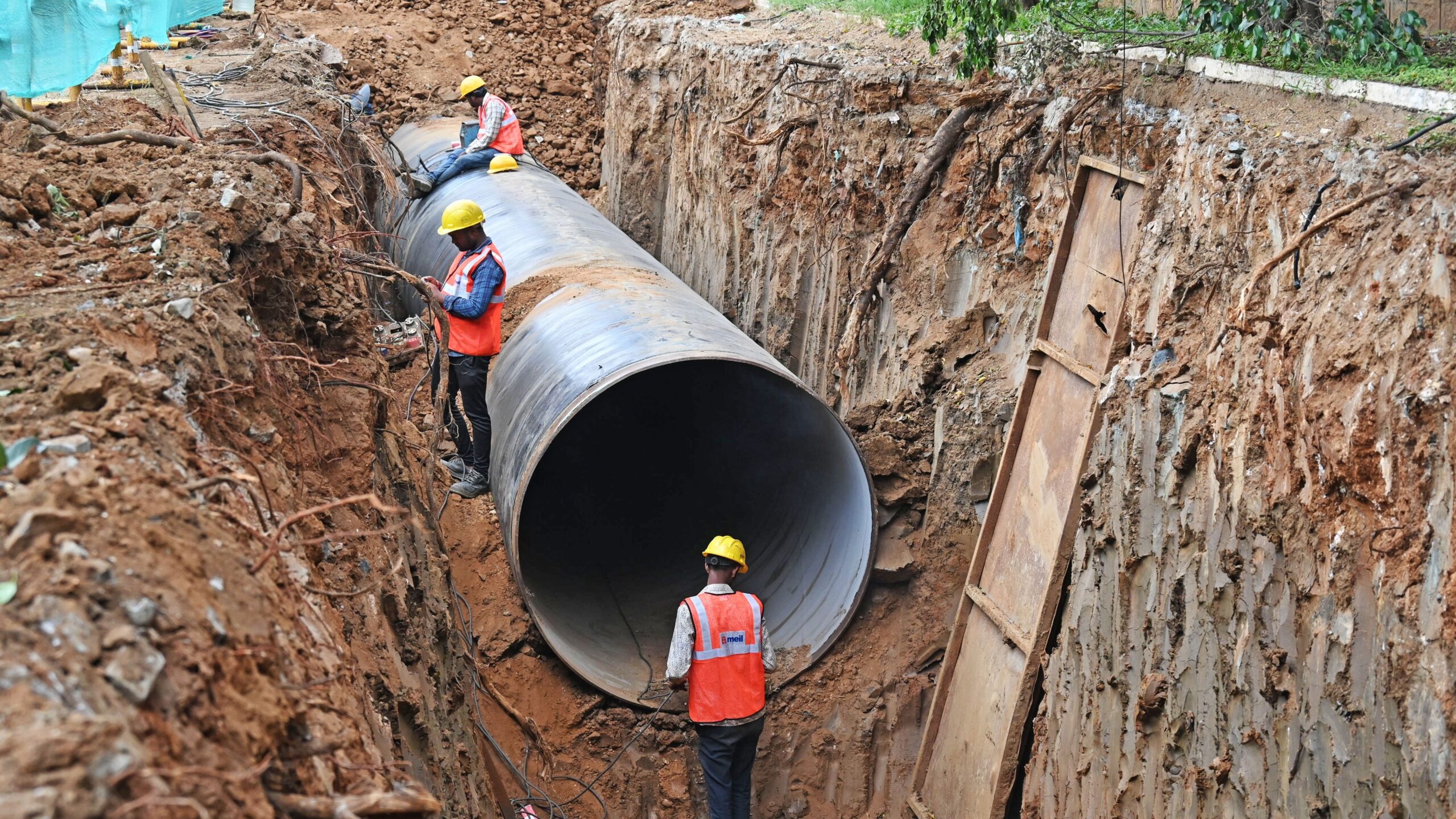
A prolonged water pipeline replacement on one of central Bengaluru’s busiest corridors has turned everyday commuting into a safety challenge, highlighting deeper concerns about how infrastructure upgrades are executed in dense urban environments. On Double Road, near the Shanthinagar transport hub, damaged pavements and construction debris have narrowed pedestrian space, pushing walkers directly into fast-moving traffic and raising questions about civic coordination and accountability.
The project, undertaken by the city’s water utility to replace ageing underground mains, was initially projected as a short-term intervention. Instead, the stretch near the bus depot service road has remained partially excavated for months. Broken footpaths, uneven surfaces, and loose rubble have left no continuous walking corridor, forcing elderly residents, office-goers, and transit users to navigate the carriageway itself. Urban mobility experts note that such disruptions disproportionately affect pedestrians, who form a significant share of daily commuters in central business districts. Double Road connects residential pockets, government offices, and a major bus interchange, making walkability critical to last-mile connectivity. When footpaths are compromised, the burden shifts to road users and traffic police, increasing the risk of collisions and congestion during peak hours.
Local transport workers and enforcement officials have privately acknowledged that the situation becomes especially hazardous near bends leading into the bus depot service road, where large vehicles turn in at speed. While traffic signals in the area moderate vehicle flow to some extent, they do little to protect pedestrians who have no alternative but to share road space with buses, cars, and two-wheelers. From an urban governance perspective, planners say the issue is not the infrastructure upgrade itself but the absence of temporary pedestrian management. Best practices in city redevelopment typically require barricaded walkways, phased restoration of pavements, and daily debris clearance—measures that reduce risk without slowing essential utility work. Their absence points to a gap between project design and on-ground execution.
The economic implications are also notable. Disrupted walkability affects small businesses along the corridor, deters foot traffic, and adds indirect costs through delays, minor accidents, and enforcement strain. For a city positioning itself as a hub for sustainable growth and people-first infrastructure, such lapses undermine broader policy goals around inclusive and climate-resilient urban development. Following mounting local complaints, the area’s elected representative has indicated that the matter will be reviewed with implementing agencies to expedite completion and restore pedestrian access. Urban policy observers argue that beyond short-term fixes, Bengaluru needs enforceable standards for utility works on arterial roads—standards that prioritise safety, continuity of movement, and public trust as cities modernise ageing infrastructure.
Also Read : Bengaluru double decker buses reshape city tourism
Bengaluru Pipeline Project Exposes Walkability Gaps
