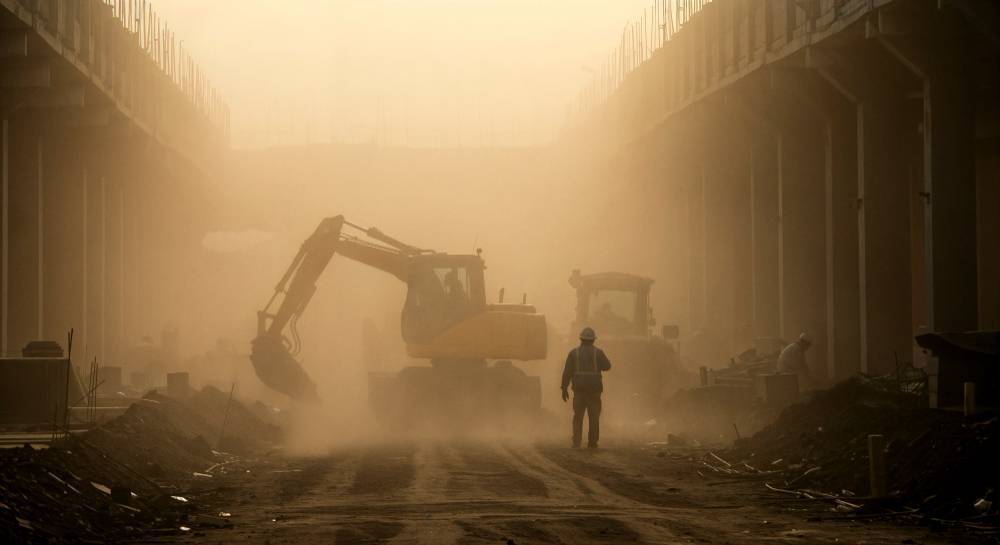
Mumbai’s rapid construction-led expansion has come under renewed judicial scrutiny after the civic administration disclosed significant gaps in air quality monitoring across active building sites. In a status submission to the Bombay High Court, the city administration acknowledged that nearly one-third of ongoing construction projects are yet to install mandatory sensor-based air quality monitors, raising concerns over how effectively dust and emissions are being tracked in one of India’s most pollution-stressed urban regions.
The disclosure emerged during hearings on a court-initiated public interest matter examining deteriorating air quality across Mumbai and its metropolitan surroundings. Civic officials informed the court that out of nearly 2,000 active construction sites, more than 660 remain non-compliant with monitoring requirements, despite clear directions aimed at reducing particulate pollution from construction activity. Urban planners note that construction dust has become one of Mumbai’s most persistent pollution sources, particularly as infrastructure projects, redevelopment, and high-density housing proliferate simultaneously. Sensor-based monitoring was introduced to bring transparency and accountability, allowing both regulators and citizens to track site-level air quality in real time. These readings are meant to be publicly displayed at sites and digitally transmitted to civic dashboards for enforcement oversight.
The municipal body told the court that enforcement action has followed delays in compliance, including the issuance of show-cause and stop-work notices against hundreds of sites found violating pollution mitigation norms. These norms include covering construction material, installing metal barricades, deploying misting systems, washing vehicle tyres, and ensuring real-time air monitoring. Several notices, officials said, were later withdrawn after corrective steps were taken. Civic authorities also presented data suggesting marginal improvements in winter air quality trends over the past two years, arguing that intensified enforcement and operational controls have begun to show results. However, the court indicated scepticism, signalling that aggregate air quality averages may not fully reflect localised pollution spikes around construction clusters and transport corridors.
The judicial bench has repeatedly emphasised that compliance cannot remain selective, particularly in a city where construction directly intersects with dense residential neighbourhoods, schools, and healthcare facilities. Legal observers say the court’s intervention reflects growing concern over institutional capacity to regulate pollution amid aggressive urban growth. The matter also highlights tensions between development momentum and environmental governance. Major public infrastructure projects, including transport corridors and government facilities, have also faced scrutiny for lapses in mitigation measures, underscoring that compliance expectations apply equally to public and private works.
Looking ahead, experts argue that consistent monitoring, data transparency, and independent audits will be critical if Mumbai is to reconcile construction-led economic growth with public health and climate resilience goals. As the court continues to review compliance, the episode may shape stricter enforcement frameworks that influence how India’s financial capital builds its future—without compromising the air its residents breathe.
Mumbai Construction Boom Faces Air Monitoring Gaps