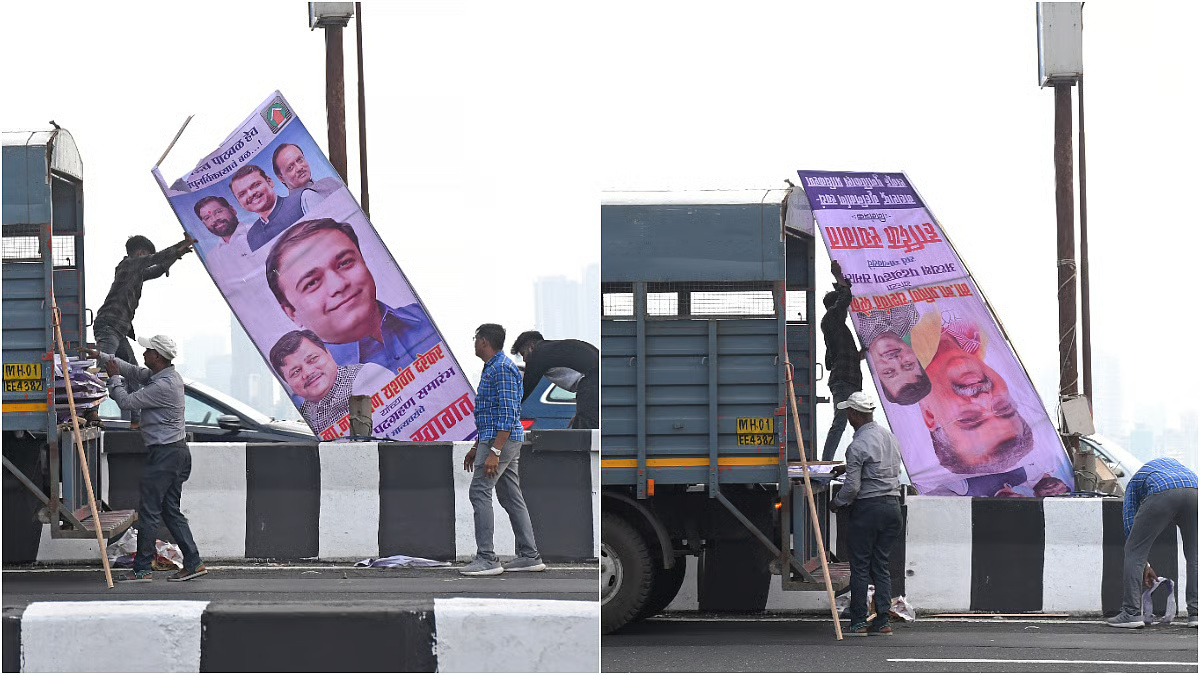
Mumbai’s streetscape has rapidly slipped back into disorder days after the conclusion of the civic elections, with footpaths and public spaces once again overtaken by illegal hawkers, unauthorised hoardings, and celebratory activities. The reversal follows a brief period of unusually strict enforcement during the election process, when monitoring by election authorities compelled civic agencies to prioritise pedestrian access, safety, and visual order across the city.
During the weeks leading up to polling, municipal enforcement teams carried out near-daily drives to clear pavements, railway station precincts, and major junctions. Thousands of unauthorised banners were removed, and hawker-free zones were actively monitored. For many residents, the period offered a rare glimpse of what a pedestrian-first Mumbai could look like—walkable, accessible, and marginally safer. That window has now closed. Across busy transit nodes such as Dadar, Andheri, Kurla, and Colaba, pavements have again been reduced to narrow obstacle courses. Temporary stalls, plastic sheets, and parked carts have returned, forcing pedestrians onto carriageways already under traffic stress. Urban mobility experts warn that such conditions disproportionately affect senior citizens, women, children, and people with disabilities, undermining the city’s stated commitment to inclusive street design.
The situation has also raised safety concerns. In one eastern suburb, tensions linked to encroachment enforcement reportedly escalated into violence, highlighting how weak post-election regulation can quickly spill into law-and-order challenges. Civic observers note that inconsistent enforcement often emboldens illegal operators while leaving frontline municipal staff exposed. Beyond footpaths, Mumbai’s skyline has also seen a rapid resurgence of unauthorised flex banners. Following a brief post-clearance lull, congratulatory posters, oversized cut-outs, and year-round political greetings have reappeared across arterial roads and residential neighbourhoods. This comes despite tighter outdoor advertising rules introduced after a fatal hoarding collapse in 2024, and repeated judicial warnings stressing public safety and accountability.
Environmental implications are also surfacing. Victory processions accompanied by firecrackers have added to localised air and noise pollution at a time when the city is already entering a season of deteriorating air quality. Urban planners argue that such practices directly contradict public commitments to climate resilience and cleaner urban living. Residents’ groups across multiple wards have begun submitting written complaints to civic officials, citing selective enforcement and failure to act on clear violations. Legal experts associated with citizen forums point out that existing laws on public property defacement and encroachment provide sufficient authority, but inconsistent application erodes public trust and weakens deterrence.
The post-election retreat from enforcement underscores a structural challenge in Mumbai’s urban governance: discipline driven by temporary oversight rather than institutionalised policy. As the city prepares for major investments in streetscaping, public transport, and climate adaptation, the credibility of these efforts will depend on whether pedestrian rights and public safety are treated as permanent civic priorities, not seasonal obligations tied to election cycles.
Illegal Hoardings And Hawkers Reclaim Mumbai Streets After Elections