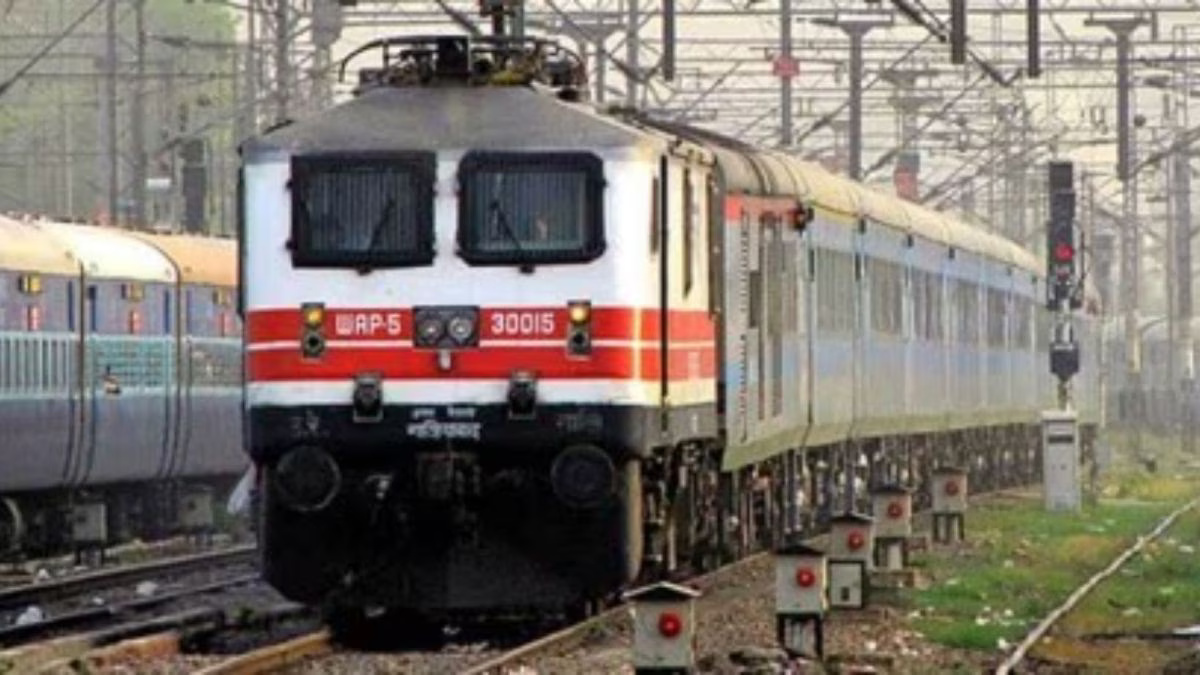
Mumbai’s overstretched suburban rail system is set to gain marginal but meaningful operational relief after the national railway authority cleared the relocation of four long-distance trains to Lokmanya Tilak Terminus (LTT). The decision affects services currently terminating at the city-end hub and is expected to release scarce track capacity on the saturated Kurla–CSMT approach, one of the most critical choke points in the metropolitan rail network.
Railway planners say the move is part of a broader Mumbai rail decongestion strategy focused on operational rebalancing rather than new construction. The Kurla–CSMT corridor carries some of the highest train densities in the country, where high-frequency suburban services must coexist with mail and express trains accessing terminal platforms. Even minor disruptions in long-distance operations often cascade into local delays, particularly during peak commuting hours. By diverting select intercity trains to LTT, officials aim to reduce conflicting movements near the city terminal and create more predictable operating “slots” for suburban services. Transport analysts note that this approach mirrors capacity-management practices in global metropolitan rail systems, where terminal diversification is used to stabilise high-frequency urban corridors without major capital expenditure.
The trains approved for relocation serve long-haul routes connecting Mumbai with southern regions. Their shift is expected to reduce platform occupation and approach line usage at the city terminal, allowing suburban services to maintain tighter headways and recover faster from routine delays. For daily commuters, this could translate into improved punctuality during peak periods, when even small disruptions amplify crowding and platform congestion. Railway officials indicate that the decision also reflects changing passenger travel patterns within the Mumbai Metropolitan Region. LTT’s growing connectivity to eastern suburbs and improved interchange options with metro and road networks have made it a more viable terminal for long-distance services. Urban mobility experts suggest this decentralisation aligns with sustainable transport goals by distributing passenger loads more evenly across the city’s rail infrastructure.
From an environmental perspective, smoother suburban operations can help lower energy consumption and emissions by reducing idling, unscheduled halts, and stop-start movements. Planners argue that incremental operational changes such as this are essential while larger capacity projects—such as additional lines, signalling upgrades, and station redevelopments—remain under execution. Implementation timelines are expected to be announced once platform allocation, stabling arrangements, crew scheduling, and passenger information systems are updated. Railway managers stress that clear communication will be critical to minimise inconvenience for long-distance travellers during the transition.
As Mumbai continues to grow, the success of measures like this Mumbai rail decongestion initiative will be judged by whether they deliver consistent reliability for local commuters while accommodating intercity demand. For now, the shift to LTT signals a pragmatic attempt to make better use of existing infrastructure in a city where rail capacity remains both indispensable and finite.
Mumbai Rail Operations Ease CSMT Bottleneck With LTT Move