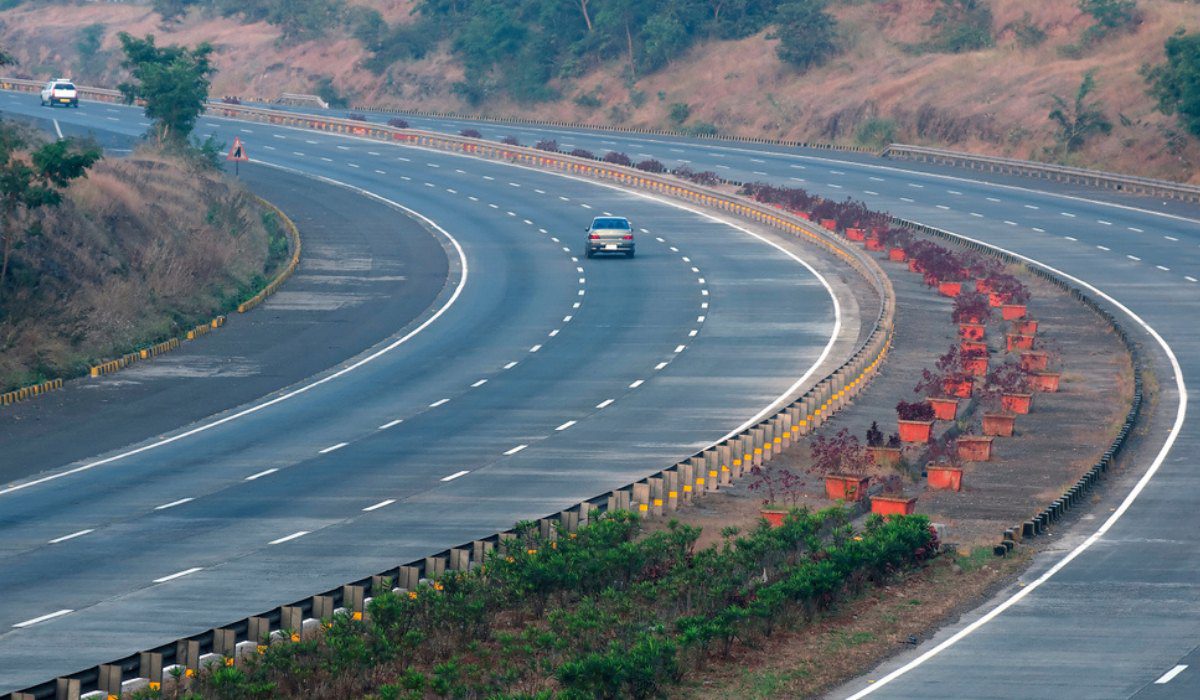
A critical infrastructure upgrade on the Mumbai–Pune Expressway is approaching operational readiness, with the long-pending ‘Missing Link’ alignment expected to open to traffic by early May. Designed to bypass the congested and accident-prone ghat section, the new corridor is projected to reduce travel time between India’s two major economic centres by up to 25 minutes, offering both mobility and safety gains.
The Missing Link forms an alternative alignment between the Khalapur and Kusgaon sections of the expressway, eliminating sharp gradients and curves that have long constrained traffic flow through the Western Ghats. For daily commuters, logistics operators and intercity travellers, the route promises smoother travel, lower fuel consumption and greater reliability, particularly during the monsoon months when landslides frequently disrupt movement. At the core of the project is a large twin-tunnel system engineered to carry multi-lane traffic in both directions. Infrastructure officials describe it as among the widest road tunnels built globally and the longest of its kind in India. The tunnels are supported by advanced ventilation, fire detection, emergency evacuation passages and intelligent traffic management systems, reflecting a shift towards safer, technology-led highway design.
In addition to tunnelling works, a major cable-supported bridge is nearing completion across a deep valley in the Lonavala ghat stretch. This structure allows the expressway to maintain a gentler gradient while minimising environmental disturbance compared to conventional hillside widening. Urban transport experts say such design choices are increasingly important as climate risks intensify in ecologically sensitive zones. According to officials overseeing the project, construction is targeted for completion by the end of March, followed by a month of technical trials, safety audits and system integration checks. The route is expected to open to the public after regulatory clearances, aligning with a broader push to upgrade Maharashtra’s high-capacity road network ahead of peak travel seasons.
The economic implications of the Missing Link extend beyond time savings. Faster and more predictable connectivity between Mumbai and Pune supports regional labour mobility, industrial supply chains and tourism flows across the western corridor. Reduced idling and smoother gradients are also expected to lower vehicle emissions per trip, contributing modestly to transport decarbonisation goals when compared with stop-start ghat traffic. However, mobility planners caution that road infrastructure alone cannot address long-term congestion unless accompanied by freight management reforms and stronger public transport alternatives. The expressway upgrade, they note, should be viewed as part of a broader regional mobility strategy rather than a standalone solution.
As final inspections begin, attention will turn to operational readiness and maintenance protocols. How effectively the Missing Link performs under heavy monsoon traffic will be closely watched, potentially shaping future highway design across India’s hilly and climate-sensitive regions.
Mumbai Pune Expressway Missing Link Nears Public Opening