


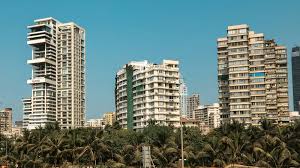
India’s residential real estate market in 2025 revealed a deepening divide between volume-driven affordable housing and value-led premium homes, underscoring how buyer priorities and developer strategies are reshaping urban housing across major cities.
Market data compiled by property consultants indicates that overall housing sales declined during the year, largely due to a sharp slowdown in the affordable segment. Homes priced below Rs 1 crore recorded a significant year-on-year contraction, dragging down aggregate residential volumes across leading urban centres. In contrast, demand for higher-priced homes remained resilient, cushioning the market from a steeper downturn. Premium housing, defined as units priced above Rs 1 crore, expanded its share of total residential sales and emerged as the dominant force in the market. Larger homes and lifestyle-oriented developments continued to attract buyers with higher purchasing power, reflecting both evolving household preferences and the growing influence of wealth-driven demand in Indian cities. Notably, the Rs 1.5–3 crore category saw the strongest momentum, signalling sustained appetite for spacious, well-located homes. Urban economists note that while fewer homes were sold overall, the value of transactions continued to rise. This shift highlights a structural change in the housing market, where fewer but higher-value deals are becoming the norm. Rising construction costs, limited land availability in prime locations and improved pricing discipline among developers have further reinforced this trend. City-level performance remained uneven. Southern markets demonstrated relative strength, with Chennai standing out for its robust growth in residential sales, supported by steady end-user demand and changing lifestyle preferences favouring apartments over independent homes. Bengaluru, Mumbai and Pune together accounted for a substantial share of national sales, underlining their continued importance as employment and investment hubs.
However, some traditionally strong markets recorded moderation in volumes, reflecting affordability pressures and cautious buyer sentiment in the mass segment. Despite this, capital values across several cities continued to climb during the year, particularly in premium micro-markets, indicating sustained confidence among buyers at the top end. On the supply side, developers appeared increasingly selective. New project launches dipped marginally overall, but premium housing remained a strategic focus. In several cities, developers channelled investments into higher-margin projects while calibrating mid-range and affordable supply based on local demand dynamics. This selective approach has helped prevent inventory overhangs and supported price stability. From an urban planning perspective, the growing tilt towards premium housing raises important questions around inclusivity and access. Housing experts caution that prolonged weakness in affordable supply could exacerbate inequality and push middle- and lower-income households further towards city fringes, increasing commute times and environmental stress. Looking ahead, analysts expect residential prices to remain on an upward trajectory, supported by controlled supply, steady premium demand and developers’ improved balance sheet discipline. While sales volumes may fluctuate in the short term, the absence of structural imbalances suggests a period of measured, value-led growth rather than a broad-based correction.
For India’s cities, the challenge will be ensuring that this premium-led recovery is complemented by renewed focus on affordable and sustainable housing, critical to maintaining social balance and long-term urban resilience.
Also Read: Navi Mumbai Tests Urban Agriculture In Planned Nodes
