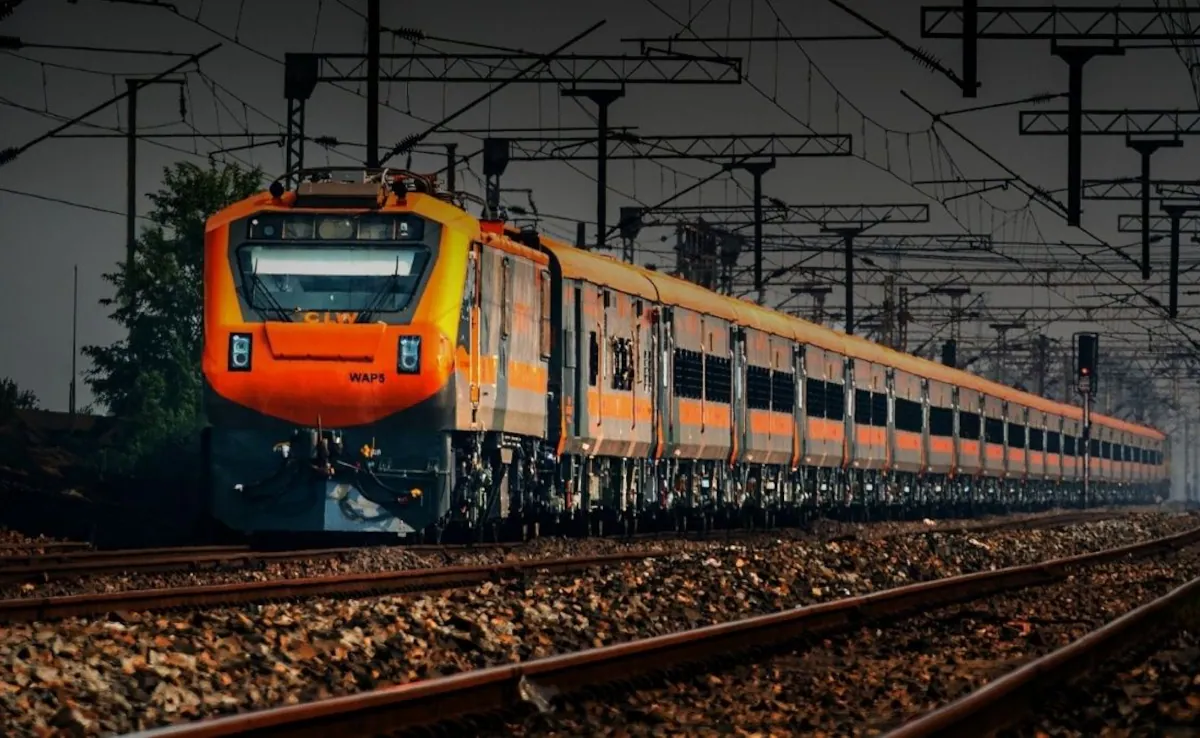
Indian Railways is preparing to introduce nine additional Amrit Bharat Express services, marking a significant expansion of its affordable long-distance rail network across eastern, northern, southern and western India. The upcoming services are expected to improve direct rail connectivity between regions that have traditionally relied on slower or indirect train options, with implications for workforce mobility, regional trade and more balanced urban growth.
According to officials familiar with the plan, the new Amrit Bharat routes will connect major population centres in Assam and West Bengal with destinations across Bihar, Uttar Pradesh, Maharashtra, Karnataka and Tamil Nadu. The proposed network includes links between cities such as Kamakhya and Rohtak, Dibrugarh and Lucknow, New Jalpaiguri and southern Tamil Nadu hubs, as well as new east–west and north–south connections terminating in Bengaluru, Panvel and the National Capital Region. The Amrit Bharat Express programme was conceived as a modern, non-air-conditioned alternative for long-distance travel, focused on affordability, operational efficiency and improved onboard design. Unlike premium train services, these trains cater primarily to migrant workers, students, small traders and families travelling between regions for employment, education and social reasons. Transport economists note that this segment forms the backbone of India’s inter-state mobility, yet has often been underserved in terms of comfort and reliability.
Since its introduction in late 2023, Indian Railways has already operationalised around 30 Amrit Bharat services. The next phase signals a strategic shift towards strengthening conventional rail as a low-carbon, high-capacity mode of transport at a time when road and air networks are under mounting environmental pressure. Railways remain among the most energy-efficient ways to move people over long distances, particularly when services are optimised for high occupancy. Urban planners highlight that improved long-distance rail links can reduce pressure on megacities by enabling circular migration rather than permanent relocation. Better connectivity between smaller cities and major employment hubs allows workers to maintain ties with their home regions, supporting more equitable economic development. Cities such as Panvel, Tambaram and Tiruchirappalli are increasingly emerging as secondary nodes benefiting from stronger rail-based access.
The expansion is also expected to support tourism and regional commerce, especially in the North East and eastern India, where rail connectivity plays a critical role in integrating local economies with national markets. Industry observers add that dependable sleeper-class services can stimulate night-time travel, easing congestion on daytime trains and improving network utilisation. As Indian Railways continues to modernise rolling stock and expand route coverage, the challenge will lie in maintaining punctuality, safety and service quality at scale. The planned rollout of new Amrit Bharat Express trains suggests a renewed focus on inclusive mobility, where rail infrastructure supports not just speed and prestige, but everyday accessibility for millions who depend on it.
Indian Railways Expands Amrit Bharat Network Nationwide