


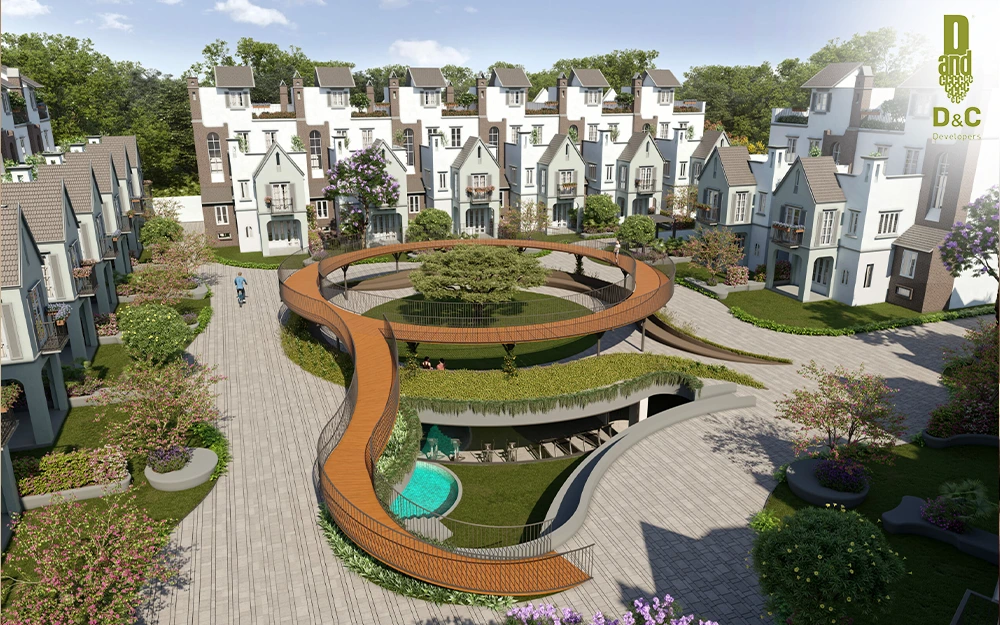
Ahmedabad’s residential real estate market is undergoing a notable transformation as developers respond to changing buyer aspirations, rising land constraints and global lifestyle influences. One such shift is visible in the growing prominence of unconventional luxury housing formats that prioritise exclusivity, experience-led design and differentiated amenities rather than scale alone.
Industry observers note that the city, once characterised by low-rise neighbourhoods and plotted housing, has steadily moved towards vertical development over the past decade. This transition has accelerated post-pandemic, driven by demand for lifestyle upgrades, increased work-from-home flexibility and higher disposable incomes among urban professionals and non-resident investors. Luxury housing, once a niche, is now shaping both the skyline and market narratives of western Ahmedabad. A privately held real estate group led by a second-generation entrepreneur has emerged as a prominent example of this trend. Operating primarily in premium micro-markets such as Shilaj, Sindhu Bhavan Road and select R3-zoned corridors, the developer has adopted design strategies rarely seen in the city. These include individual swimming pools attached to apartments, vertical landscaping integrated into façades and experiential features such as private boating access within gated developments. Urban planners say such projects reflect a broader recalibration of value in Indian cities. “Luxury today is not just about size or finishes. Buyers are paying for privacy, sensory comfort and differentiation, particularly where land is scarce,” said a senior urban development consultant based in Gujarat. However, planners also caution that such projects must be evaluated within the context of long-term sustainability, water use and urban infrastructure capacity.
The city’s R3 zone, stretching between the S G Highway and the Ring Road, has become central to this shift. Limited land availability, coupled with high connectivity and social infrastructure, has pushed prices upward and encouraged developers to justify premiums through bespoke offerings. High-rise formats of 20 to 40 floors are increasingly common, replacing the five- to seven-storey buildings that once dominated the area. Beyond Ahmedabad, similar premium experiments have been extended to satellite cities such as Gandhinagar, while earlier projects in Surat provided the financial springboard for expansion. Market participants point out that such diversification reduces risk but also underscores the growing convergence of Gujarat’s major urban centres in terms of housing aspirations. Crucially, financing models are also evolving. Several developers in the premium segment are increasingly relying on self-funding and investor participation rather than project-level bank loans, a strategy aimed at reducing leverage risk amid regulatory scrutiny and cyclical slowdowns.
As Ahmedabad positions itself as a future financial and cultural hub, the success of experimental luxury housing will likely depend on how well it aligns with environmental resilience, efficient resource use and inclusive urban planning. The coming years will test whether innovation-led premium projects can coexist with the city’s broader goals of sustainable and balanced growth.
Also Read: Riyadh Strengthens Digital AI Infrastructure
Ahmedabad Developer Bets On Experimental Luxury Housing
