Nagpur Solar Manufacturing Hub Signals Clean Energy Shift
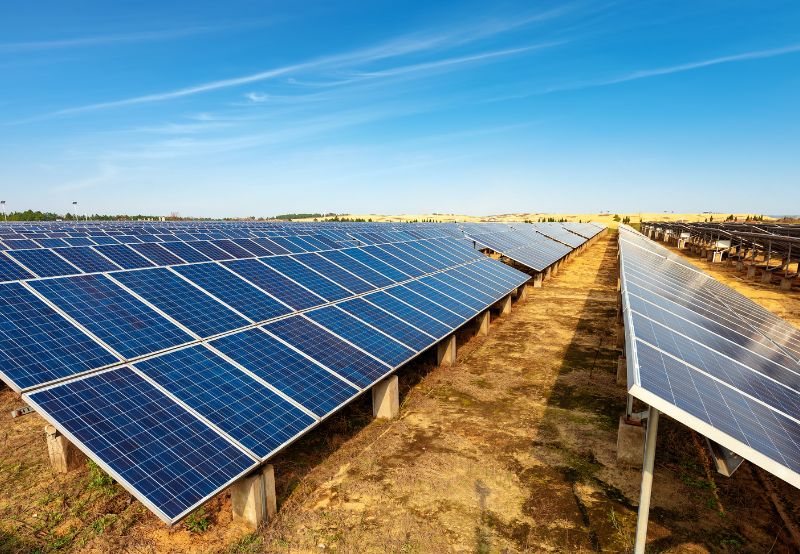
Dalmia Cement (Bharat) Limited, a subsidiary of one of India’s leading cement manufacturers, has taken a significant step to green its energy portfolio by securing rights to procure up to 128 megawatts (MW) of solar power through a strategic equity investment in a Tamil Nadu–based project. The move underscores a growing industrial shift towards renewable energy adoption and aligns with broader corporate net-zero and energy security goals.
Under the arrangement, Dalmia’s renewable arm invested ₹42.87 crore to acquire a 26 per cent stake in TrueRE Surya Private Limited, a special purpose vehicle (SPV of renewable energy firm Oriana Power) developing the under-construction solar installation. This seven-figure investment positions Dalmia as a captive consumer of the solar capacity once it enters operation. For industrial energy consumers, captive renewable sourcing — where a company owns or contracts generation that feeds directly into its operations — is increasingly attractive. It mitigates exposure to volatile grid prices, helps secure long-term energy availability, and advances corporate sustainability metrics. For Dalmia, it also supports its commitment to sourcing 100 per cent of power from renewables by 2030 under the RE100 initiative and its longer-term objective to achieve carbon negativity by 2040.
The Tamil Nadu solar project is being constructed under an ‘open access captive’ model, a regulatory framework that allows large power consumers to procure electricity from third-party renewable generators without depending solely on discom supplies. Experts say this framework strengthens energy resilience while lessening dependence on fossil-based grid power, which is vital for manufacturing hubs with energy-intensive operations. Dalmia’s push into solar is part of a broader renewable strategy. According to its most recent regulatory disclosures and annual report data, the company’s renewable generation footprint has expanded steadily. Captive wind and solar assets commissioned in recent years have helped lift its renewable share to more than one-third of total energy consumption, with incremental additions planned across multiple states.
This initiative also dovetails with India’s national-level climate goals and the cement industry’s broader decarbonisation journey. Cement production is among the most carbon-intensive industrial processes, accounting for upward of 7 per cent of global emissions. Integrating large-scale solar procurement directly into production supply chains not only reduces grid emissions but also contributes to grid load balancing during peak solar hours. Analysts note that such investments can help stabilise future costs and enhance competitiveness as carbon pricing mechanisms evolve. Challenges remain on the path to full adoption of renewable energy in heavy industries, including grid transmission constraints, financing for large-scale projects, and the need for energy storage solutions to smooth intermittency. However, Dalmia’s commitment signals confidence in scalable, cost-effective renewable integration. Urban planners and sustainability experts suggest that private sector leadership in captive power procurement will be crucial to meeting city and state climate targets while sustaining industrial growth.
As the solar plant progresses toward commissioning, further clarity is expected on its operational timeline and contributions to Dalmia Cement’s energy mix, helping cement its role in India’s net-zero transition narrative.