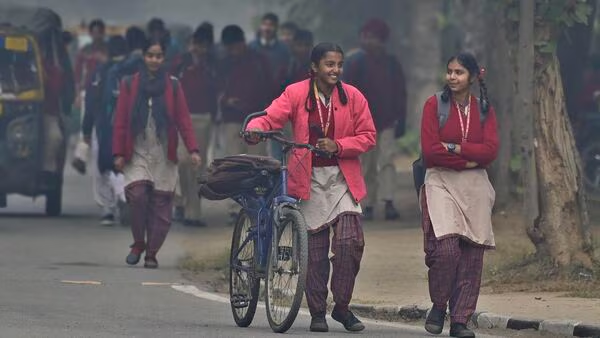
Delhi and its surrounding urban region entered another day of severe winter stress on Thursday as a prolonged cold spell tightened its grip, pushing night-time temperatures to near-record lows and prompting a precautionary weather alert. With dense fog continuing to impair visibility across transport corridors, the conditions are testing the resilience of urban infrastructure and the capacity of public services during peak winter months.
Weather data indicates that minimum temperatures across Delhi NCR have hovered close to 3 degrees Celsius, while daytime readings remain muted despite clear spells. The cold has been accompanied by persistent fog, particularly during early morning hours, reducing visibility on arterial roads and disrupting air and surface transport. For a region dependent on high-volume daily mobility, the impact is being felt across airports, highways and commuter networks.Aviation operators have reported knock-on delays as fog limits runway operations, while road authorities have advised caution along expressways linking Delhi with Noida, Gurugram and Ghaziabad. Urban transport planners note that such conditions disproportionately affect lower-income commuters who rely on early-morning travel windows and have limited flexibility in work timings.
The cold wave in Delhi NCR has now extended over several consecutive days, a pattern that experts say reflects changing winter dynamics in North India. Increased moisture retention, stagnant wind patterns and high particulate levels contribute to longer fog episodes, turning what were once short-lived weather events into multi-day disruptions. These conditions also intensify the “cold day” effect, where temperatures remain suppressed even after sunrise. From a public health standpoint, hospitals across the region have seen a rise in cold-related ailments, particularly among elderly residents, children and outdoor workers. Urban health officials stress that moderate air quality readings during winter can be misleading, as fog temporarily traps pollutants closer to ground level, increasing exposure risks during peak hours.
The economic implications extend beyond inconvenience. Delays in logistics, reduced productivity during morning hours and the strain on emergency services carry measurable costs for a region that functions as the country’s administrative and commercial hub. Real estate consultants point out that prolonged winter disruptions also highlight the importance of building design, insulation standards and access to reliable heating in residential developments areas that remain under-addressed in much of the NCR’s housing stock.
Municipal agencies and transport operators have activated winter protocols, including adjusted schedules, visibility advisories and public messaging focused on safety. Schools in some districts have modified timings or shifted younger students to remote formats, reflecting the broader civic response to weather-related risk.Forecast models suggest marginal relief over the coming days, though fog is expected to persist during morning hours. For urban planners, the episode underscores the growing need to integrate climate adaptation into city operationsfrom transport planning and public health preparedness to housing design. As Delhi NCR confronts another intense winter phase, the focus now shifts to how cities can better absorb and adapt to increasingly volatile seasonal extremes.