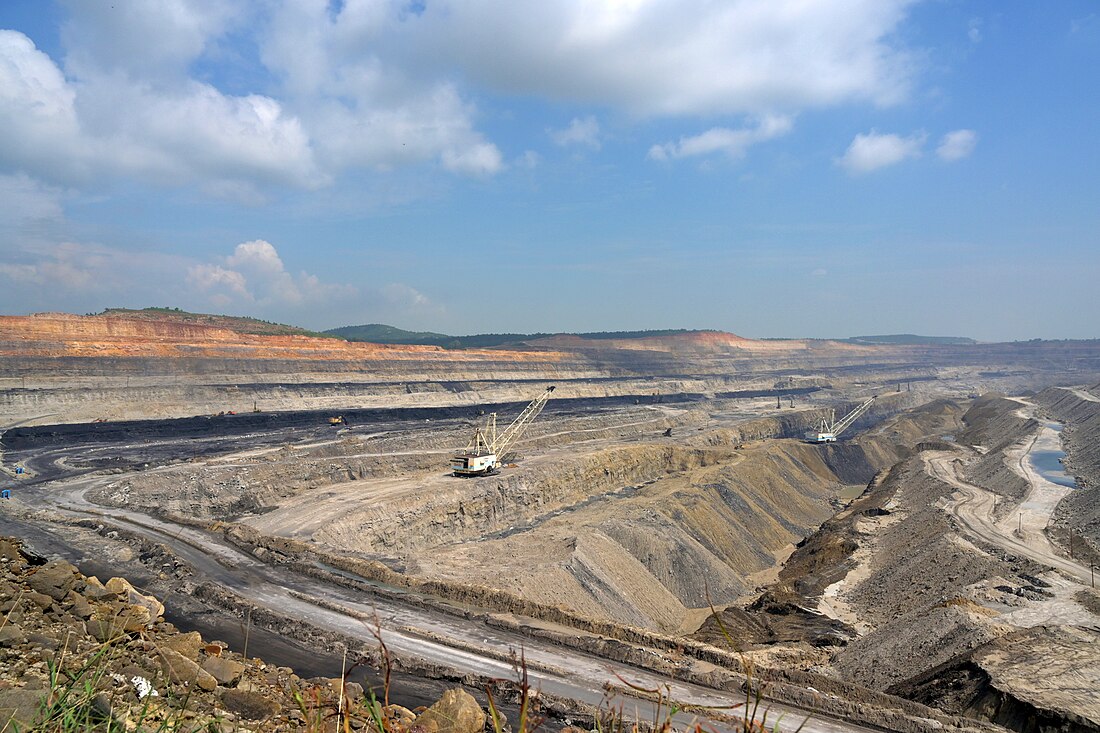
Meghalaya East Jaintia Hills Coal Pit Closure Drive
India’s mining industry has stepped up its pre-Budget advocacy, urging policymakers to recalibrate fiscal and risk frameworks to protect export competitiveness and secure overseas investment. The sector’s proposals, submitted ahead of the Union Budget 2026–27, signal deepening concerns about global market volatility, geopolitical exposure and the need to align domestic minerals policy with broader industrial and urban development goals.
At the centre of industry demands is a request to remove export duties on low-grade bauxite — a resource abundant in states such as Gujarat and Maharashtra but under-utilised due to current levies. Producers argue that duty abolition could unlock export markets for these grades, expand revenue pools and support peripheral industrial clusters that depend on mineral export activity. The mining lobby, represented by the Federation of Indian Mineral Industries (FIMI), has also appealed to maintain the existing zero-duty status for low-grade iron ore, cautioning that introducing new levies could undermine foreign exchange earnings and erode value chains built around raw material exports. This contributes to employment in mining districts and sustains related logistics and processing services crucial for both rural and urban economies.
Beyond export taxation, industry leaders are advocating for a government-backed insurance mechanism to shield Indian firms from political and economic risks tied to overseas mining projects, particularly in Africa and South America. Such a scheme would mirror sovereign guarantee models currently available for exporters and could facilitate financing from banks and institutional investors wary of exposure to political instability abroad. The push for risk-mitigation tools dovetails with calls for targeted Budget incentives, including higher initial depreciation allowances and investment tax credits that would reduce upfront costs for exploration, mineral processing and downstream manufacturing. These fiscal levers aim to make capital allocations more attractive amid competitive global mining investments.
Critically, the mining sector is also seeking a revival of the concessional 15 per cent corporate tax rate for new manufacturing units and conditional tax holidays for strategic greenfield projects. Proponents say these measures could catalyse investments not only in extraction but also in processing hubs, enhancing value retention within India and supporting urban ecosystems that rely on manufacturing and energy sectors. Environmental and climate-aligned transitions are implicit in the sector’s other major ask: a scaled-up push for coal gasification with substantial budget backing. By converting coal into synthesis gas (syngas) through cleaner high-temperature processes, mining and energy companies aim to reduce carbon intensity and support industrial fuel diversification. FIMI has advocated for an expanded budgetary allocation to significantly exceed the current policy outlay, reflecting industry interest in lower-emission pathways.
Urban planners and resource economists note that these demands reflect the sector’s dual priorities — fostering export competitiveness while hedging against external risks that could disrupt supply chains for infrastructure, construction and advanced manufacturing. India’s broader economic strategy envisages mining not merely as an extractive engine but as a foundation for sustainable industrial clusters that support resilient cities and equitable regional growth.
As Budget deliberations proceed, balancing incentives with climate and social safeguards will be key. Effective policy design could enhance India’s mineral value chains, attract long-term investment and help integrate extractive sectors into emerging low-carbon urban economies.