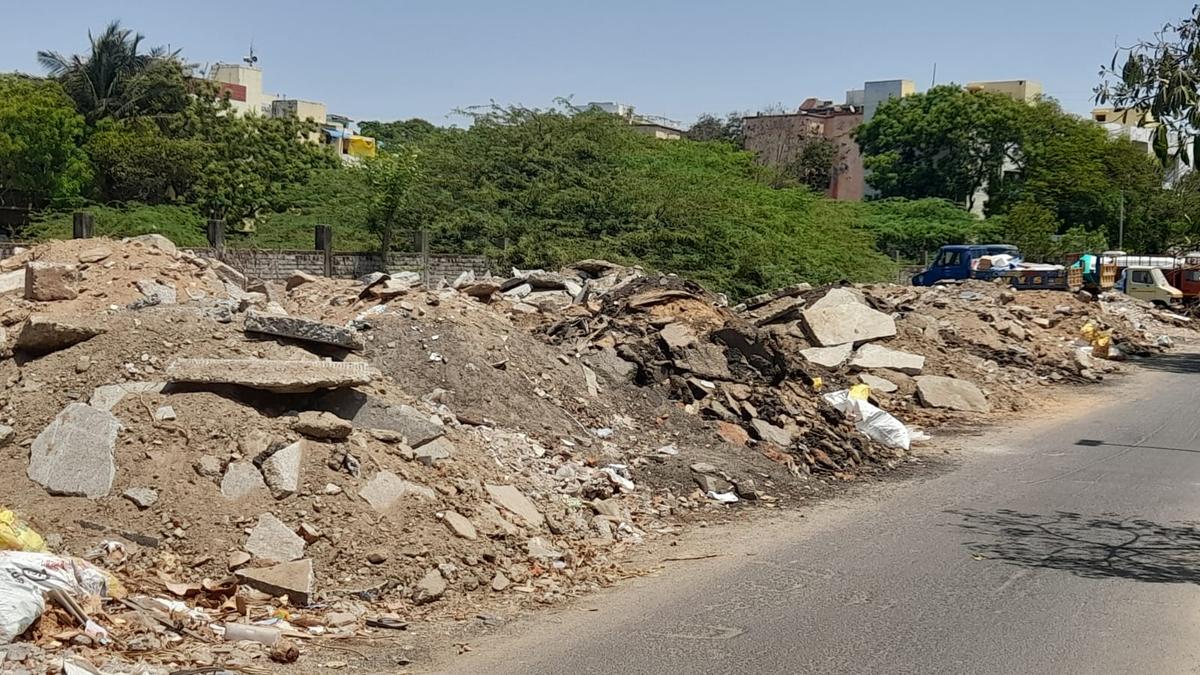
A stalled road restoration project in West Mambalam has renewed questions about last-mile infrastructure delivery and public safety oversight in Chennai’s residential neighbourhoods. An interior stretch linking two busy local streets has remained in a milled condition for months, well beyond nationally recommended timelines, exposing residents to daily mobility and safety risks.
The unfinished segment, running through a dense residential pocket, was milled as part of routine resurfacing works but never completed. National road safety norms require such surfaces to be restored within a short window to prevent accidents and structural damage. The prolonged delay has left the uneven roadway vulnerable to water stagnation, loose debris, and accelerated wear—conditions that disproportionately affect pedestrians, children, elderly residents, and sanitation workers. Urban planners point out that interior roads, while smaller in scale, play a critical role in neighbourhood connectivity. These streets often handle mixed traffic, including pedestrians, cycles, pushcarts, and two-wheelers. When left incomplete, they disrupt not only mobility but also essential services such as waste collection and emergency access. Residents in the area say the situation is particularly troubling because adjacent arterial streets have undergone multiple rounds of resurfacing in recent months, highlighting uneven prioritisation within the same locality. For families living along the affected lane, daily movement has become hazardous, especially during early mornings and evenings when visibility is low.
Civic officials familiar with the project attribute the delay to complications involving the contractor assigned to the work, including a legal matter unrelated to the neighbourhood. Such disruptions, experts say, reveal structural weaknesses in how urban contracts are managed. “When projects stall due to disputes elsewhere, there are rarely contingency mechanisms to ensure public safety is not compromised,” noted an urban infrastructure analyst.
The issue also raises broader governance concerns for rapidly growing cities like Chennai, where roadworks are frequent due to utility upgrades, drainage improvements, and resurfacing cycles. While milling is increasingly used to improve road quality and reduce material waste, its effectiveness depends entirely on timely relaying. Without strict enforcement, the technique risks becoming a liability rather than a sustainability solution. From a climate and resilience perspective, unfinished roads exacerbate flooding risks during sudden rainfall, as milled surfaces alter drainage patterns and allow water to seep into sublayers. Over time, this can shorten road lifespan and increase maintenance costs—an avoidable burden on public finances.
Civic authorities indicate that the road is now scheduled for completion in the near term following the resolution of contractual issues. For residents, the expectation is not just swift execution, but stronger accountability systems that prevent similar lapses elsewhere. As Chennai continues to invest heavily in urban renewal, the episode underscores a critical lesson: infrastructure quality is judged not by how often roads are dug up, but by how responsibly and consistently they are restored.
Also Read:
Chennai West Mambalam Roadwork Delay Raises Concerns