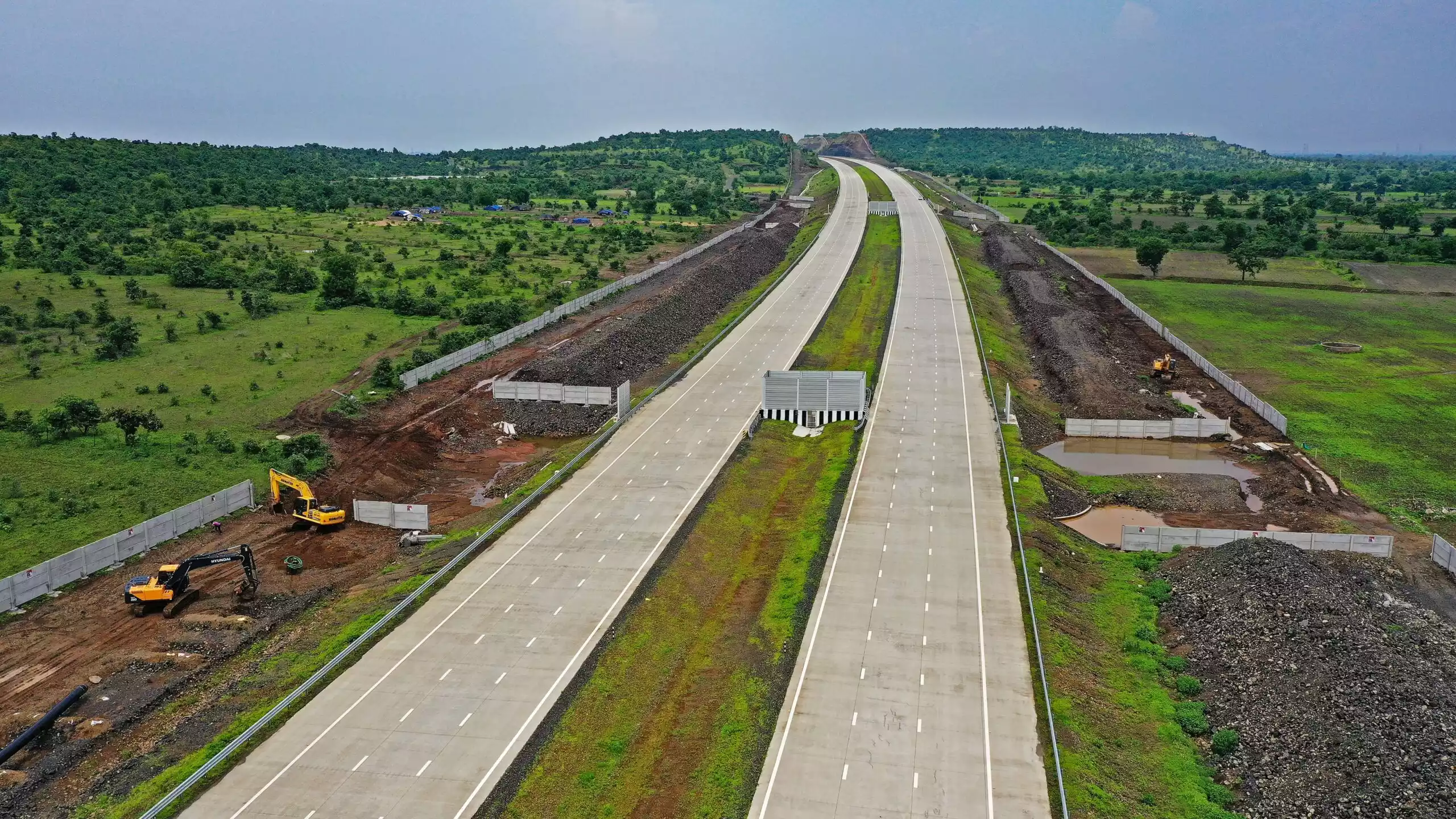
The Maharashtra government is moving forward with plans to create a direct road connection between the Samruddhi Expressway and Mumbai’s Eastern Freeway, a step that could significantly reshape long-distance road travel between Nashik and the Mumbai Metropolitan Region. The proposed linkage is aimed at addressing chronic congestion points that currently undermine the efficiency of the high-speed expressway as vehicles approach the city.
Despite the Samruddhi Expressway enabling faster intercity movement across much of its length, motorists face sharp delays once they enter the Thane district. Traffic disperses into congested urban and semi-urban road networks, where capacity limitations, mixed traffic, and frequent intersections reduce average speeds dramatically. Urban transport analysts note that this abrupt transition not only increases travel time but also raises fuel consumption and emissions in densely populated zones. The planned Samruddhi Expressway Eastern Freeway link is expected to bypass some of the most congested suburban stretches by providing controlled access into Mumbai’s eastern transport spine. According to officials associated with regional infrastructure planning, the intent is to preserve travel efficiency for long-distance vehicles while reducing pressure on local roads in Thane, Bhiwandi, and surrounding industrial clusters that already face heavy daily traffic volumes.
Several complementary projects are already underway to support this future corridor. Tunnel works near major arterial routes and ongoing connector upgrades between the eastern suburbs and Thane indicate early-stage progress. Infrastructure planners have identified the Thane–Amne stretch as a critical intervention zone, given its role as the current choke point for expressway traffic entering the metropolitan area. Beyond commuting convenience, the Samruddhi Expressway Eastern Freeway link carries wider economic implications. Nashik’s manufacturing, logistics, and agricultural processing sectors rely heavily on timely access to Mumbai’s ports, wholesale markets, and financial centres. Industry experts suggest that improved travel predictability could strengthen regional supply chains and reduce operational costs, supporting more balanced economic growth across northern Maharashtra.
The project also aligns with longer-term urban sustainability objectives. Smoother traffic flow and reduced idling can lower vehicular emissions, particularly in suburban belts where air quality concerns are rising. Transport planners emphasise that while expressway connectivity alone cannot solve urban congestion, integrating long-distance corridors with city-level traffic planning is essential for climate-resilient mobility systems. For regular travellers, the anticipated outcome is a more reliable and less fatiguing journey between Nashik and Mumbai, especially during peak travel periods. However, experts caution that execution timelines, land acquisition, and coordination with existing urban infrastructure will be decisive in determining the project’s real-world impact.
As Maharashtra continues to expand its expressway network, the success of this connection will serve as a test case for how major highway investments translate into everyday mobility improvements for people and businesses across the region.
Maharashtra Highway Network Eyes Major Urban Link