


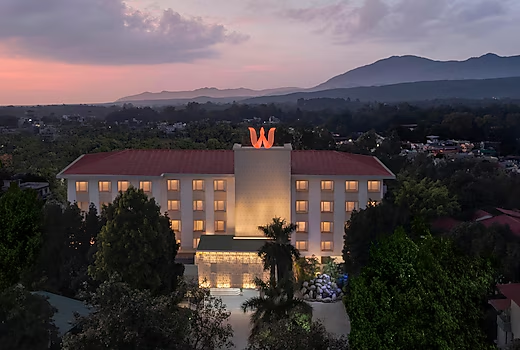
Dehradun’s hospitality landscape has taken a notable step forward with the addition of a new branded hotel, reflecting the city’s transition from a gateway town to a standalone business and leisure destination. ITC Hotels has operationalised a 73-key property in the Uttarakhand capital under a management-led model, reinforcing confidence in the region’s tourism, institutional and services-driven economy.
The development comes at a time when Dehradun is experiencing steady growth in visitor traffic, driven by improved road connectivity, proximity to pilgrimage circuits, and its expanding role as an administrative and education hub. Urban development officials note that hospitality investments are increasingly following infrastructure upgrades, signalling a maturing urban economy rather than episodic tourism-led growth. Located within the Doon Valley, the hotel has been positioned to serve both corporate and leisure demand, offering accommodation alongside conference and event facilities. This dual-use format aligns with broader market trends, where mid-sized cities are seeing demand for venues that can support business travel, social functions and destination-led tourism without the scale pressures of metro markets. Industry analysts point out that the use of a management contract reflects a wider shift in India’s hospitality sector towards asset-light expansion. For cities such as Dehradun, this model allows established operators to enter emerging markets while limiting capital exposure, and enables local asset owners to tap into national brand standards, operational expertise and global distribution systems. Beyond room inventory, the project also contributes to local employment and allied services, from food supply chains to facility management and transport.
Urban planners emphasise that hospitality assets, when integrated responsibly, can support inclusive economic growth by generating year-round jobs rather than seasonal income linked only to peak tourist months. The project’s emphasis on regional identity through food and design is also indicative of changing traveller preferences. Rather than generic luxury, demand is increasingly shifting towards experiences rooted in local culture and landscape. For hill-adjacent cities such as Dehradun, this approach helps balance tourism growth with cultural continuity and environmental sensitivity. From an urban sustainability perspective, experts caution that hospitality expansion in ecologically sensitive regions must remain aligned with carrying capacity and resource management norms. Water use, waste handling and energy efficiency are emerging as critical benchmarks for new developments, particularly in cities facing climate-linked pressures such as heat variability and groundwater stress. Looking ahead, the addition of branded hotel capacity is expected to strengthen Dehradun’s position within Uttarakhand’s tourism and meetings ecosystem, complementing nearby destinations rather than competing with them.
As infrastructure and urban services continue to improve, policymakers and investors alike will watch how hospitality-led growth integrates with the city’s long-term development priorities, ensuring that economic gains are matched by environmental resilience and livability.
Also Read: Lodha Adds Strategic Parcels To National Development Portfolio
ITC Hotels Adds Managed Property In Dehradun
