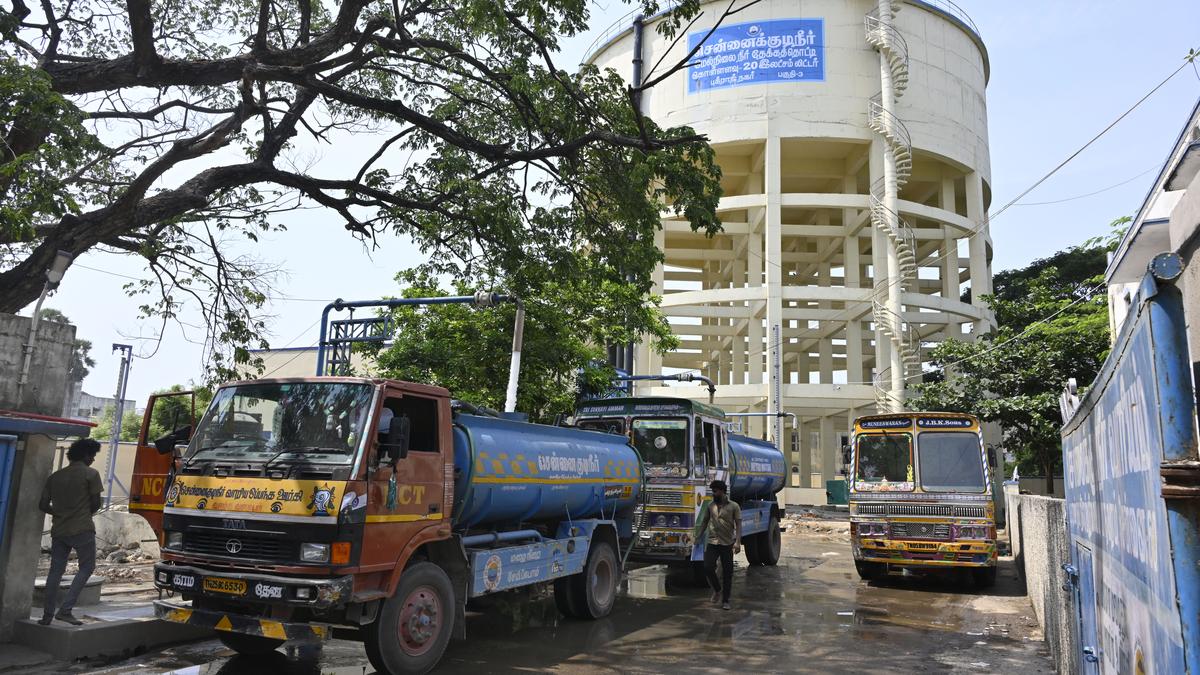
Chennai Infrastructure Push To Secure Water Supply
Chennai has moved a step closer to overhauling its drinking water backbone after the state government granted in-principle clearance for a citywide Ring Main System, a project aimed at stabilising supply amid growing climate stress and urban expansion. The decision is expected to reshape how water is moved across India’s fourth-largest metropolitan economy, reducing disruption risks and improving equity in access across neighbourhoods.
The proposed Ring Main System will create a closed-loop network linking Chennai’s multiple water sources into a single, integrated grid. At present, the city relies on a fragmented arrangement of reservoirs, groundwater, and desalination plants, each feeding specific zones. Urban planners say this structure leaves entire areas vulnerable when one source shuts down for maintenance or runs dry, even if surplus water is available elsewhere.
Under the new framework, treated water from all existing facilities including desalination units along the coast and conventional treatment plants inland will be interconnected through a network of pumping stations and high-capacity pipelines. This design allows water to be redirected dynamically based on availability, demand, and operational conditions, offering a more resilient response to droughts, floods, or infrastructure failures. Officials familiar with the project estimate the investment at just over Rs 3,100 crore, covering construction and a decade of operations and maintenance. Funding support is expected through a multilateral development loan, and the build-out timeline is projected at four years. Once operational, the system will serve all of Chennai’s water distribution stations and is engineered to handle significantly higher demand over the coming decades as population and economic activity grow.
Beyond quantity, the project places strong emphasis on monitoring and control. Advanced sensors will track pressure, flow, and water quality in real time, while automated valves will regulate supply across the network. A central command facility will supervise operations, enabling faster responses to leaks, contamination risks, or sudden demand spikes a capability increasingly vital in climate-sensitive coastal cities. Alongside the drinking water upgrade, the government has also approved a major intervention in Chennai’s ageing sewerage infrastructure, starting with the catchment served by the Nesapakkam treatment facility. This part of the city relies on systems laid several decades ago, which have struggled to cope with denser development and higher wastewater volumes. Planned works include replacing undersized pipelines, modernising pumping stations, and boosting capacity to reduce overflows and public health risks.
Urban infrastructure experts note that water supply and sanitation upgrades tend to have direct spillover effects on housing quality, real estate investment, and workforce productivity. Reliable services lower development risk, support affordable housing, and improve liveability, particularly in fast-growing peripheral zones.
As Chennai faces increasingly volatile rainfall patterns and rising demand, the success of the Ring Main System will be closely watched. If delivered on schedule and integrated effectively, it could become a template for other Indian cities seeking climate-resilient, people-first water infrastructure that balances growth with long-term sustainability.