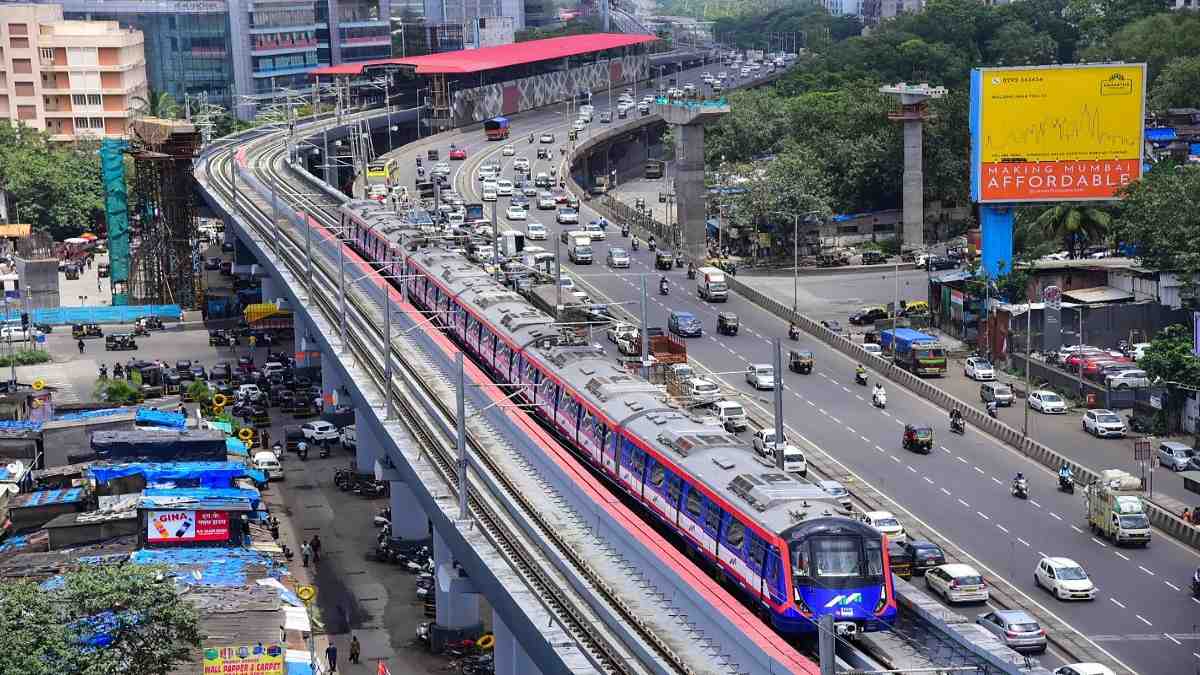
Mumbai’s metro network has taken a quiet but consequential step towards becoming a fully integrated rapid transit system with the opening of a new paid-area interchange at Dahisar East. The facility allows passengers to switch between metro lines without exiting the station or undergoing repeat ticketing and security checks, addressing a long-standing inefficiency in daily travel across the city’s northern suburbs.
Located at a key junction serving dense residential and employment zones, the interchange reshapes how commuters experience transfers. Until now, changing lines often meant navigating street-level exits, queues, and security screening — a process that added time and unpredictability, particularly during peak hours. Urban transport planners say the new configuration aligns Mumbai with global metro design standards, where seamless movement within controlled zones is essential for high-capacity systems. The Dahisar East interchange is expected to benefit a wide cross-section of commuters, including office workers travelling to western business districts, students accessing educational hubs, and service-sector employees reliant on predictable travel times. By simplifying transfers, the system reduces friction in public transport use — a critical factor in persuading commuters to shift away from private vehicles.
Officials involved in the project say the design focuses on operational efficiency as much as passenger convenience. Clear wayfinding, controlled passenger circulation, and direct concourse-level connections are intended to prevent crossflows that often lead to congestion. Transport experts note that such design interventions can significantly improve station throughput without increasing physical footprint, a key consideration in land-constrained urban environments like Mumbai. From a network perspective, the interchange strengthens east–west connectivity, which has historically lagged north–south corridors in terms of capacity and reliability. As more metro lines come online, interchanges like Dahisar East will determine whether the system functions as a coherent network or a set of disconnected routes. Analysts argue that paid-area transfers are particularly important for building commuter confidence in multi-line journeys.
The project has been delivered by the region’s transport development authority following statutory safety inspections and operational trials. Phase-wise commissioning has allowed authorities to monitor passenger movement and system performance before opening the facility to full public use. Such incremental rollouts, urban planners say, reduce risk while enabling real-world optimisation. Beyond immediate commuter benefits, the interchange has wider urban implications. Faster, predictable transfers support higher metro ridership, which in turn lowers per-capita transport emissions and reduces pressure on road infrastructure. For surrounding neighbourhoods, improved accessibility can enhance walkability, support local commerce, and influence more compact, transit-oriented development patterns over time.
As Mumbai’s metro network continues to expand, attention will increasingly shift from route length to network quality. The Dahisar East paid-area interchange sets a functional benchmark, highlighting how small design decisions can deliver outsized gains in efficiency, inclusivity, and sustainability. The challenge ahead lies in replicating this standard across future interchanges to ensure the metro evolves into a truly people-first urban mobility system.
Mumbai Metro Unlocks Dahisar East Interchange