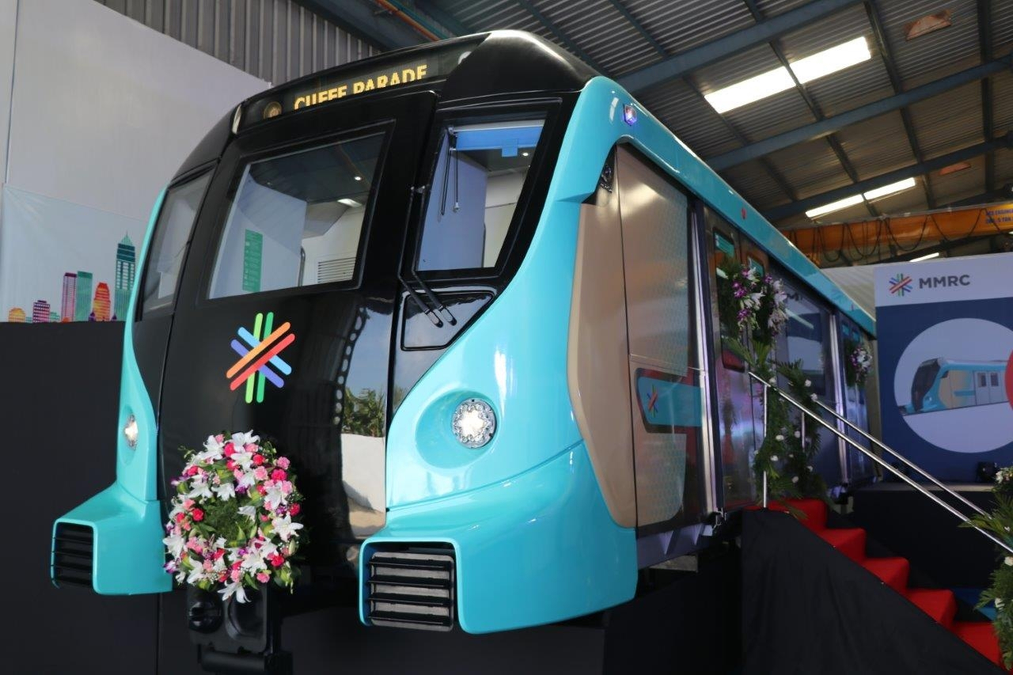
Mumbai Underground Metro Sees Growing Commuter Adoption
Mumbai’s new underground metro corridor — the Aqua Line (Metro Line 3) — is registering a notable uptick in daily ridership, underscoring growing commuter trust and the expanding role of mass rapid transit in the city’s transport ecosystem. Since the full 33.5 km route between Cuffe Parade and Aarey JVLR became operational in 2025, daily boardings have climbed into the five‑figure and low‑six‑figure range, marking an inflection point for India’s first fully underground metro line.
According to official data, the Aqua Line carried more than 3.8 million passengers in October 2025, averaging roughly 141,000 weekday riders, with peak days spiking above 180,000 boardings. This trajectory represents a significant increase from early operational phases, when ridership was limited by partial openings and an incomplete corridor footprint. Urban mobility experts say this signals Mumbai commuters are increasingly incorporating the metro into regular travel routines, particularly for journeys linking major employment, education and commercial districts.
The Aqua Line’s ridership growth aligns with broader trends in urban transportation in India’s megacities, where residents are seeking faster, safer and more reliable alternatives to congested roads and crowded suburban rail services. By connecting central business hubs, residential catchments and economic nodes beneath the city’s surface, the fully underground corridor addresses core urban pressures — congestion, travel time and road safety — while supporting sustainable modal shifts away from private vehicles. Transit professionals point to several structural factors behind the ridership uptick. Operational maturity — including improved train frequency, extended service hours and better integration with feeder transport — has made commuting via Aqua Line more convenient. Alongside this, the introduction of digital ticketing options and QR/WhatsApp‑based systems has reduced friction in fare payment, particularly among tech‑savvy urban travellers.
However, growth has not been uniform across the entire network. Initial ridership in early partial‑opening phases was markedly lower — with reports citing daily boardings in the tens of thousands before the full line opened. Observers attribute this to limited connectivity, incomplete station accessibility and lower public awareness during staged rollouts, factors that have eased as the corridor neared full‑length operations.The ridership trend also carries significant economic and infrastructure implications. Increased use of the Aqua Line can help decongest parallel road corridors, lower transportation costs for commuters and reduce vehicular emissions — aligning with broader climate resilience and sustainable mobility goals for the Mumbai Metropolitan Region. Urban planners highlight that as ridership stabilises, transit‑oriented development (TOD) around stations could unlock higher land use efficiency and catalyse mixed‑use precincts that combine housing, workplaces and services within easy reach of rapid transit.
Challenges remain, particularly around last‑mile connectivity and seamless integration with other metro lines and public transport modes. Critics have noted gaps in feeder services and occasional service disruptions, even as authorities accelerate improvements to network integration and customer experience. Looking ahead, sustained growth in Aqua Line ridership is poised to reinforce Mumbai’s broader push toward structured urban mobility systems. As the corridor matures and interchanges with other transit services deepen, the metro’s growing user base could play a pivotal role in shaping commuting patterns and real estate values across the city’s transport corridors.