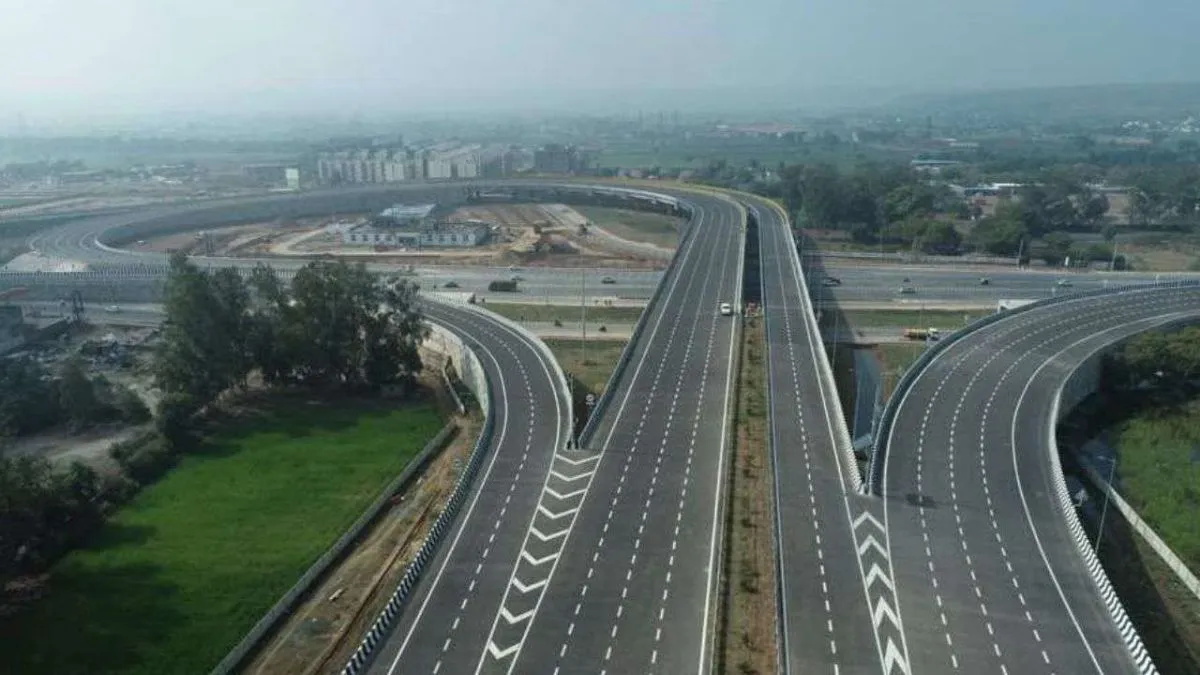
Maharashtra Plans New Link Between Samruddhi and Eastern Freeway
Maharashtra is poised to reconfigure one of its most consequential transport corridors with a plan to physically integrate the Samruddhi Expressway into Mumbai’s Eastern Freeway network, a move that could substantially trim travel times and unclog freight and passenger flows between Nashik and India’s financial capital. The announcement, endorsed by state authorities and welcomed by motorists, underscores a broader infrastructure pivot toward seamless multi‑regional connectivity in western India.
The Samruddhi Expressway — officially called the Hindu Hrudaysamrat Balasaheb Thackeray Maharashtra Samruddhi Mahamarg — is a flagship greenfield route stretching roughly 701 km to link Mumbai and Nagpur, including important transit through Nashik and other economic zones. Once fully operational, it has already halved travel times between key urban centres and enhanced access across the state’s industrial and agrarian belts. Despite its scale, travellers and logistics operators have pointed to a persistent bottleneck east of Mumbai where the Samruddhi corridor currently interfaces with the broader highway network. Vehicles funnel through intermediate points such as Amne village near Thane, before joining congested sections of the Nashik‑Mumbai corridor. This has eroded some of the expressway’s time‑saving potential for journeys into the metropolitan region.
The proposed link to the Eastern Freeway’s extension — itself a key urban expressway facilitating high‑speed movement into central Mumbai — aims to rectify this. Work under consideration includes upgrades to the Thane‑Amne stretch, constructing new tunnels along Ghodbunder Road and extending the Eastern Freeway eastwards from Ghatkopar to Thane. When completed, this would create a largely uninterrupted and high‑capacity express route from Nashik through Thane into Mumbai’s core. Commuters and freight operators have expressed support for the state’s plans, highlighting anticipated reductions in congestion and smoother transitions between long‑distance expressways and urban traffic systems. A senior logistics planner noted that enhanced corridor continuity is likely to unlock latent economic benefits by lowering distribution costs and improving predictability for businesses that rely on road haulage across Maharashtra’s manufacturing and agricultural supply chains.
Urban planners also point out that bringing high‑speed expressway connectivity closer to Mumbai’s dense arterial network will dovetail with ongoing efforts to decongest other major routes, including the Mumbai‑Pune Expresswayand peripheral urban roads. These improvements are expected to redistribute traffic more efficiently while enabling more reliable commuter and intercity travel. However, the plan also raises critical questions about implementation complexity, land acquisition and environmental assessments. Infrastructure experts caution that linking long‑distance expressways with dense urban freeway systems must be managed carefully to minimise disruption, ensure safety and maintain equitable access for local commuters. Successful integration will require well‑coordinated project design, adequate funding and phased execution to avoid interim bottlenecks during construction.
Looking ahead, Maharashtra’s push to interconnect its major expressway assets reflects a broader state agenda to decentralise mobility, strengthen economic corridors and reduce transport friction across regional economies. If realised on schedule, the Samruddhi‑Eastern Freeway link could become a defining milestone in the state’s transport network evolution — shaping travel patterns and logistics efficiency for years to come.