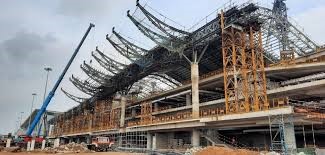
Chennai Airport Terminal Two Project Under Timeline Review
Chennai’s aviation infrastructure is under renewed scrutiny as central authorities review the progress of the city’s second terminal expansion, a project critical to managing rising passenger volumes and sustaining economic growth across Tamil Nadu. The review comes amid mounting pressure on existing airport facilities, which are operating close to design capacity during peak travel periods.
The New Integrated Terminal Building T2 Phase II at Chennai International Airport is intended to significantly expand the airport’s handling capability, positioning the city to meet future travel demand while supporting trade, tourism and regional connectivity. However, recent assessments indicate that tighter coordination and adherence to timelines are now essential to avoid further operational strain. According to officials familiar with the review process, the expansion has been classified as a project of national importance, reflecting its role in strengthening India’s aviation network along the southern corridor. The terminal’s second phase spans over 86,000 square metres and is designed to raise the airport’s annual passenger handling capacity to 35 million. This expansion is expected to improve circulation within the terminal, ease congestion at security and boarding areas, and enhance accessibility for passengers with reduced mobility.
Industry experts note that Chennai Airport has seen steady growth in both domestic and international traffic, driven by manufacturing-linked travel, IT services, and the city’s role as a gateway to Southeast Asia. Without timely infrastructure upgrades, delays and overcrowding could undermine passenger experience and airline efficiency, potentially diverting traffic to competing hubs. Urban planners also highlight the wider city-level implications. Airports increasingly function as economic nodes, influencing real estate development, employment clusters and surface transport planning. Delays in terminal expansion can have knock-on effects, from longer curbside congestion to increased emissions from idling aircraft and vehicles, running counter to climate-resilient urban goals.
To address execution challenges, authorities have directed all project stakeholders including the airport operator, construction contractors and project management consultants to resolve technical and coordination issues collectively. A streamlined decision-making process is being emphasised to prevent incremental delays that often affect large infrastructure projects. From a sustainability perspective, the expanded terminal is expected to incorporate energy-efficient systems and improved passenger flow design, aligning with broader efforts to reduce the carbon intensity of airport operations. Experts stress that timely completion is key to realising these benefits, particularly as passenger growth rebounds strongly across India’s metro airports.
As air traffic demand continues to rise, the focus now shifts to execution discipline. The coming months will be crucial in determining whether Chennai Airport can deliver the terminal upgrade in step with the city’s economic ambitions and the aviation sector’s evolving expectations.