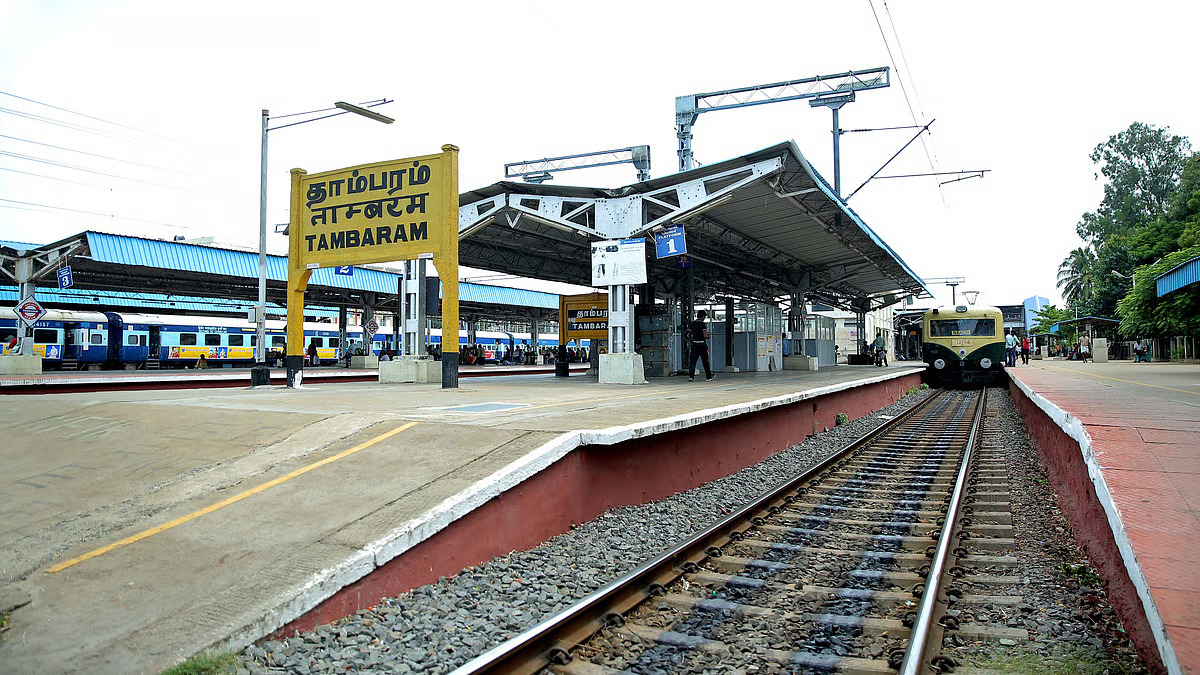
One of Chennai’s busiest suburban and long-distance rail gateways is heading for a significant transformation. Tambaram railway station, a critical interchange for southern Tamil Nadu and the Chennai metropolitan region, is set for a large-scale redevelopment that aims to nearly double passenger handling capacity while reshaping the station into a modern, multi-modal transit hub.
The proposed upgrade, being structured under a public–private partnership framework, reflects a broader push by Indian Railways to unlock land value while modernising legacy infrastructure. For Tambaram, the redevelopment is not merely cosmetic. Peak-hour passenger capacity is projected to rise from about 13,500 commuters today to nearly 29,000 once the project is completed. Track capacity is also expected to increase, supporting future expansion of both suburban and long-distance services. Railway planners see Tambaram playing a larger role in Chennai’s rail ecosystem as congestion pressures mount at central terminals. With space constraints limiting further expansion at older stations, Tambaram’s relatively larger land parcel positions it as a strategic alternative for originating and terminating more express services. Infrastructure additions under consideration include new platforms, expanded track layouts, additional foot overbridges and a first-level concourse to ease passenger circulation.
A key component of the redevelopment is improving access from both the eastern and western sides of the station, reflecting changing urban growth patterns in the southern suburbs. Direct-entry platforms, redesigned station facades and upgraded passenger circulation areas are expected to reduce dependence on foot overbridges and escalators, improving accessibility for elderly commuters, persons with disabilities and daily suburban users. However, the proposal has sparked discussion among urban transport observers and resident groups about how station redevelopment priorities are being set. While officials emphasise capacity enhancement and operational efficiency, some stakeholders argue that passenger-facing amenities such as waiting areas, parking integration and seamless last-mile connectivity need stronger emphasis. Given Tambaram’s annual footfall runs into several crores, even marginal improvements in circulation and dwell time can have outsized benefits for commuter comfort and safety.
Urban planners also point out that station redevelopments increasingly shape surrounding real estate and local economies. A well-designed transit hub can catalyse compact, transit-oriented development, reduce car dependence and support climate-resilient urban growth. Conversely, poorly integrated projects risk prioritising commercial returns over commuter needs. Railway authorities have indicated that the current plan remains open to refinement, with inputs from state agencies, civic bodies and citizen groups expected to influence the final blueprint. Similar redevelopment models are being studied for other high-growth stations across Tamil Nadu, signalling a shift towards decentralised rail hubs rather than overburdened city-centre terminals.
For Chennai’s southern suburbs, the Tambaram upgrade represents more than a station makeover. It is a test case for whether rail infrastructure investment can align capacity growth with inclusive design, sustainability goals and the everyday realities of millions who depend on public transport.
Also Read:
Chennai Tambaram Rail Hub Gears Up For Expansion