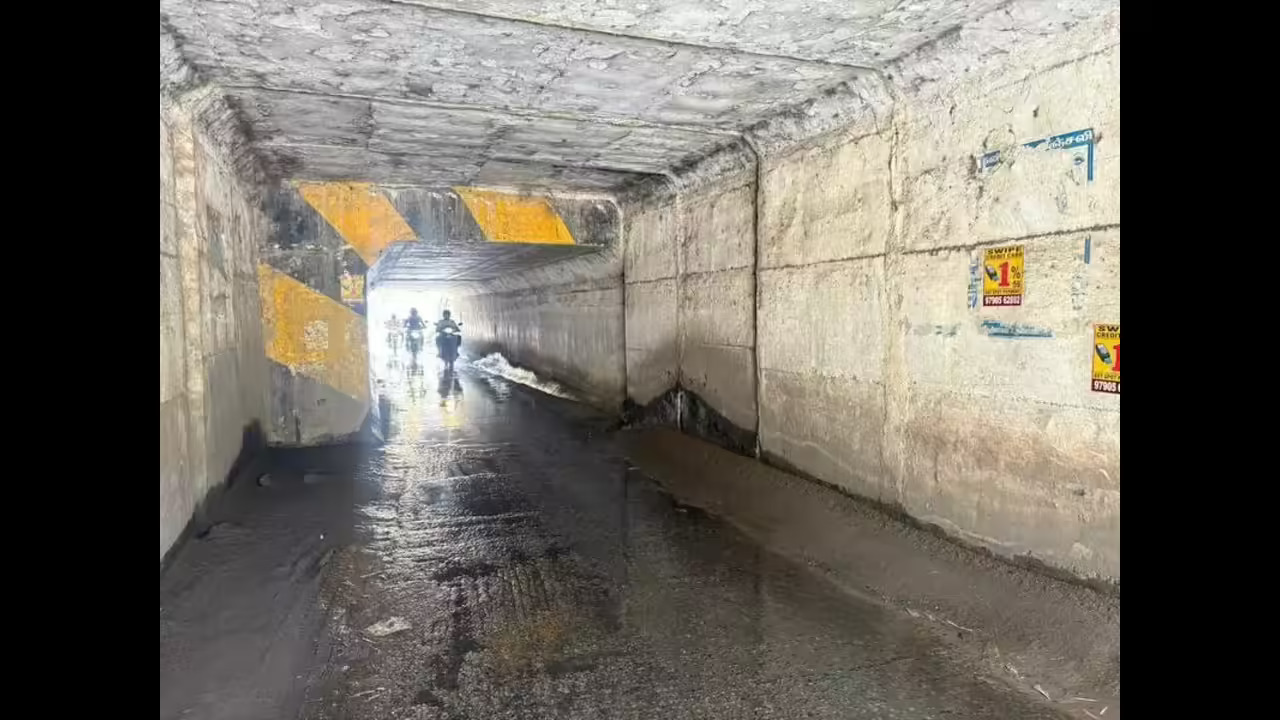
Chennai Tambaram Underpass Highlights Infrastructure Neglect
A key road link beneath the railway tracks in Chennai’s southern suburbs has become a case study in how urban infrastructure can quickly deteriorate without sustained governance and accountability. The Irumbuliyur underpass near East Tambaram railway station, designed to ease congestion on one of the city’s busiest transit corridors, is now drawing attention for persistent sanitation, safety and maintenance failures.
The underpass plays a strategic role in daily mobility. It allows motorists to bypass traffic bottlenecks near Tambaram railway station and provides a direct connection between GST Road, West Tambaram and neighbourhoods on the eastern side of the tracks. Thousands of commuters depend on it every day, particularly during peak hours, making its condition a matter of public safety rather than mere inconvenience. Despite its importance, the underpass suffers from chronic sewage seepage and water stagnation. Poor drainage has led to foul-smelling wastewater collecting along the carriageway, turning the stretch hazardous for two-wheelers and pedestrians alike. During periods of rainfall, flooding worsens, limiting visibility and increasing the risk of vehicle breakdowns and accidents. Urban planners point out that such conditions reflect design and maintenance gaps, especially in infrastructure located below grade level where water management is critical.
Equally concerning is the lack of basic safety infrastructure. The absence of adequate lighting and surveillance has made the underpass unwelcoming after dusk. Commuters, particularly women and older residents, report avoiding the route in the evenings despite longer travel times elsewhere. Experts note that underpasses are often treated as purely engineering solutions, while social safety and accessibility receive far less attention. The governance structure surrounding the underpass has further complicated the issue. Multiple agencies are involved in transport and rail-adjacent infrastructure, creating ambiguity over responsibility for upkeep. Civic groups argue that this overlap frequently results in delayed action, with maintenance falling through administrative gaps. Similar challenges have been observed in other subways and pedestrian underpasses across the Tambaram region, including newer assets that are already showing signs of seepage and surface damage.
From a broader urban development perspective, the Irumbuliyur underpass highlights a recurring challenge in Indian cities: capital expenditure on new infrastructure often outpaces investment in long-term operations and maintenance. While flyovers and grade separators are built to support economic growth and reduce congestion, their sustainability depends on routine upkeep, resilient drainage systems and integrated safety planning.
Officials familiar with the matter indicate that inspections and corrective measures are being considered, including improved lighting and monitoring. However, urban policy specialists stress that isolated fixes will not be sufficient. What is required is a coordinated maintenance framework, clear inter-agency accountability and design standards that factor in climate resilience and everyday user experience.
As Chennai continues to expand outward, ensuring that existing transport infrastructure remains safe, accessible and functional will be as important as building new corridors. The condition of the Irumbuliyur underpass serves as a reminder that people-first urban mobility depends not just on construction, but on consistent care long after projects are inaugurated.