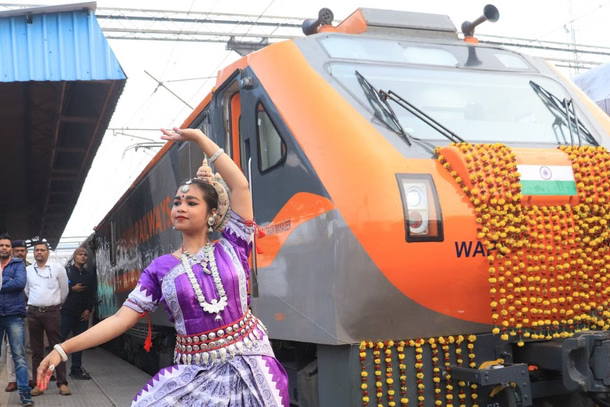
Odisha’s rail network is undergoing a structural shift as new-generation passenger trains and station upgrades reshape how the eastern state connects with national economic corridors. The expansion of semi-high-speed and modern long-distance services marks a significant change for a region historically dependent on conventional express trains for mobility, trade and tourism.
Over the past two years, Indian Railways has steadily expanded premium and mid-tier services across Odisha, integrating the state into faster intercity and cross-country rail networks. The rollout includes semi-high-speed trains designed for shorter intercity journeys as well as upgraded long-distance services aimed at improving comfort without sharply increasing fares. For Odisha, this dual-track strategy has helped address both regional travel needs and national connectivity gaps. Six semi-high-speed services currently operate on routes touching key cities such as Puri, Bhubaneswar, Cuttack, Rourkela and Berhampur. These corridors link pilgrimage centres, industrial belts and port-influenced economies with neighbouring states including West Bengal, Jharkhand, Chhattisgarh and Andhra Pradesh. Transport economists note that reduced travel times on these routes support labour mobility, weekend tourism and business travel while easing pressure on congested highways.
Alongside premium services, modern long-distance trains with higher-capacity coaches have been introduced to serve passengers travelling between eastern India, western industrial centres and southern technology hubs. Odisha stations form an important transit spine on several of these routes, improving access to destinations such as Surat, Bengaluru and northern West Bengal. Unlike legacy mail and express services, these trains offer improved suspension, better seating layouts and enhanced safety features, making long journeys more predictable and accessible for a broader income base. Railway planners view Odisha’s geography as strategically important. The state sits between mineral-rich interiors and coastal trade gateways, with rail corridors supporting freight, industrial supply chains and passenger movement. Strengthening passenger rail services complements ongoing investments in freight corridors and port-linked rail infrastructure, contributing to lower-emission transport compared to road-based alternatives.
Station redevelopment is emerging as another critical pillar of this transformation. Several high-footfall stations in Odisha are being redesigned with improved circulation, universal accessibility, upgraded waiting areas and better integration with local transport. Urban planners argue that modern stations act as multimodal anchors, supporting compact city growth and reducing last-mile inefficiencies, particularly in pilgrimage and tourism-driven economies like Puri.
The broader timetable overhaul planned by Indian Railways is expected to further benefit Odisha through faster schedules and improved punctuality on existing services. Capacity additions and speed rationalisation are aimed at making rail travel more competitive against short-haul flights and long-distance bus travel, especially as fuel costs and emissions concerns rise. While challenges remain around last-mile connectivity and station-area planning, the scale and sequencing of rail upgrades suggest a long-term shift rather than a one-off expansion. As Odisha’s rail services become faster, more reliable and more inclusive, the state is positioning itself more firmly within India’s evolving low-carbon mobility and regional growth framework.
Odisha Connectivity Expands Through New Rail Services