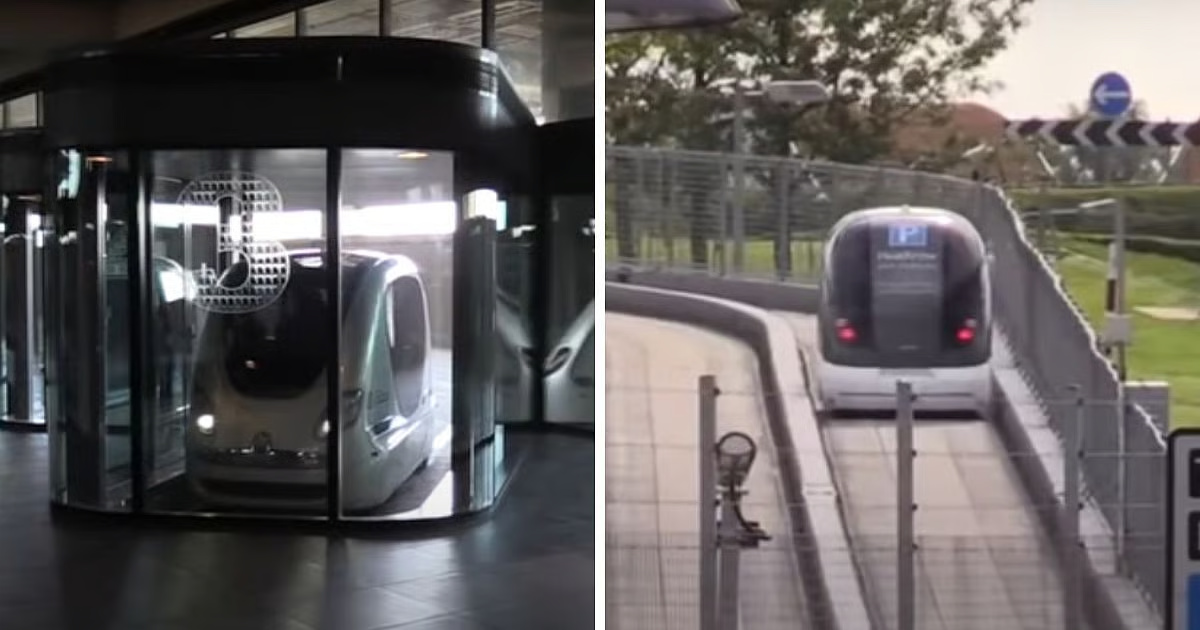
The Maharashtra government has initiated a move to alter a key development plan reservation in eastern Mumbai, clearing a critical planning hurdle for the proposed Kurla pod taxi terminal under the city’s automated rapid transit programme. The decision signals a willingness to recalibrate land-use priorities to unlock last-mile transport infrastructure in one of the Mumbai Metropolitan Region’s most congested business corridors.
At the centre of the change is a plot currently occupied by police housing near Kurla suburban station, which was earlier reserved as an open playground under the city’s development plan. Urban development officials say the reservation will be shifted to an alternative site, allowing the land to be used for an integrated transport facility supporting the Kurla pod taxi terminal. The redevelopment will follow a shared-cost model between implementing agencies, aimed at balancing public infrastructure needs with institutional requirements. The pod taxi system, formally classified as an Automated Rapid Transit System, is planned as a feeder network for the Bandra Kurla Complex, a commercial district that attracts more than 300,000 daily commuters but remains heavily dependent on private vehicles and road-based transport. Urban planners have long flagged the absence of efficient last-mile connectivity from suburban rail stations as a structural weakness in BKC’s transport ecosystem.
According to officials familiar with the process, the Mumbai Metropolitan Region Development Authority had repeatedly highlighted the lack of vacant land near Kurla and Bandra stations as a project risk. Requests for parcels adjacent to the railway network were not cleared, forcing planners to explore alternative publicly owned sites. The Kurla police housing plot, measuring about 6,800 square metres, emerged as the only feasible option within walking distance of the station. A parallel solution is being pursued at Bandra, where land managed by a central government rail development agency is expected to host a second terminal along with maintenance and testing infrastructure. Only a limited portion of the site will be allocated, with the rest retained for rail-linked redevelopment, reflecting a more compact and multi-use approach to urban land management.
Transport experts say the Kurla pod taxi terminal is unlikely to dramatically reduce congestion on its own but could play an enabling role in shifting short-distance trips away from private cars. By integrating automated transit with foot overbridges, rail stations, and commercial districts, the project aligns with broader goals of lowering transport emissions and improving commuter reliability. As the project moves into land finalisation and design stages, urban policy specialists caution that transparent planning, rehabilitation safeguards, and seamless pedestrian access will be critical. If executed carefully, the Kurla pod taxi terminal could offer a template for repurposing constrained urban land to support cleaner, people-first mobility in India’s densest cities.
Mumbai Clears Planning Hurdle For Kurla Pod Taxi Terminal Project