Lucknow Sanitation Crisis Forces People To Migrate
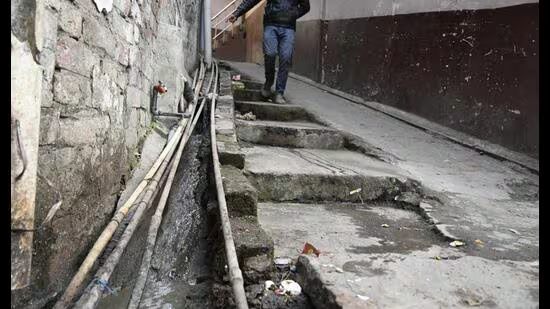
Persistent contamination of local water supplies and overflowing sewage in parts of the state capital are forcing residents to consider relocation, underscoring deepening challenges in urban water management and basic service delivery. In neighbourhoods such as Indira Nagar’s Mayawati Colony, untreated sewage has entered homes and streets, creating health hazards and prompting community protests under slogans such as “no road, no vote,” as public grievance over civic neglect intensifies.
For many residents, the crisis is more than an inconvenience: it is altering daily life and mobility decisions. Families report foul‑smelling water seeping into living areas, escalating costs for medical care and potable water, and an erosion of confidence in municipal sanitation systems. This has led some to migrate temporarily or permanently to safer localities, as deteriorating environmental conditions clash with aspirations for a healthy urban life.The water contamination troubles in Lucknow reflect broader systemic issues observed across multiple city sectors. Several localities have faced irregular supply and reports of smeared, discoloured water from taps, while others endure supply disruptions due to malfunctioning tubewells and infrastructure gaps, resulting in heightened reliance on tanker deliveries or alternative sources.
Urban health specialists stress that prolonged exposure to untreated sewage and contaminated water elevates the risk of waterborne illnesses and vector‑borne diseases, disproportionately impacting children, the elderly and low‑income households who lack coping resources. Frequent waterlogging and stagnant flows also amplify mosquito breeding and contribute to bacterial proliferation. In many Indian cities, including Lucknow, sewage systems remain under‑capacity relative to population growth, allowing untreated or partially treated effluent to infiltrate public spaces and groundwater. The crisis is not confined to piped supply. The Gomti River, which courses through Lucknow and supports both urban ecology and municipal withdrawal, continues to grapple with untreated inflows from drains and sewage channels. Though major sewage‑treatment infrastructure such as the Bharwara Sewage Treatment Plant was established to address this load, experts caution that significant volumes of wastewater still bypass adequate treatment, compromising surface and groundwater quality.
Municipal authorities maintain that improved monitoring and responsive services are priorities, as reflected in expanded helplines and complaint redressal mechanisms for water leaks, contamination and supply irregularities. However, critics argue that systemic fixes — including drainage upgrades, comprehensive stormwater management, expansion of sewage‑treatment capacity, and resilient supply networks — have lagged behind population growth and environmental pressures.Urban planners say that equipping cities for safe water delivery is foundational to sustainable urbanisation. Without reliable, safe water infrastructure, cities may see not only health and economic costs, but also demographic shifts as residents seek greener, cleaner habitats. For Lucknow, addressing the underlying causes of water contamination — from ageing pipelines to watershed management and sewage‑treatment gaps — will be critical for restoring livability and stem out‑migration.