


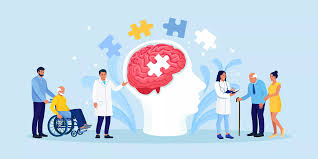
At a high‑profile scientific ceremony in Bengaluru this weekend, a leading Nobel laureate urged a fundamental rethink of how research on complex diseases like Parkinson’s disease is organised, advocating for structured, team‑based scientific collaboration to accelerate breakthroughs in treatment and understanding. The call came against a backdrop of rapid global rise in neurodegenerative disorders that pose profound social and economic challenges for ageing populations.
The event, hosted by a national science foundation, honoured six young researchers across disciplines from economics to physical sciences with prestigious annual awards recognising significant scientific and scholarly contributions. A senior scientist remarked that recognising diverse fields underscores how innovation ecosystems depend on cross‑disciplinary interaction, not isolated inquiry. In his address, the anatomy Nobel laureate highlighted Parkinson’s — a progressive neurological condition affecting movement and quality of life — as a case where conventional academic incentives can constrain progress. He noted that most funding and recognition structures favour individual achievement, potentially sidelining collaborative teams that can integrate different scientific strengths. This comment resonates with broader debates in research policy about how funding mechanisms and reward systems shape scientific productivity.
Parkinson’s disease, whose incidence is growing worldwide, illustrates the complexity of modern health challenges. Recent projections suggest parts of Asia may account for substantial shares of new cases in coming years, driven by demographic shifts and environmental factors, heightening the urgency of coordinated research efforts. Industry experts and urban health planners observing the event say that this discussion carries implications for India’s innovation strategy. As the country expands its scientific infrastructure and invests in biomedical research capacity, embedding incentives for interdisciplinary and team‑oriented work could strengthen India’s role in solving global health problems. Moreover, such a shift would align with national goals of building equitable research ecosystems that attract global talent and encourage sustained scientific engagement.
The laureate’s personal connection to the disease — citing family experience with Parkinson’s symptoms and diagnostic challenges — added a human dimension, underscoring how research culture impacts not just academic career trajectories but lives of patients and families. Beyond his remarks on collaboration, the Nobel scientist acknowledged the contributions of award recipients whose work spans fundamental and applied sciences, reinforcing how diverse research strengthens the societal knowledge base. Organisers emphasised that recognising and supporting early‑career researchers lays the groundwork for long‑term scientific resilience and innovation.
Looking ahead, stakeholders in India’s research community say institutional shifts — including grant programmes that prioritise team science and partnerships between academic labs, healthcare systems and industry — will be vital for tackling multi‑faceted challenges such as Parkinson’s disease and other conditions that intersect public health, ageing and urban demographics.
Also Read:Nanded Welcomes Blum Interior Experience Centre
Bengaluru Event Highlights Team Driven Neurodegenerative Research
