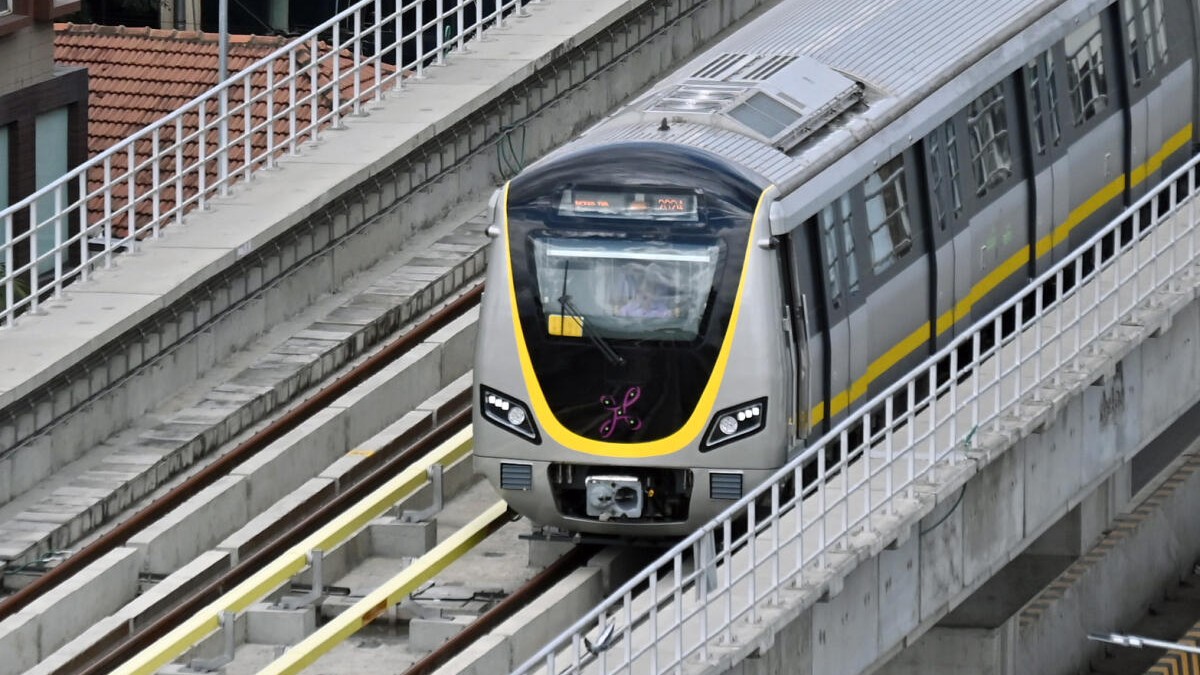
Airport Metro Expansion To Boost Bengaluru Connectivity
Bengaluru is on track to strengthen its urban mobility framework with the airport metro corridor expected to be operational by the end of 2027, the Bengaluru Metro Rail Corporation Ltd (BMRCL) confirmed. The project, spanning 58.19 kilometres from Central Silk Board Junction to Kempegowda International Airport, is being executed in two phases—Phase 2A covering 19.75 kilometres and Phase 2B extending 38.44 kilometres.
The completion of this corridor will expand Bengaluru’s metro network to 175 kilometres, reinforcing the city’s efforts to provide rapid, sustainable transit solutions amid growing population density and urban sprawl. Urban planners note that enhanced metro connectivity to the airport is likely to reduce reliance on private vehicles, contributing to lower emissions and improved traffic flow along key arterial roads.During a forum organised by the Bangalore Chamber of Industry and Commerce (BCIC) and TERI’s GRIHA Council, BMRCL officials highlighted ongoing developments in Phase-3, spanning 44 kilometres, with detailed project reports for an additional 36-kilometre Phase-3A already under review. Long-term studies are underway for more than 200 kilometres of new metro corridors, indicating a forward-looking strategy to align Bengaluru’s transport infrastructure with projected population growth and commuter demand.
BMRCL has also emphasised sustainability in operations, with technologies such as regenerative braking reducing energy consumption by over 30% per trip. These innovations not only improve operational efficiency but also support the city’s broader goal of integrating low-carbon solutions into public infrastructure, a key consideration in climate-resilient urban planning.The forum also marked a memorandum of understanding between BCIC and the GRIHA Council to collaborate on sustainable urban infrastructure development. Analysts observe that such partnerships between industry bodies and sustainability councils can help align commercial growth with environmental considerations, ensuring that Bengaluru’s urban expansion does not compromise energy efficiency or green-building standards.
Experts suggest that airport metro access will be particularly impactful for commercial districts, technology parks, and logistics hubs, facilitating smoother commutes and reducing the carbon footprint of high-volume passenger traffic. Moreover, integrating metro expansions with future smart mobility initiatives—including last-mile connectivity, electric shuttle services, and multimodal transport hubs—could serve as a model for other rapidly urbanising Indian cities.
As Bengaluru prepares to operationalise the airport metro, the city demonstrates a clear commitment to combining infrastructure growth with sustainability and long-term urban planning. Effective implementation will not only improve mobility but also enhance residents’ quality of life, reduce urban congestion, and support environmentally responsible city development.