


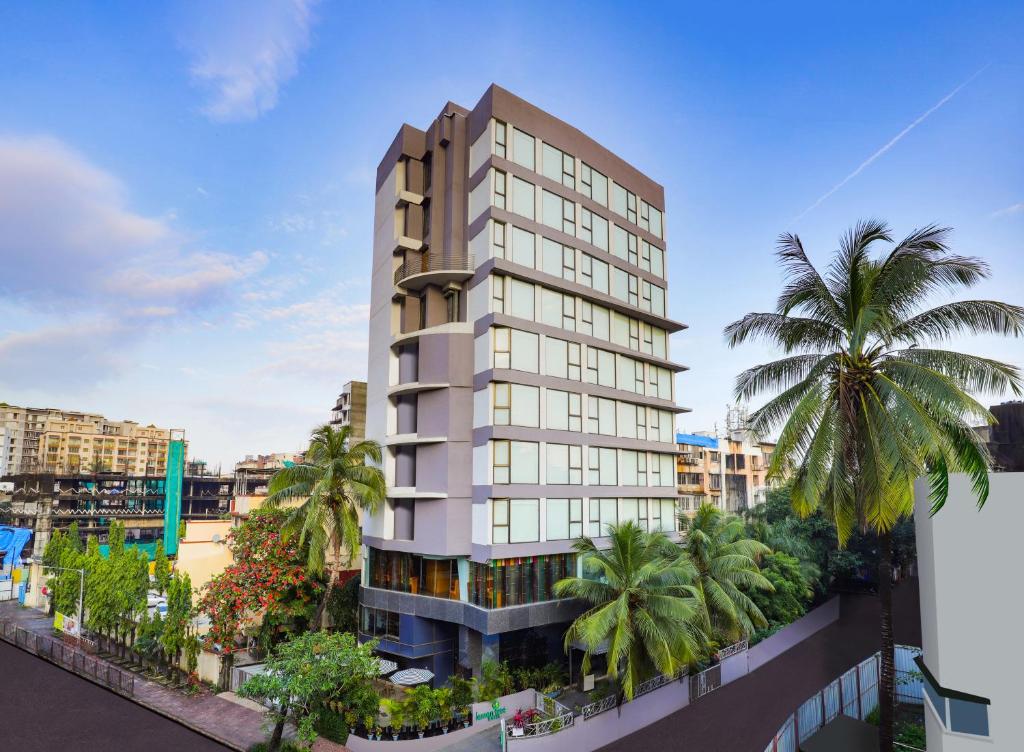
Lemon Tree Hotels is executing a strategic reorganisation to segregate its hospitality operations into distinct business platforms, supported by a renewed investment from global private equity firm Warburg Pincus. The move is designed to streamline operations, improve capital allocation, and accelerate expansion in India’s growing hotel sector, which is closely tied to urban economic activity and business travel infrastructure.
Under the approved scheme, Lemon Tree Hotels will pivot to an asset-light model, concentrating on hotel management, franchising, brand-building, and digital solutions. Meanwhile, its subsidiary, Fleur Hotels, will house all owned properties and spearhead future acquisitions and developments. Warburg Pincus is acquiring a 41.09 percent stake from APG Strategic Real Estate Pool and has committed up to Rs 960 crore in phased capital investment to support Fleur Hotels’ growth trajectory. Analysts note that separating management from ownership can enhance operational focus and financial transparency, enabling each entity to pursue tailored strategies. The asset-light platform allows Lemon Tree to scale its brand across India and overseas without tying up capital in property, while Fleur Hotels assumes responsibility for asset development, property optimisation, and long-term returns on ownership. Post-reorganisation, ownership of Fleur Hotels will be divided among Lemon Tree shareholders (32.96 percent), Lemon Tree itself (41.03 percent), and Warburg Pincus (26.01 percent), not accounting for dilution from the primary capital infusion. Fleur Hotels is projected to operate 5,813 keys across 41 properties, while Lemon Tree will continue managing 6,011 keys across 89 hotels, with a development pipeline of 9,414 keys across 127 properties.
Industry experts say such restructuring aligns with global hospitality trends, where operational efficiency and scalability increasingly determine competitive advantage. By maintaining management control of leased and owned hotels, Lemon Tree ensures continuity of service standards while unlocking capital for new developments. The transaction also facilitates focused capital deployment for Fleur Hotels, allowing the company to acquire or develop strategic assets in high-demand urban and peri-urban corridors. Urban planners and real estate analysts highlight the broader implications: asset-light models encourage hotel proliferation without exacerbating land use pressures, supporting sustainable urban densification. Meanwhile, dedicated ownership arms can optimise property performance, invest in energy-efficient infrastructure, and integrate climate-conscious operations. This dual-platform structure reflects evolving investor preferences and operational strategies in India’s hospitality sector. Completion of the scheme, including listing Fleur Hotels separately on NSE and BSE, is expected within 12-15 months. Observers note that such structural clarity is increasingly critical in India’s post-pandemic hospitality landscape, where investor confidence, operational agility, and sustainable asset management influence city-level hospitality growth and employment.
The reorganisation positions Lemon Tree Hotels to focus on brand expansion and digital engagement, while Fleur Hotels becomes the group’s primary vehicle for owned asset growth, bridging operational efficiency with capital deployment in India’s urban hotel markets.
Also Read: Enforcement Directorate Action Reshapes NCR Housing Accountability
Lemon Tree Hotels Transforms Portfolio For Scalable Operations
