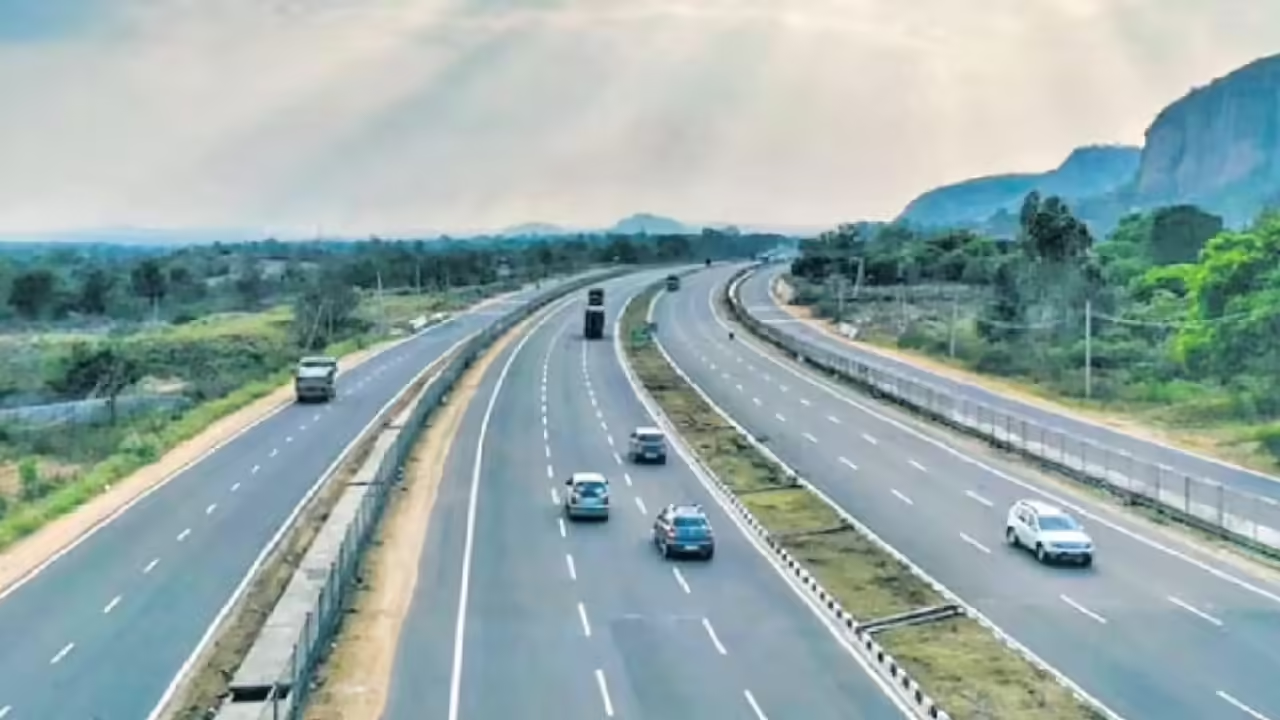
India is preparing to recalibrate the legal backbone of its highway development programme, with the Union government set to propose amendments to the National Highways Act, 1956 in the upcoming Budget Session of Parliament. The planned changes are designed to address land acquisition delays that have slowed road construction across several states, affecting connectivity, logistics efficiency and regional economic growth.
Road infrastructure has been central to India’s capital expenditure strategy over the past decade, linking industrial corridors, ports and growing urban centres. Yet a significant share of highway projects has faced prolonged timelines, largely due to disputes over land compensation and extended court cases. Officials familiar with the matter say the proposed amendments seek to bring predictability to these processes while balancing public interest with landowner rights. At the heart of the reform agenda is a restructuring of how land acquisition disputes are handled under the highways framework. Under the current system, challenges to compensation awards can stretch for years, often bringing construction activity to a standstill. The revised provisions are expected to introduce defined timelines for filing objections, a move aimed at preventing projects from being trapped in open-ended litigation.
Another key proposal under consideration involves land parcels acquired for highway development but left unused for extended periods. Draft provisions suggest such land could revert to original owners if it remains unutilised beyond a specified timeframe. Urban planners view this as an important corrective, reducing speculative acquisition and reinforcing accountability in project planning.
The push to amend the National Highways Act reflects broader concerns around infrastructure efficiency and fiscal discipline. Delayed projects not only escalate costs for public agencies but also weaken the economic returns expected from new transport links. Industry experts note that stalled highways disrupt freight movement, raise logistics costs, and delay the benefits of improved road safety and reduced travel time for citizens.
From a city and climate perspective, faster project execution could also support more sustainable outcomes. Timely completion of highways helps divert traffic from congested urban roads, lowering fuel consumption and emissions. However, planners caution that legal reform must be accompanied by better alignment with regional land-use plans to avoid sprawl and ensure that highways support compact, transit-oriented growth. The legislative changes are expected to be tabled during the Budget Session, which begins in late January and continues in phases until early April. If passed, the amendments could reset how India delivers large transport projects, particularly in fast-growing regions where land values and competing land uses have made acquisitions increasingly complex.
Looking ahead, the success of the proposed overhaul will depend on how consistently the revised rules are implemented on the ground. Clear timelines, transparent valuation methods and early engagement with affected communities will be critical if the reform is to translate into faster highways, fairer outcomes and more resilient infrastructure systems.
India road reforms aim to unlock frozen projects