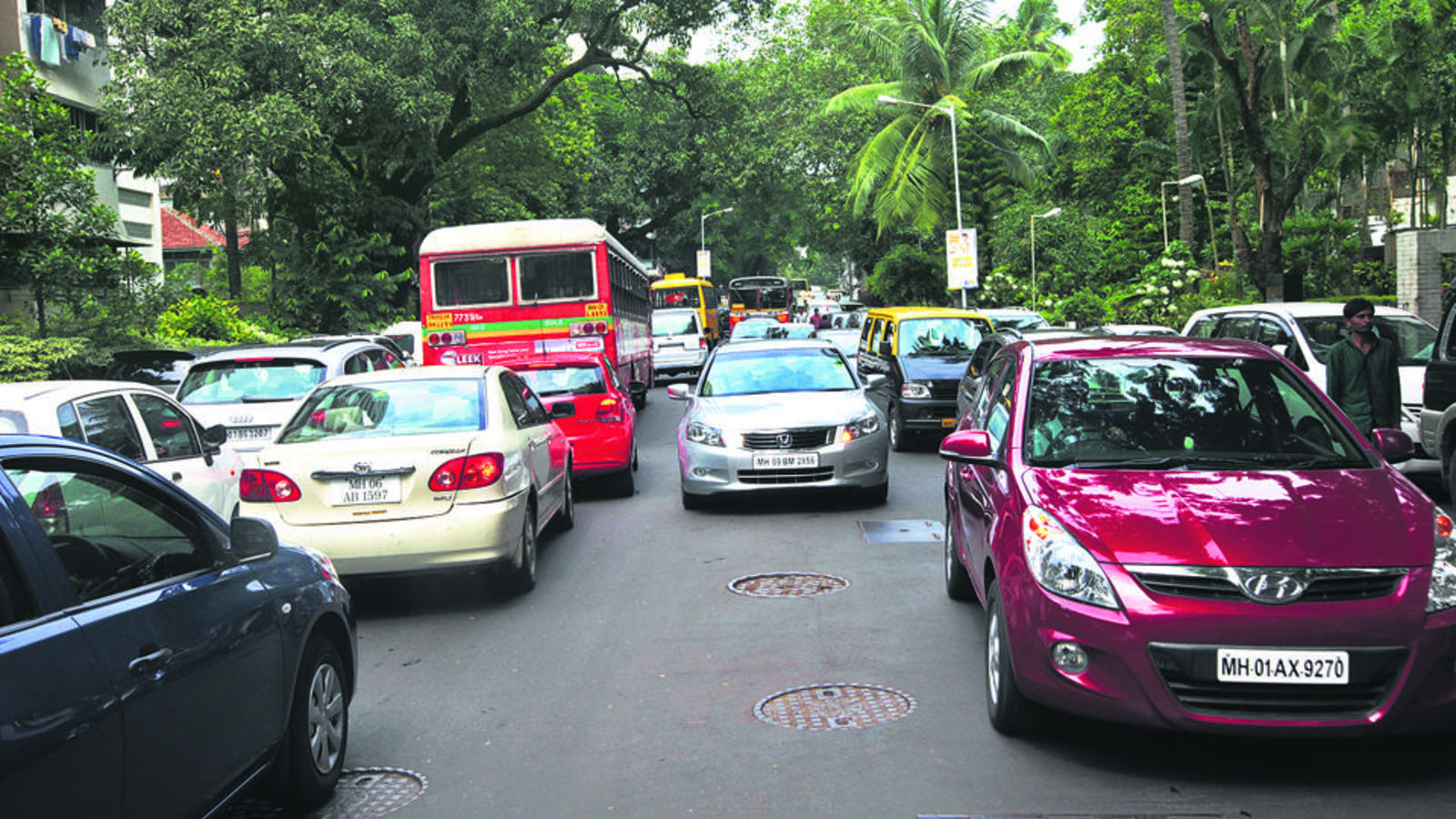
A wave of civic frustration is building in Mumbai’s Malabar Hill, one of the city’s most politically influential neighbourhoods, as residents push back against stricter parking enforcement and deteriorating local roads. The discontent has transformed everyday urban inconveniences into a wider debate on how legacy neighbourhoods are managed amid rising vehicle ownership, redevelopment pressure, and election-season politics.
The immediate trigger has been tighter parking controls near a popular public garden used daily by walkers, many of them senior citizens. The introduction of higher fines and new restrictions, residents say, disrupted long-standing travel routines in an area where alternatives to private vehicles are limited by steep slopes and narrow streets. While some enforcement measures were later eased after public pressure, uncertainty remains over whether the changes are temporary or structural. Beyond parking, road conditions have emerged as a persistent grievance. Malabar Hill’s terrain presents engineering challenges, with gradients and confined rights of way complicating upgrades such as cement concreting and drainage improvements. Urban infrastructure specialists note that these constraints are common in older neighbourhoods across Mumbai, where road design predates current traffic volumes and modern service requirements.
The area’s development history has compounded the problem. Many residential buildings were constructed decades ago without dedicated parking, and redevelopment has added density without proportionate upgrades to public realm infrastructure. As vehicle numbers increase, curbside competition has intensified, creating friction between residents, visitors, and enforcement agencies.
What makes the situation more complex is Malabar Hill’s social mix. Alongside high-value residences and government precincts, the ward includes several informal settlements housing service workers who support the area’s economy. Planners warn that uniform enforcement without parallel investments in mobility options risks deepening inequities, particularly for those dependent on flexible parking and pedestrian access.
The civic unrest has spilled into the local election campaign, with candidates across parties acknowledging that parking management, road quality, and basic amenities now dominate voter conversations. However, policy analysts caution that piecemeal fixes will not address the underlying structural gaps. They argue for area-level mobility plans that prioritise walkability, slope-sensitive road design, and shared parking solutions over ad hoc restrictions. From a sustainability lens, the episode highlights the limits of car-centric planning in dense, low-carbon urban zones. Cities seeking climate resilience must reduce dependence on private vehicles while ensuring that public spaces remain accessible to older residents and daily users.
Malabar Hill’s experience underscores the need for locally tailored solutions rather than blanket enforcement. As Mumbai continues to retrofit its older neighbourhoods, the challenge will be to balance regulation with inclusion, heritage with modern mobility, and enforcement with empathy. For Malabar Hill, the immediate test lies in whether authorities can translate citizen anger into durable urban fixes that improve everyday life rather than merely managing congestion.
Mumbai Malabar Hill Roads Parking Spark Urban Debate