


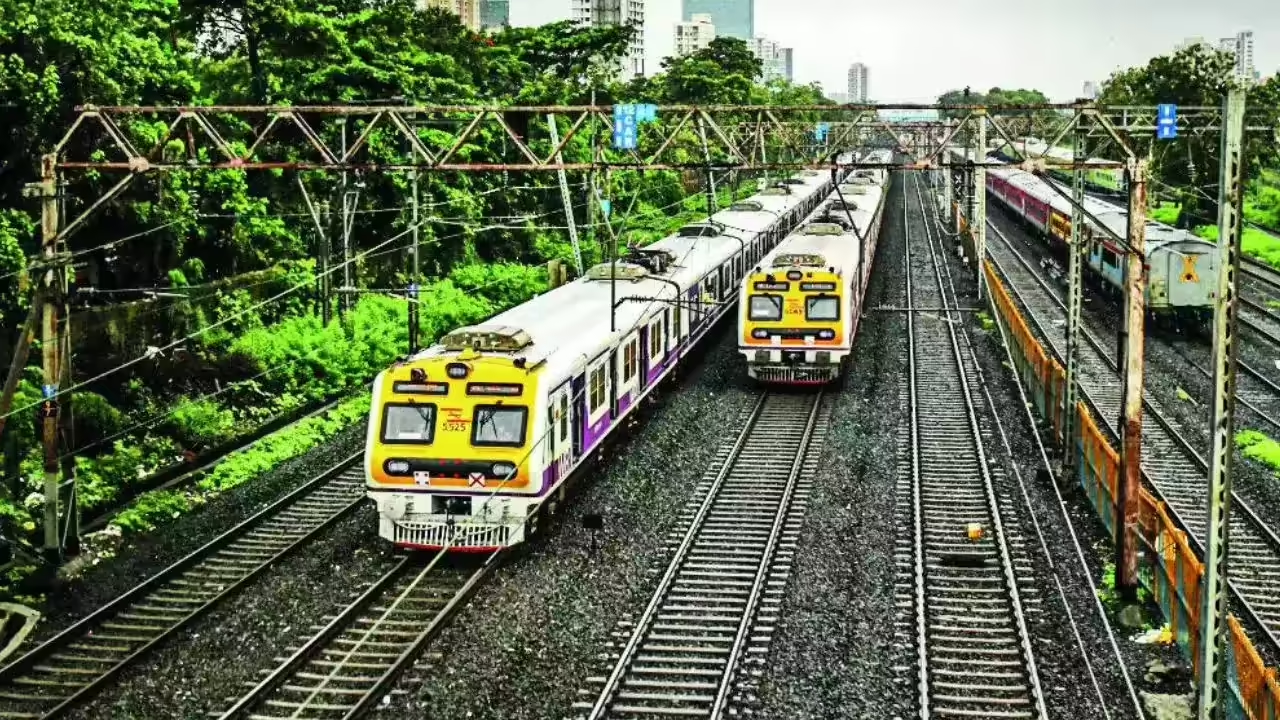
Mumbai’s tightly held urban land market is witnessing another high-stakes inflection point as a large railway-owned parcel in Bandra East moves closer to long-term private development. Two major domestic real estate groups have emerged as leading contenders for the site, reflecting the intensifying competition for centrally located land amid constrained supply and rising commercial demand.
The 11-acre-plus parcel sits within one of Mumbai’s most strategically connected zones, positioned between established commercial districts, transit corridors, and dense residential catchments. Its location places it at the crossroads of the city’s evolving live-work ecosystem, where proximity to offices, housing, and transport infrastructure increasingly defines land value. The land is being offered on a long-term lease framework, a model that has become central to public land monetisation strategies in India’s largest cities. Under the current terms, developers are expected to commit a substantial upfront lease premium alongside a significant revenue-sharing arrangement over the project lifecycle. Urban economists note that such structures allow public agencies to retain long-term value while transferring development risk to private players. Planning provisions attached to the parcel permit high-density construction, enabling built-up potential several times the plot’s base area. This creates scope for a mixed-use outcome, combining commercial, residential, and supporting urban infrastructure. However, higher floor space also brings increased responsibility around traffic management, public realm integration, and environmental performance.
Industry experts point out that the growing appetite for railway land reflects a broader recalibration of Mumbai’s real estate geography. With redevelopment and greenfield options limited, institutional developers are increasingly turning to underutilised public land parcels that can support large-format, master-planned projects. These sites offer scale but require careful alignment with transport systems, drainage networks, and neighbourhood services. From a civic perspective, such auctions have implications beyond balance sheets. Large developments in transit-adjacent zones can either ease or exacerbate urban stress, depending on how density is managed. Urban planners emphasise the need for pedestrian infrastructure, last-mile connectivity, and energy-efficient building systems to ensure that new construction supports climate resilience rather than undermines it. The Bandra East parcel is also part of a wider monetisation pipeline, with multiple railway-owned assets in Mumbai being prepared for market-based development. Together, these transactions signal a shift in how public land is leveraged to fund infrastructure while shaping the city’s growth trajectory.
As bidding progresses, attention will turn to how development obligations are structured and enforced. For Mumbai, the outcome will not only determine the future of a prime land parcel but also set a benchmark for how public land, private capital, and urban priorities can be aligned in one of the world’s most land-constrained cities.
Also Read:
Mumbai Railway Land Monetisation Reshapes Prime Real Estate Market
