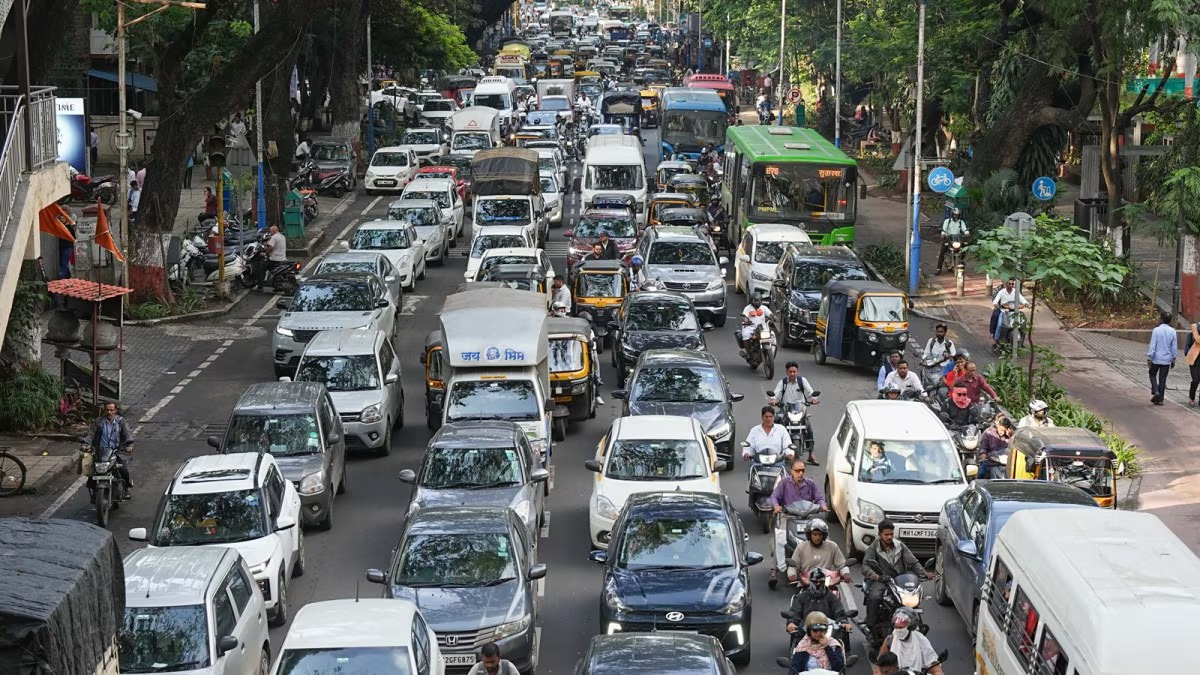
Authorities overseeing the Hyderabad–Vijayawada national highway corridor have rolled out an extensive traffic management plan ahead of the Sankranti holiday surge, as one of southern India’s busiest inter-state routes prepares for an intense spike in festive travel. The advisory, covering diversions, enforcement, and technology trials, reflects the mounting pressure seasonal migration places on urban-adjacent infrastructure and regional mobility networks.
The Hyderabad–Vijayawada stretch is a critical economic artery linking Telangana with coastal Andhra Pradesh, supporting daily commuter flows, freight movement, and holiday travel. During Sankranti, traffic volumes multiply as families return to hometowns, often overwhelming highway capacity. Officials expect congestion to begin building from Friday evening, amplified this year by a long weekend and ongoing construction activity across multiple districts. Data from previous festive periods shows the scale of the challenge. Toll plaza counts along the corridor have crossed two lakh vehicles over three days during past Sankranti holidays, far exceeding weekday averages. Urban transport analysts note that such spikes expose structural weaknesses in highway design, particularly where urban growth has outpaced service road completion, pedestrian crossings, and grade separation.
Several construction zones have been flagged as high-risk during peak movement. Stalled lane expansion works, incomplete underpasses, and temporary traffic arrangements have created conflict points between long-distance vehicles and local movement. In town centres along the route, the absence of grade-separated crossings forces pedestrians, buses, and two-wheelers to interact directly with high-speed traffic, increasing accident risk. To manage the surge, traffic police have announced a set of diversions aimed at redistributing vehicle loads onto parallel state and national highways. While these detours lengthen travel distances, officials argue they are necessary to prevent gridlock and reduce crash probability at known bottlenecks. Transport planners say such measures highlight the importance of network redundancy in regional infrastructure planning, particularly during predictable seasonal peaks.
Enhanced enforcement and monitoring form another pillar of the plan. Highway patrol units, emergency response vehicles, and surveillance teams have been positioned along sensitive stretches, supported by aerial monitoring to identify congestion build-up in real time. Safety improvements at accident-prone locations, including better lighting and clearer signage, have been prioritised to reduce night-time risks. The festival period is also serving as a live testing ground for new tolling technology. A satellite-assisted automatic toll collection pilot at a major plaza on the corridor aims to cut queue times and fuel wastage by allowing vehicles to pass without stopping.
Infrastructure economists view such trials as critical for improving highway efficiency and lowering emissions from idling traffic. As festive travel peaks, the Hyderabad–Vijayawada corridor underscores a broader urban challenge: aligning highway expansion, town planning, and traffic operations with rising mobility demand. The effectiveness of this year’s measures may shape how future festivals, freight surges, and regional growth are managed along India’s fast-developing transport corridors.
Hyderabad festival traffic plan reshapes highway travel