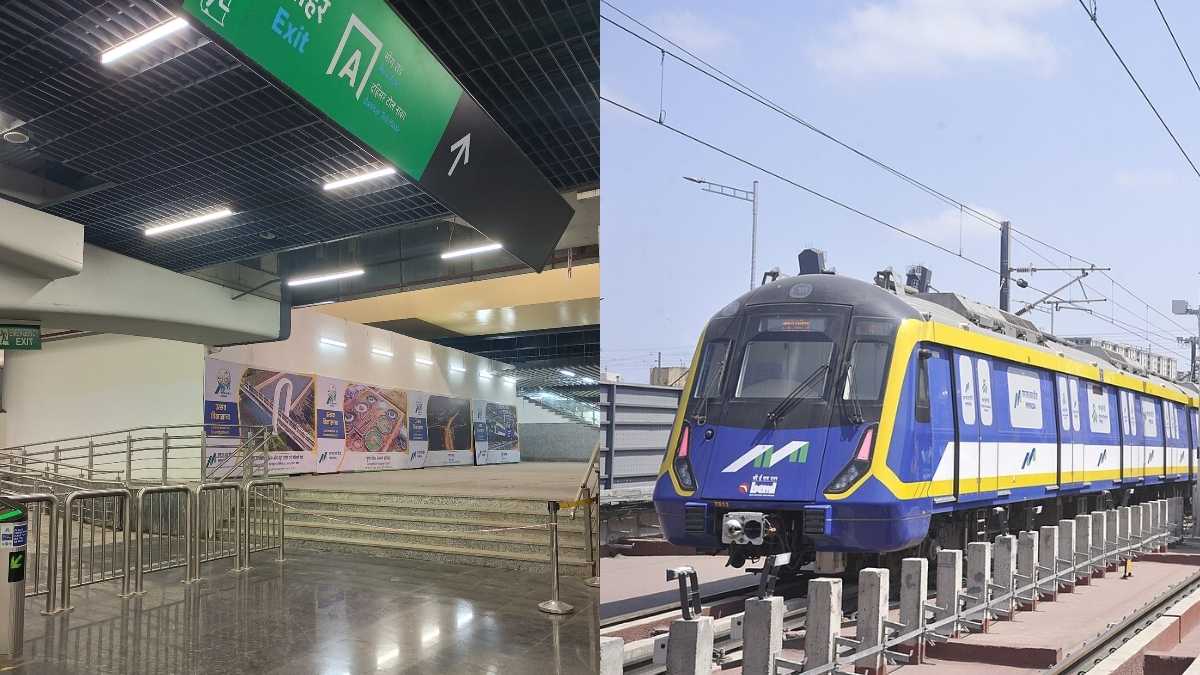
Mumbai’s rapid transit network has reached a critical integration milestone with the operational readiness of the Dahisar East Metro interchange, a development that reshapes how northern suburbs move across the city. Located in one of Mumbai’s fastest-growing residential belts, the new interchange introduces the city’s first paid-area metro transfer, allowing commuters to switch lines without exiting fare-controlled zones—an upgrade with immediate implications for travel time, congestion and everyday mobility.
The Dahisar East facility connects multiple metro corridors serving both eastern and western suburbs, along with an extension reaching towards the Mira–Bhayandar region. For urban transport planners, this is a structural improvement rather than a cosmetic one. Removing exit-and-entry friction at interchange points increases the effective capacity of the entire network, making existing infrastructure work harder without additional trains or tracks. For commuters, the change is tangible. Journeys between Mira Road, Dahisar East and employment hubs in Andheri that once relied on crowded suburban trains or road-based transport can now be completed through a single, continuous metro trip. Transport analysts estimate that commute times on this corridor could drop by nearly half once full public access begins, easing pressure on arterial roads such as the Western Express Highway and key toll junctions.
Beyond speed, the Dahisar East Metro interchange supports a broader shift towards cleaner, people-first mobility. Metro-led travel reduces dependence on private vehicles, cutting fuel consumption and local air pollution in a zone that has long struggled with traffic bottlenecks. Environmental planners note that such interchange-led efficiency gains are essential if Mumbai is to meet long-term climate resilience and emissions-reduction goals. The station also plays a strategic role in urban development. Improved east–west connectivity expands the practical catchment for housing and commercial activity, helping balance growth between Mumbai’s core and its northern suburbs. Real estate experts suggest that better access through Dahisar East could stabilise residential demand in peripheral areas while reducing the pressure for high-density development closer to established business districts.
Operational readiness follows mandatory safety approvals, with passenger services expected to commence shortly after regulatory restrictions linked to the ongoing civic election period are lifted. Once opened, the interchange will serve daily commuters from Mira Bhayandar, Dahisar, Borivali, Kandivali, Malad and Goregaon—areas where population growth has consistently outpaced transport capacity. Importantly, the interchange has been designed with future expansion in mind. Planned links to airport-bound corridors and additional metro lines will further strengthen Dahisar East as a mobility node rather than a terminal station. Urban mobility specialists argue that such nodes are what transform metro systems from isolated lines into true citywide networks.
As Mumbai continues to grow outward and upward, the Dahisar East Metro interchange signals a quieter but meaningful shift—towards integrated infrastructure that prioritises time savings, affordability and environmental outcomes. The real test now lies in consistent operations, last-mile connectivity and ensuring that surrounding neighbourhoods evolve alongside the transport network, not ahead of it.
Dahisar East Metro Redefines Northern Mumbai Commutes