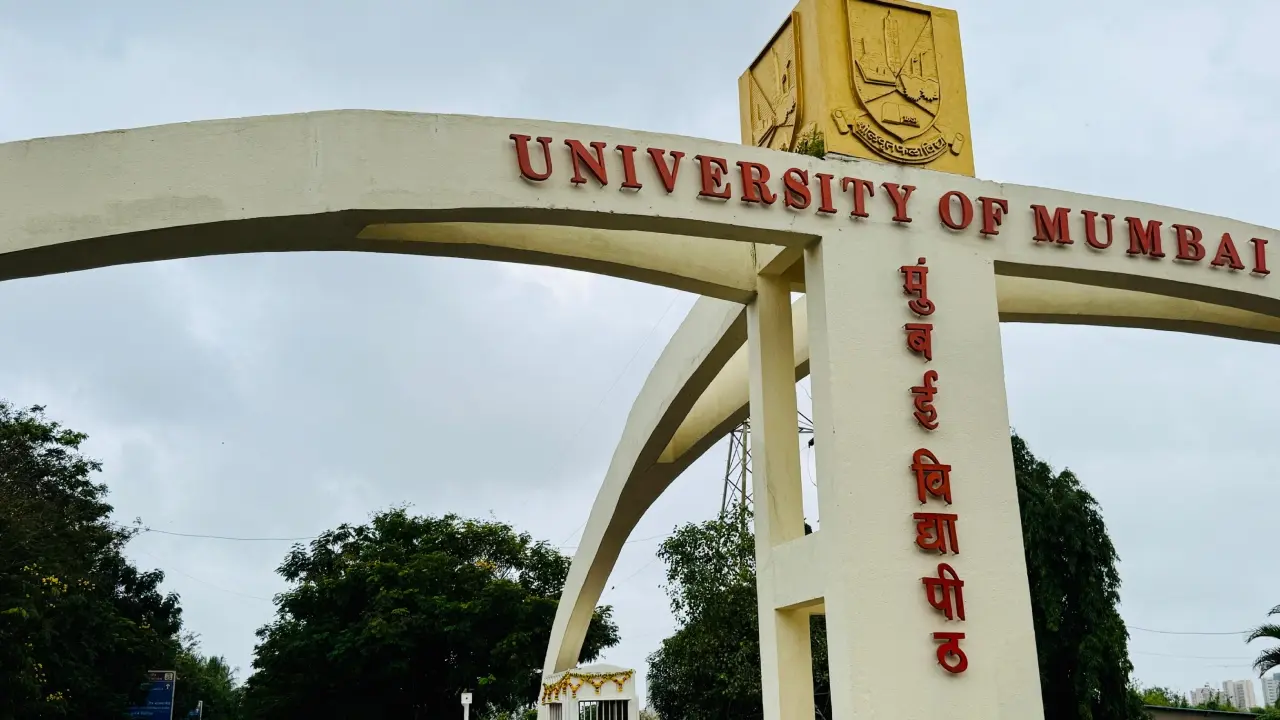
Mumbai’s urban planning and infrastructure ecosystem is set to gain a critical technological upgrade as a leading public university prepares to host a high-precision geospatial reference facility in partnership with the country’s national mapping agency. The initiative, anchored at Mumbai University’s campus, is expected to strengthen data accuracy for city planning, infrastructure delivery and disaster preparedness across the Mumbai Metropolitan Region and beyond.
The project involves the installation of a Mumbai University CORS—a Continuously Operating Reference Station that enables real-time satellite-based positioning with centimetre-level accuracy. Such systems form the backbone of modern surveying, allowing planners, engineers and public agencies to work with far greater spatial precision than conventional GPS tools. Urban experts say this level of accuracy is increasingly essential as cities densify, infrastructure corridors multiply and climate risks intensify. For a region like Mumbai, where land constraints, flood vulnerability and transport congestion intersect, access to reliable geospatial data can materially improve decision-making. Accurate positioning supports better road and metro alignment, efficient utility mapping, safer construction practices and more responsive transport management. It also plays a growing role in climate-resilient planning, from drainage modelling to coastal risk assessments.
Under the collaboration framework, Mumbai University will integrate the Mumbai University CORS into academic programmes and applied research. Students and researchers working in geography, geoinformatics, GIS, remote sensing and AI-driven spatial analysis will gain hands-on exposure to nationally standardised geospatial infrastructure. According to academic observers, this bridges a long-standing gap between classroom learning and real-world urban applications, improving workforce readiness in a sector with rising demand. The partnership also opens structured access to national geospatial datasets and reference networks developed under India’s updated geospatial policy framework. Industry professionals note that aligning academic institutions with official spatial standards can reduce inconsistencies between public and private projects, lowering delays and disputes in infrastructure execution and real estate development.
Beyond education, the station is expected to serve as a shared resource for government departments, consulting firms and infrastructure agencies requiring high-accuracy positioning. As smart city platforms increasingly rely on integrated data layers—transport, utilities, land use and environmental indicators—such reference points become essential public assets rather than niche technical tools. Urban economists point out that investments in geospatial infrastructure often deliver indirect economic returns. More accurate surveys reduce cost overruns, limit rework in construction projects and improve asset management over time. For citizens, the benefits are less visible but tangible: safer buildings, smoother transport systems and more resilient neighbourhoods.
As Indian cities move towards data-driven governance, the success of initiatives like the Mumbai University CORS will depend on open access, skilled users and institutional coordination. If effectively integrated into planning workflows, the station could quietly become one of the most influential tools shaping how Mumbai builds, maintains and future-proofs its urban environment.
Mumbai University Boosts Urban Planning With CORS