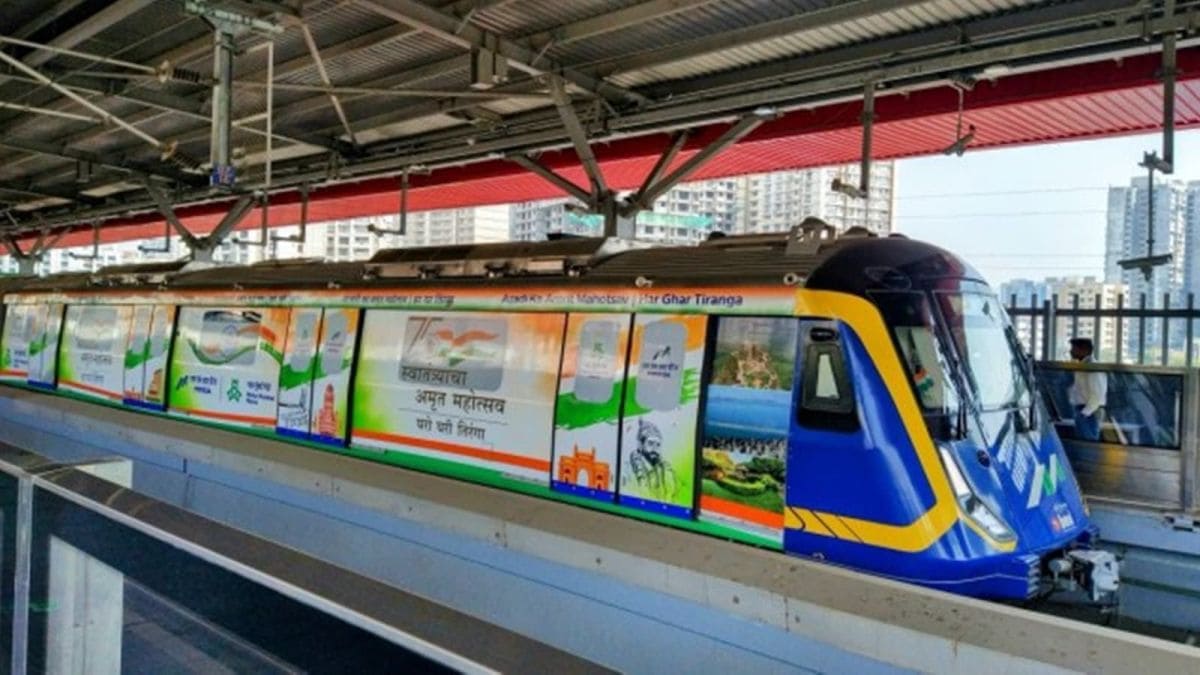
A fresh set of infrastructure commitments for Thane and the wider Mumbai Metropolitan Region (MMR) has placed urban mobility, water security and waste reform at the centre of the region’s next growth cycle. Senior state leadership, addressing a public interaction in Thane ahead of local body elections, outlined a multi-year roadmap aimed at easing congestion, accelerating mass transit delivery and stabilising essential civic services—issues that directly shape liveability, housing demand and economic productivity.
At the core of the announcement is a renewed push for Thane Metro development, with authorities indicating that all sanctioned Metro corridors across the MMR are expected to be operational by the end of the decade. For Thane, a city that has seen rapid residential densification without proportional transport capacity, the timeline is critical. Urban planners note that delayed mass transit has long forced dependence on arterial roads, increasing commute times, emissions and logistics costs for businesses. To address chronic traffic pressure, particularly along the Ghodbunder Road corridor, the state has proposed a new urban growth hub in the Kolshet–Diva belt. The idea is to decentralise employment and services while introducing water-based transport options that could reduce load on road networks. Industry experts say such multimodal planning, if executed with last-mile integration, could help Thane transition from a commuter suburb to a more self-sustaining urban node.
Water resilience formed the second major pillar of the roadmap. Officials confirmed progress on multiple dam projects intended to stabilise supply across the MMR. With regulatory clearances in place and local rehabilitation agreements concluded, additional capacity is expected to come online in phases over the next three years, followed by a larger reservoir becoming fully operational later in the decade. For real estate markets, predictable water availability is a decisive factor influencing project approvals, pricing stability and long-term habitability. Waste management is also set for structural change. The administration reiterated its intent to phase out conventional dumping grounds in favour of bio-mining and scientific processing facilities. Environmental specialists argue that this shift could free up large tracts of urban land while reducing methane emissions and groundwater contamination—an often-overlooked climate risk in fast-growing cities.
Beyond hard infrastructure, the plan includes setting up a specialised incubation centre in Thane to support innovation-led enterprises. Observers say such institutions can anchor local employment, reducing peak-hour travel while aligning economic growth with lower-carbon urban forms. While political arrangements for the upcoming municipal elections remain a backdrop, urban analysts stress that delivery will matter more than declarations. If timelines for Thane Metro development, water augmentation and waste reform hold, the city could emerge as a template for balanced metropolitan expansion—one where mobility, environment and real estate growth reinforce rather than undermine each other.
Thane MMR Sets 2030 Target For Metro Network