


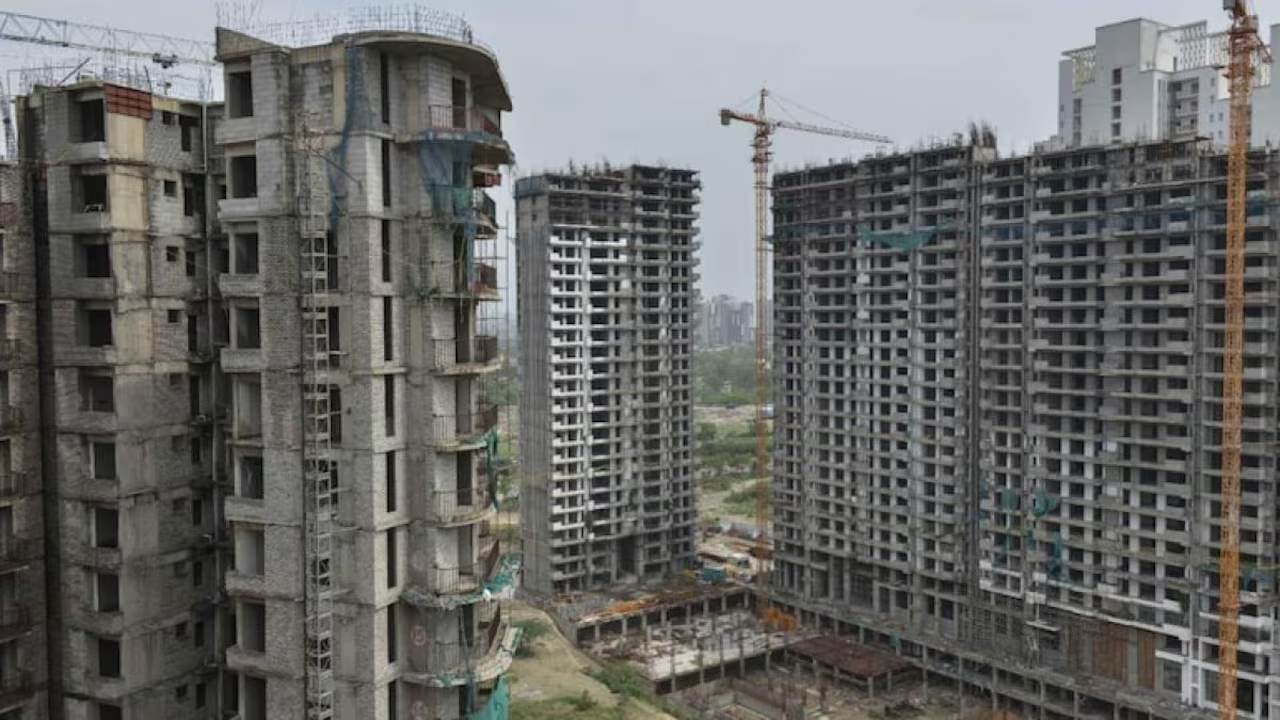
Uttar Pradesh’s real estate market recorded a decisive expansion in 2025, marked by a sharp rise in project approvals, capital inflows, and construction scale. Regulatory data shows that developer participation and investor confidence strengthened across both NCR and non-NCR districts, signalling a structural deepening of the state’s urban economy rather than a short-term cycle.
The total number of registered real estate projects increased substantially over the year, alongside a sharp jump in committed capital. This growth reflects rising confidence in regulatory enforcement, infrastructure-led urbanisation, and the gradual formalisation of property markets beyond the traditional NCR belt. Industry analysts note that such growth is closely tied to predictable approvals, clearer land titles, and improved buyer protections. Capital deployment into registered projects rose sharply year-on-year, with Noida emerging as the single largest investment magnet. The city’s dominance is attributed to its proximity to Delhi, expanding metro connectivity, expressway access, and its growing relevance as a mixed-use employment and residential hub. Ghaziabad and Lucknow followed, reinforcing their status as established urban anchors within the state. Beyond NCR, the data reveals a widening geographic spread of development. Tier-2 cities and emerging urban centres accounted for a larger share of new registrations, reflecting policy-driven decentralisation. Improved highway networks, regional air connectivity, industrial corridors, and urban renewal programmes have made smaller cities commercially viable for organised real estate development. The number of approved residential and commercial units also rose significantly, with housing continuing to account for the majority of new supply. Urban planners point out that this expansion comes at a time when household demand is shifting toward formal, regulated developments offering better infrastructure, safety standards, and long-term asset security.
Commercial and mixed-use projects also gained momentum, supported by office decentralisation, retail formalisation, and the expansion of education, healthcare, and hospitality infrastructure. This diversification is helping cities balance residential growth with employment generation, a key requirement for reducing long-distance commuting and improving urban liveability. Regionally, western Uttar Pradesh continued to dominate in value terms, while central districts showed steady momentum led by the state capital. Eastern Uttar Pradesh remained smaller in scale but displayed improving investor interest, particularly in cities benefiting from tourism, religious activity, and urban infrastructure upgrades. Real estate professionals observe that the regulatory framework has played a stabilising role by encouraging timely project execution and improving transparency. This has helped restore buyer trust, attract institutional capital, and reduce speculative volatility.
Looking ahead, the challenge for Uttar Pradesh will be to ensure that growth translates into climate-resilient, infrastructure-ready cities. Sustainable construction practices, public transport integration, and equitable access to housing will determine whether this investment-led expansion delivers long-term urban resilience rather than fragmented sprawl.
Also Read: GIFT City Sees High Value Real Estate Expansion
Uttar Pradesh Sees Broad Based Real Estate Expansion
